

Small-Scale Gold Mining: Processing Hard-Rock Ore Without Mercury
What You Will Learn from This Guide
Small-scale hard-rock gold is recovered without mercury by crushing the quartz ore, grinding it until the gold grains are free, and separating the heavy gold by gravity before any chemical step. This guide explains that flowsheet stage by stage, the equipment that fits each stage, and the permits and test work that come before any purchase, starting from what comminution means in practice. It is written for mine owners, engineers and buyers who are planning or upgrading a small processing plant. After reading it, you can turn an ore sample into a test-work list and a realistic equipment scope, and then compare it with ball mill selection for gold flotation circuits.
Placer Gold and Hard-Rock Gold Need Different Plants
Small-scale gold comes from two different kinds of deposit, and only one of them needs crushing and grinding. The rock side of this question is covered in types of rocks for crushing.
- Placer (alluvial) gold is already free. It sits as grains and flakes in river gravel or old terraces. Processing is washing, screening and gravity concentration. Crushers and ball mills add nothing here.
- Hard-rock (lode) gold is locked inside rock, usually quartz veins, and often together with sulfides such as pyrite and arsenopyrite. The rock must be crushed and ground before any gold can be separated.
Hard-rock ore splits again into two cases:
- Free-milling ore: most of the gold becomes free after grinding. Gravity can recover a large share of it.
- Refractory ore: the gold is locked inside sulfide grains at a very fine size. Gravity recovers little. A flotation concentrate is then produced and treated at a licensed facility.
Only test work tells which case applies. Gold-bearing quartz is also hard and abrasive, with quartz at Mohs 7, so wear parts are a large share of operating cost. The breakage mechanics behind this are explained in crushing vs grinding.
Mercury, Permits and the Compliance Baseline
A processing plan for small-scale gold starts with the legal and mercury baseline, because both decide which flowsheet can operate at all. The way stages are divided in a compliant plant is shown in primary, secondary and tertiary crushing.
- Scale of the sector. Artisanal and small-scale gold mining supplies about 20% of the world’s gold. Up to 20 million miners work in it in more than 80 countries.
- Mercury. The sector emits more than 2,000 tonnes of mercury per year and accounts for about 37% of global mercury pollution, more than any other source.
- Treaty obligations. Under the Minamata Convention, each Party with artisanal gold mining must reduce, and where feasible eliminate, mercury use in the sector. Annex C names four practices that national action plans must eliminate:
- whole-ore amalgamation;
- open burning of amalgam or processed amalgam;
- burning of amalgam in residential areas;
- cyanide leaching of sediment, ore or tailings to which mercury was added, without first removing the mercury.
- Permits. In every jurisdiction a plant needs a valid mineral title, an environmental license, water rights and a tailings plan. Buying a crusher or a mill does not make an operation legal.
For these reasons, the flowsheet below uses no mercury at any stage. It also leaves any cyanide or flotation step to licensed facilities, a topic covered in ball mill selection for gold flotation circuits.
A Mercury-Free Flowsheet for Small Hard-Rock Plants
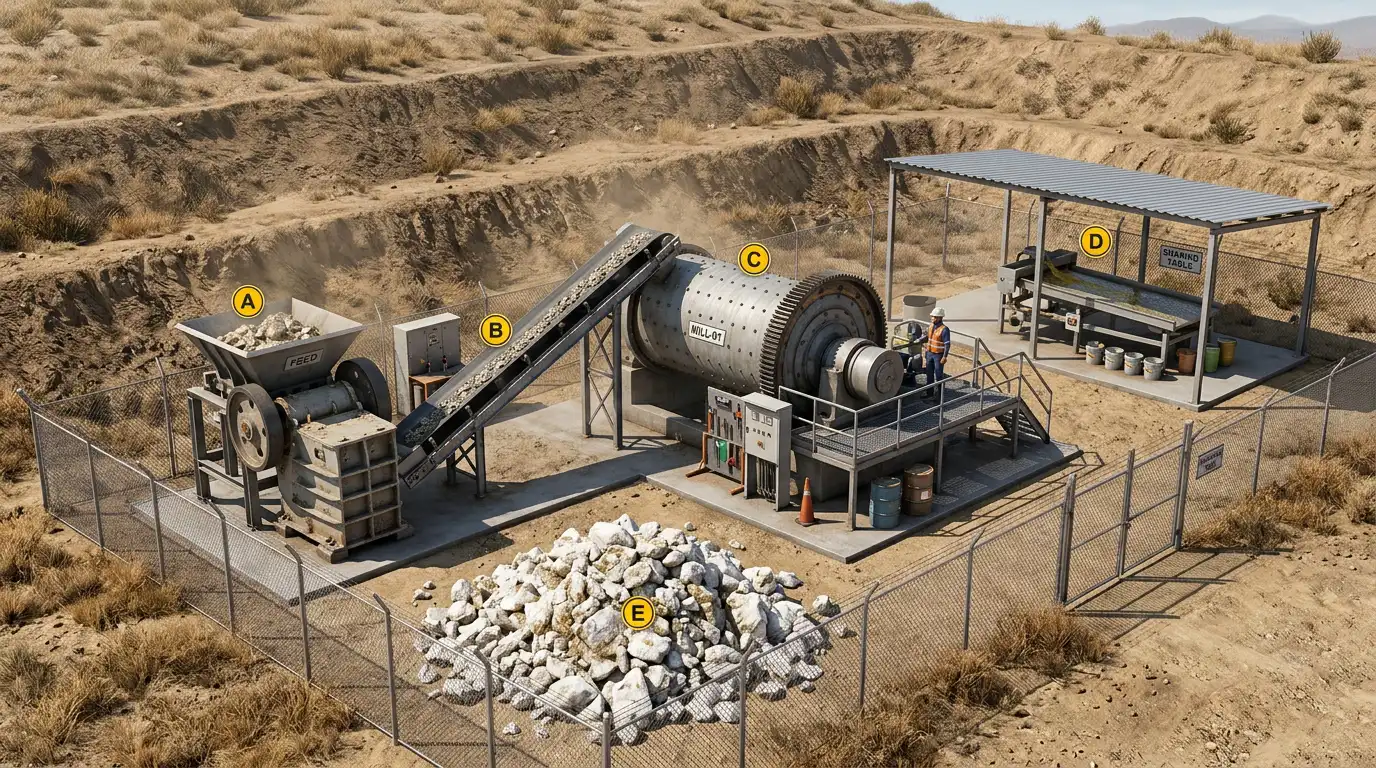
A mercury-free small plant follows six stages, from sample to sellable product. Size terms used here are defined in particle size terms: F80, P80, mesh and microns.
- Sample and test the ore: assays by size fraction, a gravity-recoverable gold (GRG) test and a grindability test.
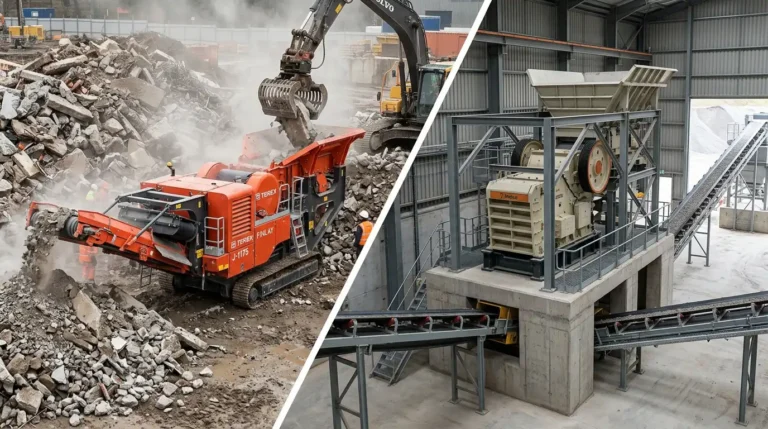
- Primary crushing of run-of-mine ore with a jaw crusher.
- Secondary crushing to the feed size of the mill, with a second jaw or a hammer crusher.
- Wet grinding in a ball mill, in closed circuit with a classifier.
- Gravity concentration inside the grinding circuit, then upgrading of the concentrate on a shaking table.
- Final recovery by direct smelting of high-grade concentrate with a flux, or sale of concentrate. Tailings go to an engineered storage facility.
| Stage | Purpose | Typical equipment | Mr Crusher Mill option |
|---|---|---|---|
| Primary crushing | Reduce run-of-mine ore to 20–100 mm | Jaw crusher | PE Jaw Crusher, PEW Jaw Crusher |
| Secondary crushing | Reach ball mill feed size | Second jaw, hammer crusher, cone crusher (larger plants) | PC hammer crusher; HST Single-cylinder Hydraulic Cone Crusher for larger tonnage |
| Screening | Remove fines, close the crushing circuit | Vibrating screen | Y Vibrating Screen |
| Grinding | Liberate gold grains | Wet overflow ball mill | MQ Ball Mill |
| Gravity concentration | Recover free gold | Centrifugal concentrator, sluice, shaking table | Not supplied; sourced from specialist suppliers |
| Final recovery | Produce doré or sellable concentrate | Smelting furnace, licensed refiner | Not supplied |
Table note: Equipment options from Mr Crusher Mill product datasheets; stage sizes are typical market practice, not standardized.
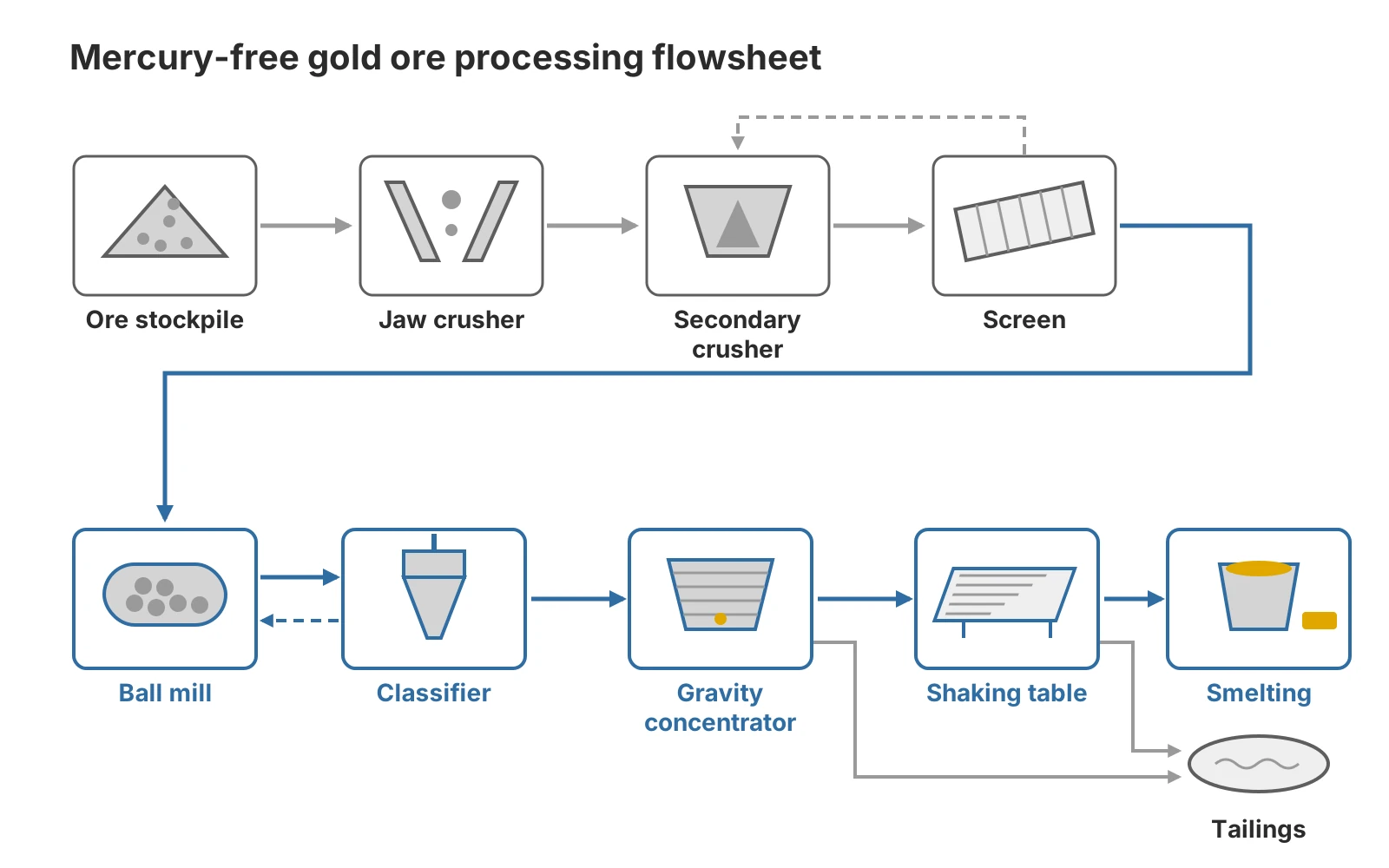
The order matters more than the brand of each machine: gold that is not freed in grinding cannot be caught by gravity, and gold that is caught early is not lost to over-grinding. The way these stages connect is explained in open circuit vs closed circuit in crushing and grinding.
Crushing Gold-Bearing Quartz
Compression crushing is the standard first stage for quartz vein ore, and the PE Jaw Crusher covers the small tonnages typical of these plants. Its mechanical shim adjustment needs no hydraulic system, which suits remote sites with limited maintenance support.
| Model | Feed opening (mm) | Max feed (mm) | Discharge range (mm) | Capacity (t/h) | Power (kW) |
|---|---|---|---|---|---|
| PE150×250 | 150×250 | 125 | 10–40 | 1–3 | 5.5 |
| PE250×400 | 250×400 | 220 | 20–50 | 5–21 | 15 |
| PE400×600 | 400×600 | 350 | 40–100 | 15–70 | 30 |
| PEW400×600 | 400×600 | 350 | 35–85 | 15–70 | 37 |
Table note: Source: Mr Crusher Mill product datasheets.
The PEW Jaw Crusher adds hydraulic discharge-opening adjustment, a V-shaped cavity and centralized lubrication. It suits plants that run longer shifts and change the discharge setting often.
Secondary crushing. A ball mill needs a finer feed than a single jaw stage delivers. Two options are common at small scale:
- Hammer crusher. The PC400×300 takes 100 mm feed and gives a product below 15 mm at 3–10 t/h with 11 kW. The PC600×400 takes 120 mm feed at 8–15 t/h with 22 kW. Both handle ores up to 320 MPa compressive strength. On quartz-rich ore the hammers wear quickly, so spare hammers must be in the budget.
- Second jaw crusher set at a close discharge. It wears less per tonne on abrasive quartz but gives a coarser, more elongated product.
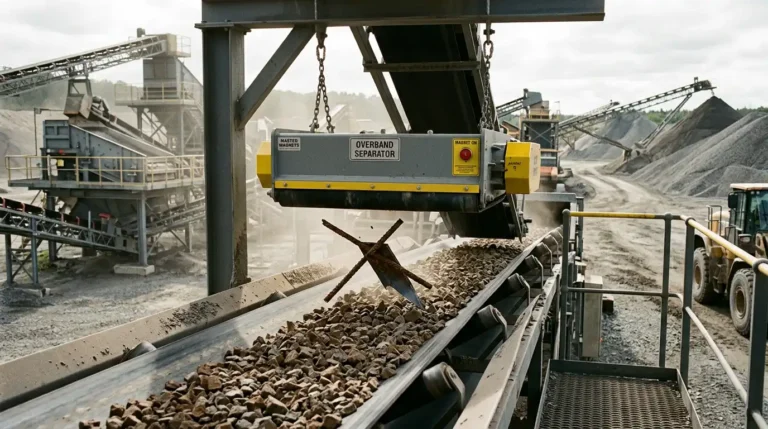
Install a magnet and a scalping screen ahead of the crushers. Tramp steel from old workings is common in vein ore. The PE design and its components are explained in the PE jaw crusher explained.
Grinding to Liberate the Gold
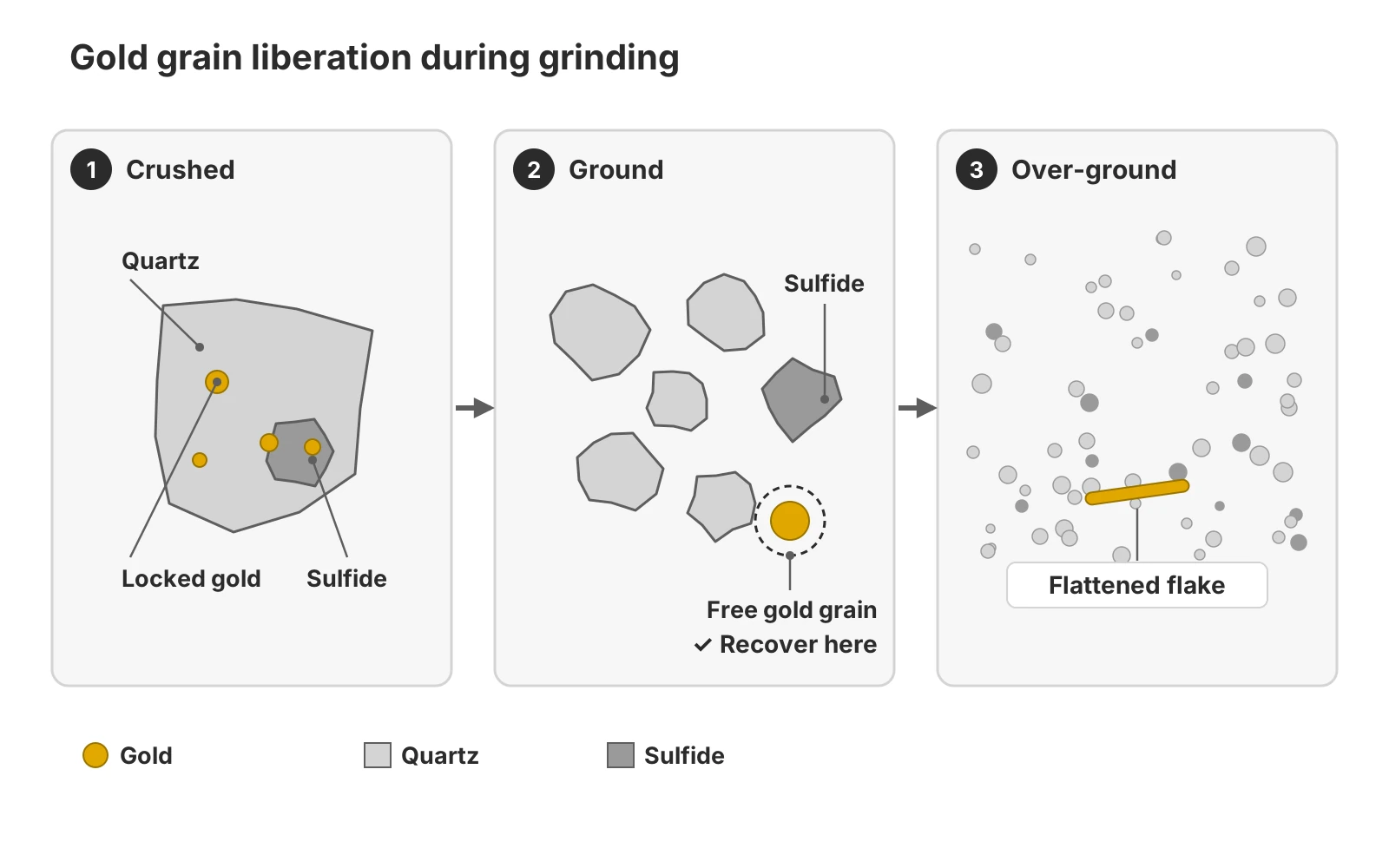
Grinding sets the gold recovery ceiling of the whole plant, and the MQ Ball Mill is the usual machine for this stage. The target is liberation: each gold grain must be free of quartz and sulfide before it reaches the concentrator. The right grind size comes from test work, not from habit.
Three points matter most at small scale:
- Liberation is the bottleneck. In one documented artisanal setting, stamp mills left so much gold locked that gravity separation recovered less than 30% of the total gold.
- Gold is malleable. A ball mill can hammer free gold into thin flakes coated with fine mineral. Flaked gold is harder to recover by any method. For this reason, gravity recovery is placed inside the grinding circuit, on the classifier underflow or the mill discharge, so coarse gold leaves before it is over-ground.
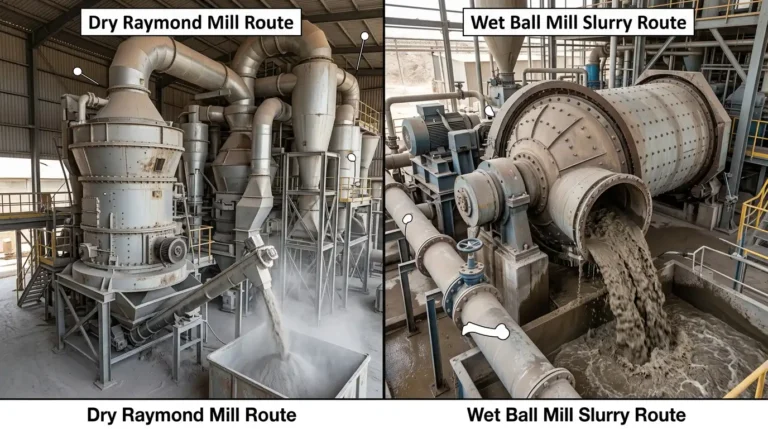
- Wet grinding in closed circuit is the standard. Gravity concentrators need a slurry, and the classifier returns coarse particles to the mill. The trade-offs are covered in wet ball mill vs dry ball mill.
| MQ model (Ф×L mm) | Power (kW) | Ball load (t) | Weight (t) |
|---|---|---|---|
| 900×1800 | 18.5 | 1.5 | 4.6 |
| 900×3000 | 22 | 2.7 | 5.6 |
| 1200×2400 | 30 | 3 | 12 |
| 1200×3000 | 37 | 3.5 | 12.8 |
| 1500×3000 | 75 | 7.5 | 15.6 |
Table note: Source: Mr Crusher Mill product datasheets. Throughput depends on ore grindability and target grind size, so it is calculated from test data rather than read from a table.
Mill selection for a small plant, including discharge type and drive, is covered in the small ball mill guide.
Gravity Concentration and Final Recovery Without Mercury
Gravity concentration recovers free gold by density, without chemicals, and it works best when it is built into the closed grinding loop described in open circuit vs closed circuit. Gold has a density near 19 g/cm³, against about 2.7 g/cm³ for quartz.
- Sluices and carpets catch coarse gold at low cost.
- Centrifugal concentrators recover finer gold. They cost more but suit the grinding circuit.
- Shaking tables upgrade a concentrate into a high-grade product, and the operator can see the gold band.
- Panning is a last cleaning step, not a primary method.
The gain can be large. In field research in Ecuador, traditional gravity concentration followed by amalgamation recovered as little as 40% of the gold. Better primary gravity materials plus a shaking table, with no mercury, raised recovery to about 90% or more on the ores tested.
Final recovery. A high-grade table concentrate can be smelted directly with a flux such as borax, which removes the need for amalgam. Smelting must happen in a ventilated, permitted area. If test work shows that most of the gold sits inside sulfides, gravity alone will not reach an acceptable recovery; a flotation concentrate is then the next step, and its treatment belongs to licensed plants. Flotation basics are explained in what is flotation.
Before Buying Equipment: Test Work and Sizing
Equipment for a gold plant is sized from test data, and the mill is the most expensive item to get wrong, as shown in ball mill dimensions and size selection. Use this sequence:
- Confirm the mineral title, environmental license and water permit.
- Take representative samples from the vein, the wall rock and both oxide and fresh ore.
- Order assays by size fraction, a GRG test and a Bond ball mill work index test.
- Fix the daily tonnage and operating hours, and convert them to t/h.
- Size the crusher and mill from the test data, then check available power, including generator capacity at off-grid sites.
- Design tailings storage and water recycling before construction.
- List spare parts for the first year: jaw plates, hammers, mill liners and grinding balls.
Send the test results, target tonnage and power supply when requesting an equipment proposal. Screening choices for the crushing circuit are covered in what is screening.
Frequently Asked Questions
Can gold be recovered without mercury at small scale?
Yes, when the gold is free-milling. Crushing, grinding to liberation, gravity concentration and direct smelting of the concentrate replace amalgamation. A wet MQ Ball Mill in closed circuit provides the liberated feed.
What size crusher does a small gold plant need?
It depends on daily tonnage and feed size. As an example, the PE Jaw Crusher model PE250×400 is rated at 5–21 t/h with 220 mm maximum feed.
Is a hammer crusher suitable for gold ore?
It gives a fine product in one step and suits low tonnages. On quartz-rich ore, hammer wear is high, so many plants use a second jaw instead and accept a coarser mill feed.
Does placer gold need a ball mill?
No. Placer gold is already free, so washing, screening and gravity concentration are enough.
Does buying equipment make a gold operation legal?
No. Legality depends on the mineral title, environmental license and local rules, which must be in place before processing starts.