

Magnetic Separator: How It Protects and Purifies Processing Lines
What You Will Learn from This Guide
A magnetic separator does two unrelated jobs under one name. One version protects crushers and conveyors from stray metal. A different version purifies minerals by pulling out iron-bearing particles. This guide explains both roles, the main separator types, and how field strength and belt speed decide what gets removed.
Two Separate Jobs Share One Equipment Name
Buyers researching magnetic separators often assume one machine, one purpose. That assumption causes confusion fast. The underlying physics is the same. The application splits into two distinct tracks.
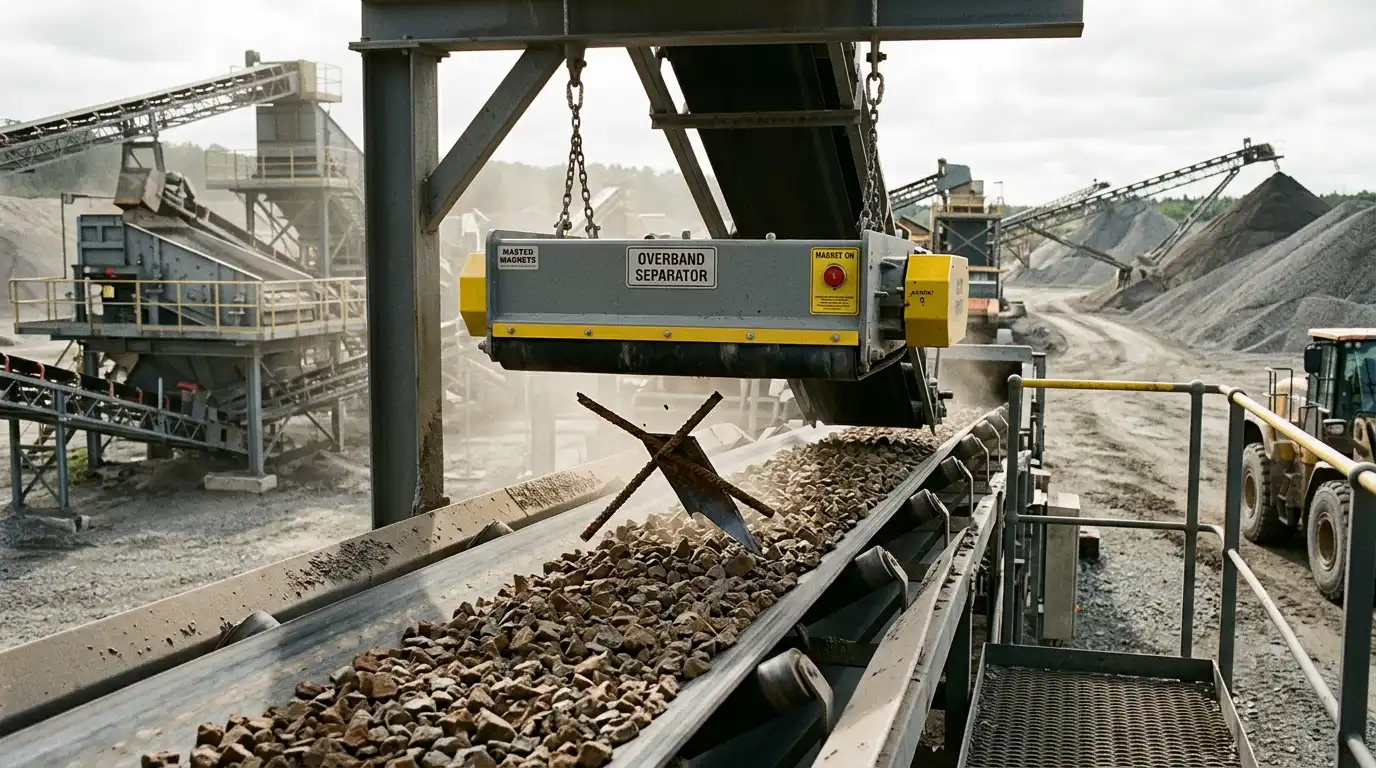
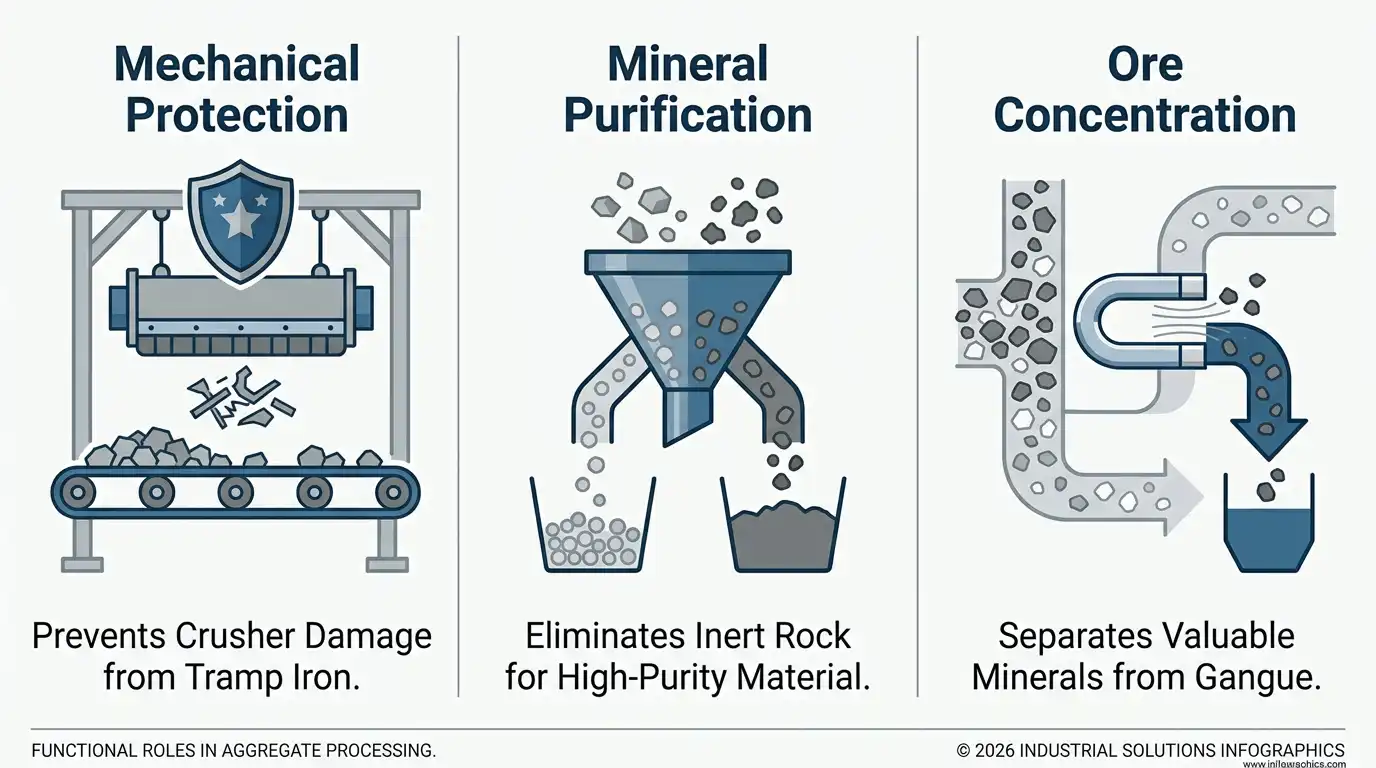
The first track is mechanical protection. A separator intercepts tramp metal, bolts, and worn tooling before this debris reaches a crusher jaw or a mill chamber. The second track is mineral purification. A separator here removes iron-bearing particles from a feed stream to raise product purity.
These two tracks use overlapping hardware for different problems. A quarry running crushed limestone cares about protection. A kaolin processor chasing paper-grade whiteness cares about purification. Iron ore itself adds a third use case: concentrating the magnetic mineral as the product, not removing it as a contaminant.
The Separator Types Behind Both Jobs
An overband separator, also called a suspended magnet, hangs above a conveyor belt. It lifts ferrous debris upward and off to one side. It is the standard choice for protecting a crusher feed line, since it intercepts metal before material drops into the crushing chamber.
A drum separator rotates a magnetized shell inside a non-magnetic drum skin. Material falls across the drum. Magnetic particles cling to the rotating surface longer than non-magnetic particles. This design runs continuously, at higher throughput than a static plate magnet.
A plate or grate separator sits directly in a chute or hopper throat. It traps tramp metal by direct contact as material flows past. It needs manual cleaning on a schedule, since nothing clears captured debris on its own.
A high-intensity wet separator targets a different problem entirely. The research literature calls it WHIMS, short for wet high-intensity magnetic separation. Trade names like SLon label the pulsating high-gradient version.
This equipment concentrates weakly magnetic minerals in a slurry, at far higher field strength than a protective separator. It belongs inside a mineral processing plant, not at a crusher feed point.
Protecting Crushers and Conveyors from Tramp Metal
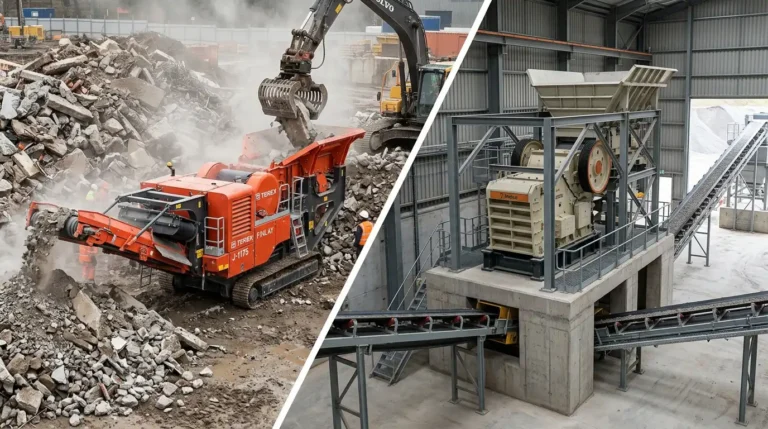
Tramp metal entering a jaw crusher causes two kinds of damage. It chips or cracks the jaw plates directly. It can also jam the crushing chamber hard enough to require a manual clearing operation. Clearing a jammed crusher by hand is one of the more dangerous routine tasks on a quarry site.
A 2007 incident recorded by the New South Wales government’s mine safety regulator shows the risk directly. An assistant superintendent was struck in the head by a steel bar while trying to free a wedged piece of steel from a crusher.
The regulator’s broader incident record spans 1913 through 2007. Moving-plant contact and uncontrolled energy release caused roughly 70 percent of recorded non-coal crusher fatalities at open-cut sites. Clearing a blockage is a recurring factor behind both causes.
An overband magnet placed ahead of the crusher feed removes most tramp metal before it causes either problem. The Saskatchewan Research Council’s processing guidance makes the same point for a different commodity. It recommends an overband magnet remove tramp iron from stockpile material before dense-media separation, protecting the downstream process rather than only the crusher itself.
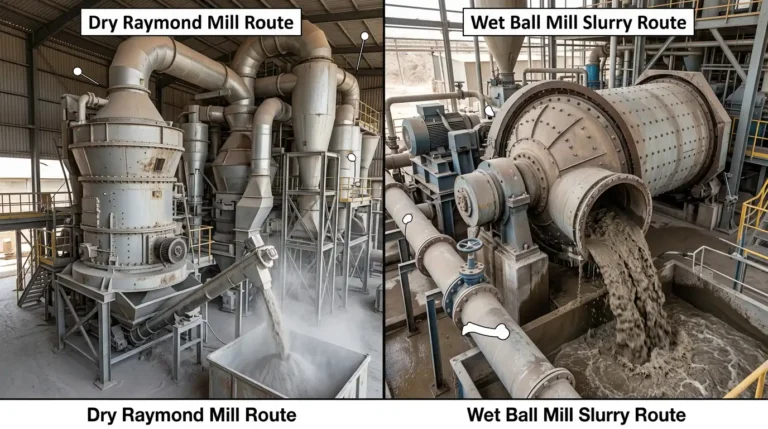
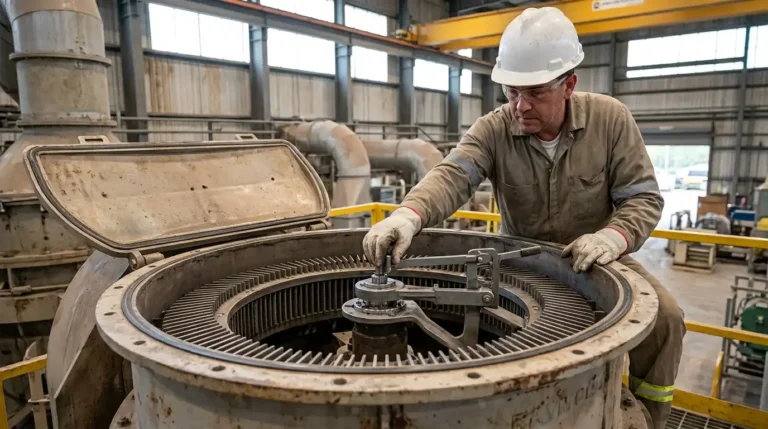
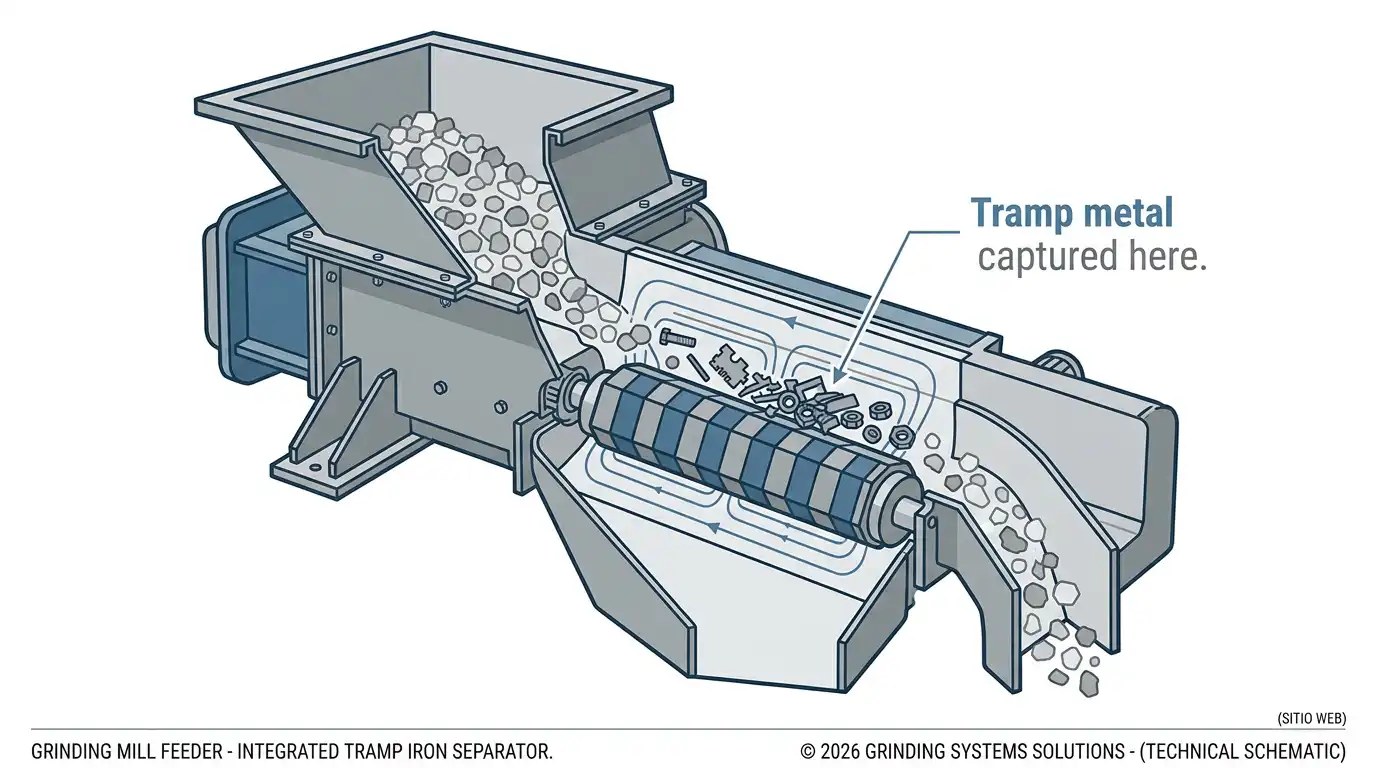
This is also the logic behind building tramp-metal protection directly into a grinding mill’s feed system. A separate upstream separator becomes unnecessary this way. The MGW Intelligent Raymond Mill uses an air-locking feeder with a built-in permanent magnet roller. It removes tramp metal as material enters the mill, not at a separate station upstream.
Removing Iron Impurities to Improve Mineral Purity
Kaolin, feldspar, and quartz are valued for whiteness and low iron content, not for bulk tonnage. Even a small fraction of iron-bearing contamination discolors the finished powder. That discoloration matters directly to paper coating, ceramic glaze, and glass-grade end uses.
A dissertation from Brazil’s Universidade Federal de Minas Gerais compared two high-intensity separator designs used for this kind of purification work. Testing on iron ore tailings from the Quadrilátero Ferrífero region found iron recovery rates of roughly 79 to 93 percent for a pulsating high-gradient design. That design generally outperformed an older wet high-intensity design on the same feed.
The same dissertation found the two designs differ most in uptime, not raw separation power. The pulsating design reached roughly 98 to 99 percent operating availability at several cited industrial sites. The older design uses a matrix prone to clogging, running closer to 78 to 90 percent availability at comparable sites. A separator stopped often for cleaning processes less material over a year, whatever its rated separation performance.
The cost pattern follows similar long-horizon logic. The same research cites implementation costs for magnetic separation running roughly five times higher than a flotation-based alternative. Operating costs run at roughly one-third by comparison. That tradeoff pays back only over a long operating life, which suits a permanent plant rather than a short-term operation.
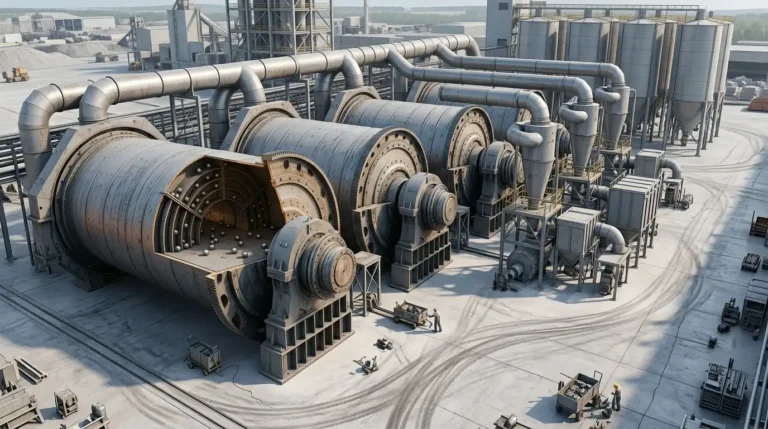
For a mill grinding feldspar or kaolin, this purity consideration applies directly during grinding, not only during a separate upstream step. The MSF Ultrafine Mill grinds kaolin and potash feldspar down to as fine as 3,000 mesh. End uses include paper, paint, and cosmetics, where iron contamination control is part of the product specification.
Field Strength, Magnet Type, and Staged Separation
Industrial permanent separators typically run from a few hundred gauss up to roughly one tesla. The exact figure depends on the design and duty. High-intensity wet separators for fine mineral beneficiation run considerably higher. Cited test fields reach 3,000 to 6,000 gauss, and some industrial units run at 1.0 to 1.7 tesla.
A permanent magnet separator needs no power connection. It keeps working through a power outage, which matters for a crusher feed line that cannot afford downtime. An electromagnet trades that advantage for adjustable field strength. An operator can tune separation intensity for a changing feed without swapping hardware.
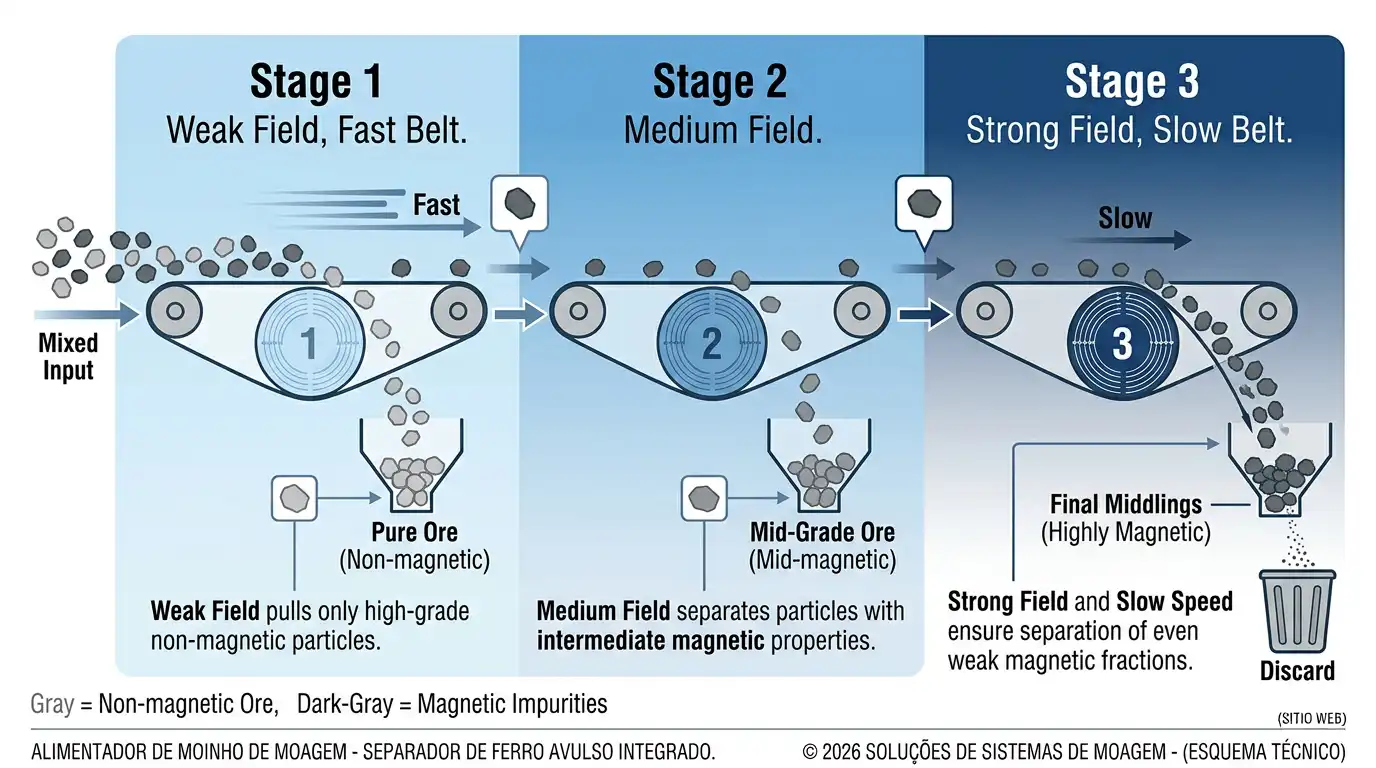
A feed containing both strongly and weakly magnetic particles often needs more than one separator stage. The Saskatchewan Research Council’s guidance describes a tiered approach. A weak field and fast belt speed come first, scalping out strongly magnetic ferrous material.
Progressively stronger fields and slower belt speeds then separate the remaining particles by susceptibility. Running the weak stage first keeps ferrous debris from jamming or prematurely wearing the more sensitive stage downstream.
Why Some Plants Skip the Standalone Separator Entirely
Most published material on magnetic separators compares standalone models. That framing centers the buying decision on which separator to purchase and mount on an existing line. It misses a real alternative available at the equipment-specification stage. A plant designer can choose a crusher or mill with protection built into the feed system from the start.
Building the magnet into the feeder removes a separate purchase, a separate installation, and a separate maintenance point from the plant layout. It also places the magnet at the earliest point in the material path. That point sits ahead of the grinding chamber itself, not on an upstream conveyor run that may not exist in every plant layout.
This approach does not replace a dedicated purification circuit for a kaolin or feldspar operation chasing a strict whiteness specification. That application still needs a standalone high-intensity separator sized to the required purity level. For routine tramp-metal protection on a crushing or grinding line, though, equipment with protection already built in is often the simpler and cheaper path.
Frequently Asked Questions
Does a magnetic separator replace a metal detector on a conveyor line?
No. A magnetic separator removes ferrous metal physically. A metal detector only signals that metal is present, often triggering a belt stop or a diverter gate.
Many plants use both together. The separator handles routine ferrous debris, and the detector catches non-ferrous metal or oversized fragments the magnet cannot lift.
Should I choose a permanent magnet separator or an electromagnet?
A permanent magnet separator needs no electrical supply. It keeps working during a power outage, which suits continuous crusher or conveyor protection. An electromagnet allows adjustable field strength for a feed that changes composition. That flexibility costs a power connection and higher running cost.
Does Mr Crusher Mill manufacture a standalone magnetic separator?
No. Mr Crusher Mill does not sell magnetic separators as a standalone product line. Tramp-metal protection is built directly into the feeder of the MGW Intelligent Raymond Mill. Mineral purity for kaolin and feldspar is addressed through the grinding process of the MSF Ultrafine Mill instead, not through a separate separator product.
Why does a magnetic separator need more than one stage for some materials?
A single field strength cannot cleanly separate strongly magnetic, weakly magnetic, and non-magnetic particles from one feed stream. A staged circuit applies a weak field first to remove strongly magnetic material. Progressively stronger fields then separate the remaining particles by susceptibility, without jamming or wearing out the most sensitive stage.
References & Sources
- Saskatchewan Research Council, Magnetic Separation White Paper
- Universidade Federal de Minas Gerais (UFMG), Escola de Engenharia, “Estudo Comparativo entre os Separadores Magnéticos Jones e o Vertical Pulsante de Alto Gradiente” (specialization monograph)
- NSW Department of Regional NSW, Resources Regulator, MDG-31 — Feeder Breakers and Crusher Fatal Incidents