

Phosphate Rock Powder Production: Raymond Mill vs Wet Ball Mill Route Comparison
What You Will Learn from This Guide
Choosing between a Raymond mill and a wet ball mill for phosphate rock is not a question of which machine grinds better. It comes down to what happens to that ground rock next. This guide walks through both routes, why wet-process phosphoric acid plants overwhelmingly grind wet, and why a dry Raymond mill route still makes sense for other phosphate applications. It serves anyone specifying grinding equipment for a phosphate rock operation. After reading, you will know which question to ask first before picking a mill.
Two Downstream Paths, Two Grinding Routes
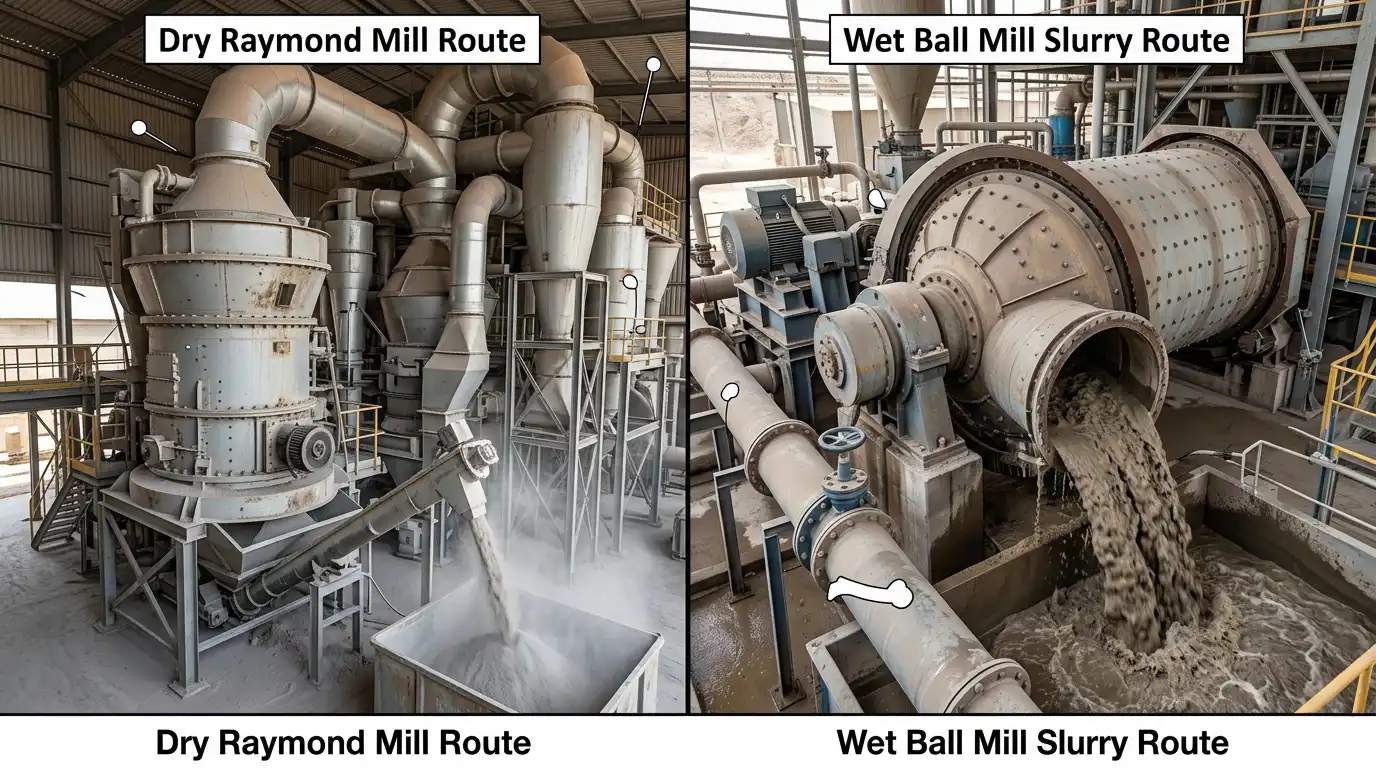
Ground phosphate rock heads toward one of two very different next steps, and that destination is what actually decides the grinding route. Rock feeding a wet-process phosphoric acid reactor needs to end up as a pumpable slurry, since the reaction with sulfuric acid happens in that wet, agitated form.
Rock destined for direct-application fertilizer, or for a thermal process route to elemental phosphorus, needs to end up as a dry, storable powder instead. Those two destinations point toward genuinely different grinding technologies, not just different settings on the same machine.
Why Wet-Process Phosphoric Acid Plants Grind Wet
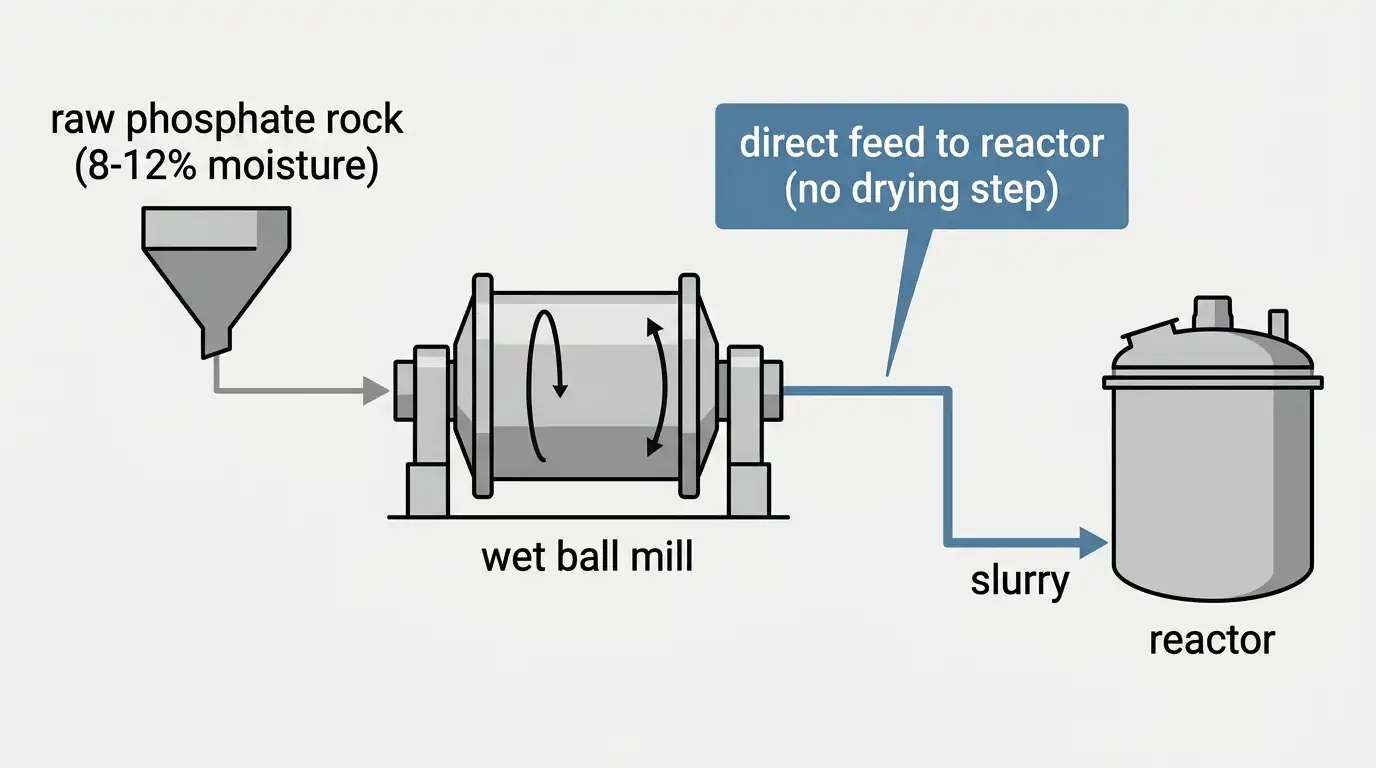
Raw phosphate rock arrives from the mine already carrying real moisture, typically somewhere between 8 and 12 percent water by weight. Wet grinding puts that existing moisture to work rather than fighting it. Grinding directly into a slurry eliminates the separate rock-drying step a dry route would otherwise require.
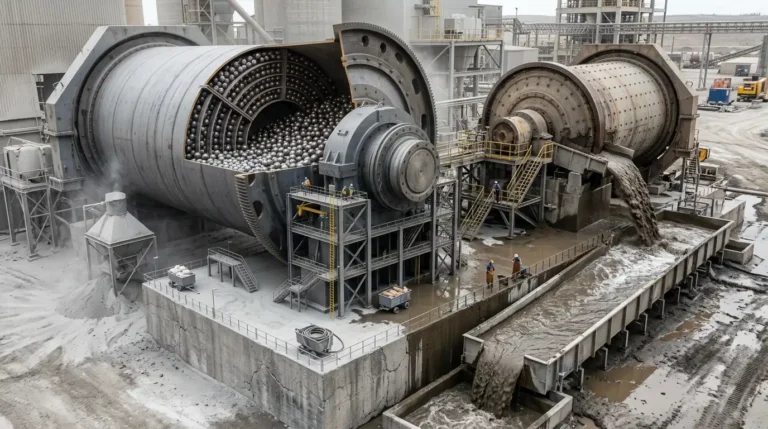
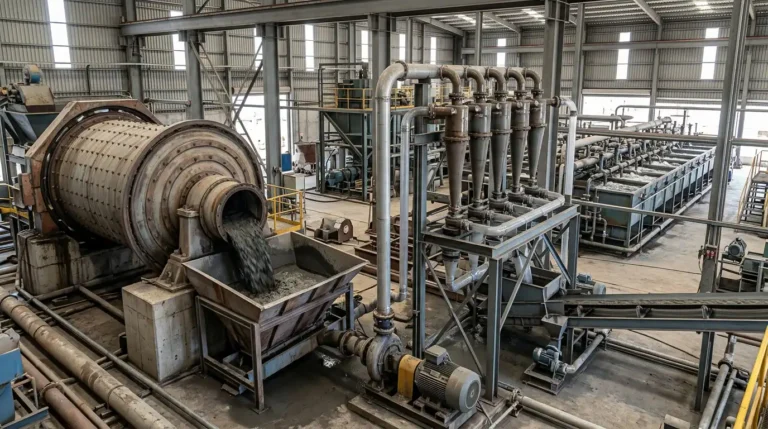
That elimination carries real, documented advantages beyond just skipping one piece of equipment. Wet grinding largely eliminates the dust pollution a dry route generates. The resulting slurry is also easier to convey through piping and easier to meter accurately into the reactor than dry crushed rock would be. The ground slurry can feed straight into the phosphoric acid reactor, matching the wet, agitated form that reaction actually needs.
Fineness Targets for the Wet Route
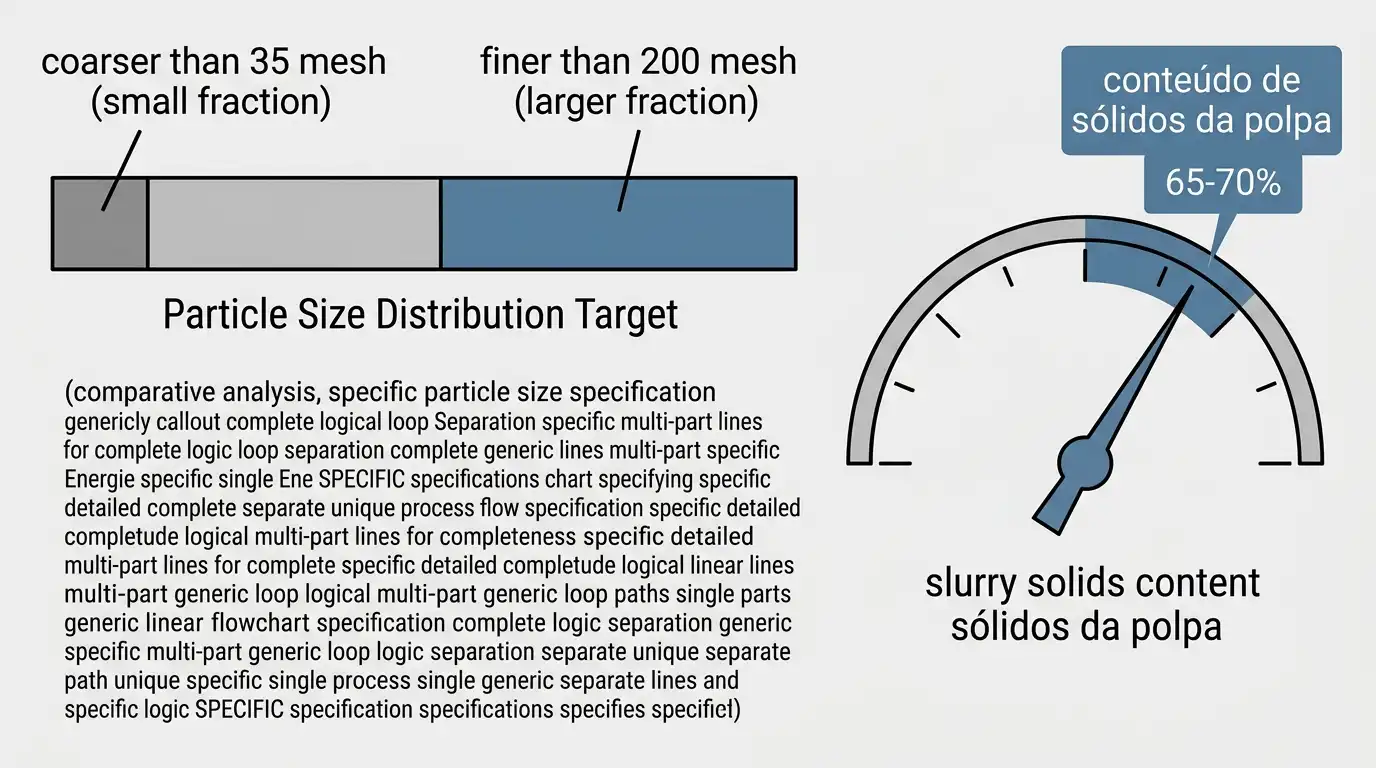
Wet-process phosphoric acid grinding does not chase an extremely fine product. Common targets call for the ground rock to pass a 30 mesh screen. Some operations grind to a finer 50 mesh cut instead, where reactor design calls for it.
More detailed specifications sometimes describe a split target instead of one single cutoff. That target runs a small percentage still coarser than 35 mesh alongside a substantial fraction finer than 200 mesh.
The slurry itself typically runs at a fairly high solids content, often in the range of 65 to 70 percent solids by weight. That concentration keeps the slurry pumpable while still delivering the surface area the acid reaction needs. The actual optimum size distribution depends on the specific reactor design in use, chosen to maximize how completely the rock converts to phosphoric acid.
Why Raymond Mill Still Makes Sense for Dry Powder Product
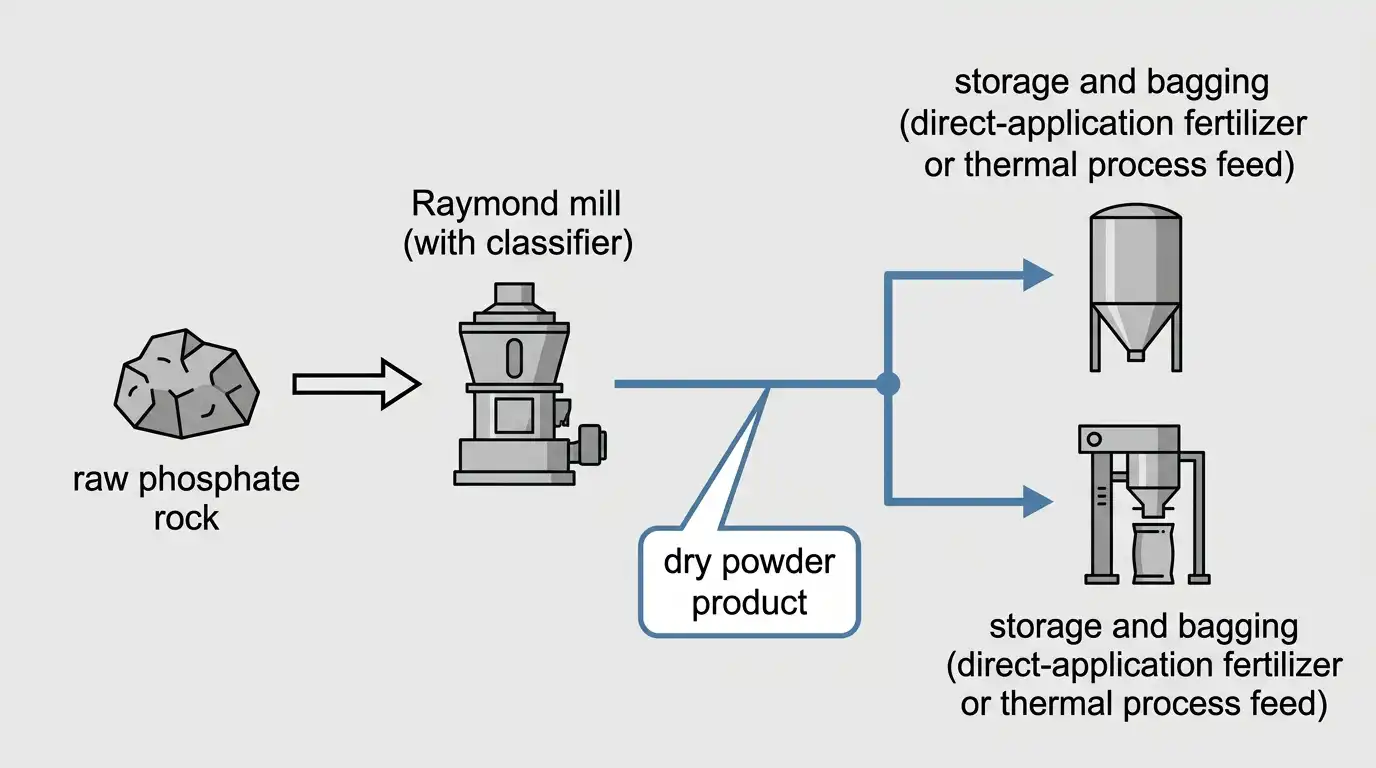
Not every phosphate operation feeds a wet-process acid reactor. Finely ground phosphate rock is itself a real product, sold as a direct-application soil amendment for acidic soils without any chemical processing at all. That product has to leave the plant as a dry, storable, shippable powder, which is exactly what a Raymond mill delivers.
A thermal process route to elemental phosphorus runs through an electric furnace rather than acid digestion. It similarly wants dry, properly sized feed rather than a slurry. In both cases, the dry Raymond mill route matches what actually happens to the material next. That is the same logic that makes wet grinding the right call for an acid plant, just pointing the opposite direction.
The Clay Content Problem
Not all phosphate rock behaves the same way in a dry mill, and clay content is the real swing factor. Sedimentary phosphate deposits, a major share of global production, often carry significant natural clay alongside the phosphate mineral itself.
That clay content can cause real sticking and buildup problems inside a dry, air-swept grinding system. It is the same kind of buildup that alters separator blade performance and disrupts classification over time. Wet grinding sidesteps this problem entirely, since the clay simply stays suspended in the slurry instead of caking onto dry equipment surfaces. This is a genuine, material-driven reason wet grinding dominates in phosphate regions with clay-rich ore, separate from whatever the downstream process happens to need.
Matching the Route to the Plant, Not Just the Rock
Choosing between these two routes ultimately depends on two questions together, not either one alone. What does the downstream process actually need, a slurry or a dry powder? And how much clay or natural moisture does the specific rock carry, since that affects how cleanly a dry route can actually run?
A wet-process phosphoric acid plant grinding clay-rich rock has both factors pointing the same direction, strongly favoring wet ball milling. A direct-application fertilizer producer working relatively clean, low-clay rock has both factors favoring dry Raymond milling instead. Real operations do not always line up this cleanly. That is exactly why the downstream destination has to be the starting question, not the rock alone.
Frequently Asked Questions
Why do most wet-process phosphoric acid plants grind phosphate rock wet instead of dry?
Raw phosphate rock already arrives from the mine carrying roughly 8 to 12 percent moisture. Wet grinding uses that moisture instead of removing it in a separate drying step. Wet grinding also largely eliminates dust pollution. The resulting slurry is also easier to convey and meter into the reactor than dry crushed rock would be.
What fineness does wet-process phosphoric acid production typically target?
Common targets call for ground rock to pass a 30 mesh screen. Some operations grind to a finer 50 mesh cut instead, depending on reactor design. The slurry itself typically runs at 65 to 70 percent solids by weight. That concentration stays pumpable while still exposing enough surface area for the acid reaction.
When does a Raymond mill still make sense for phosphate rock instead of wet grinding?
A Raymond mill fits when the ground rock needs to leave the plant as a dry, storable powder rather than feed a wet reactor. Direct-application rock phosphate fertilizer and thermal-process feed for elemental phosphorus production are both real products that need dry powder, not a slurry.
Why does clay content in phosphate rock affect the choice between wet and dry grinding?
Clay-rich phosphate rock, common in sedimentary deposits, tends to stick and build up inside dry, air-swept grinding equipment, disrupting classification over time. Wet grinding avoids this entirely, since the clay stays suspended in the slurry instead of caking onto dry equipment surfaces. That is a major reason wet grinding dominates in clay-rich phosphate regions regardless of the downstream process.
References and Sources
- U.S. Patent 4,485,077 — Method for Conducting Wet Grinding of Phosphate Rock in a Phosphoric Acid Production Plant
- U.S. Patent 5,183,211 — Chemical Aids for Wet-Grinding Phosphate Rock
- U.S. Environmental Protection Agency — AP-42 Chapter 11.21: Phosphate Rock Processing
- BC Insight / CRU Group — Phosphate and Potash Grinding Equipment