

Open Circuit vs Closed Circuit in Crushing and Grinding: How the Flows Differ
What You Will Learn from This Guide
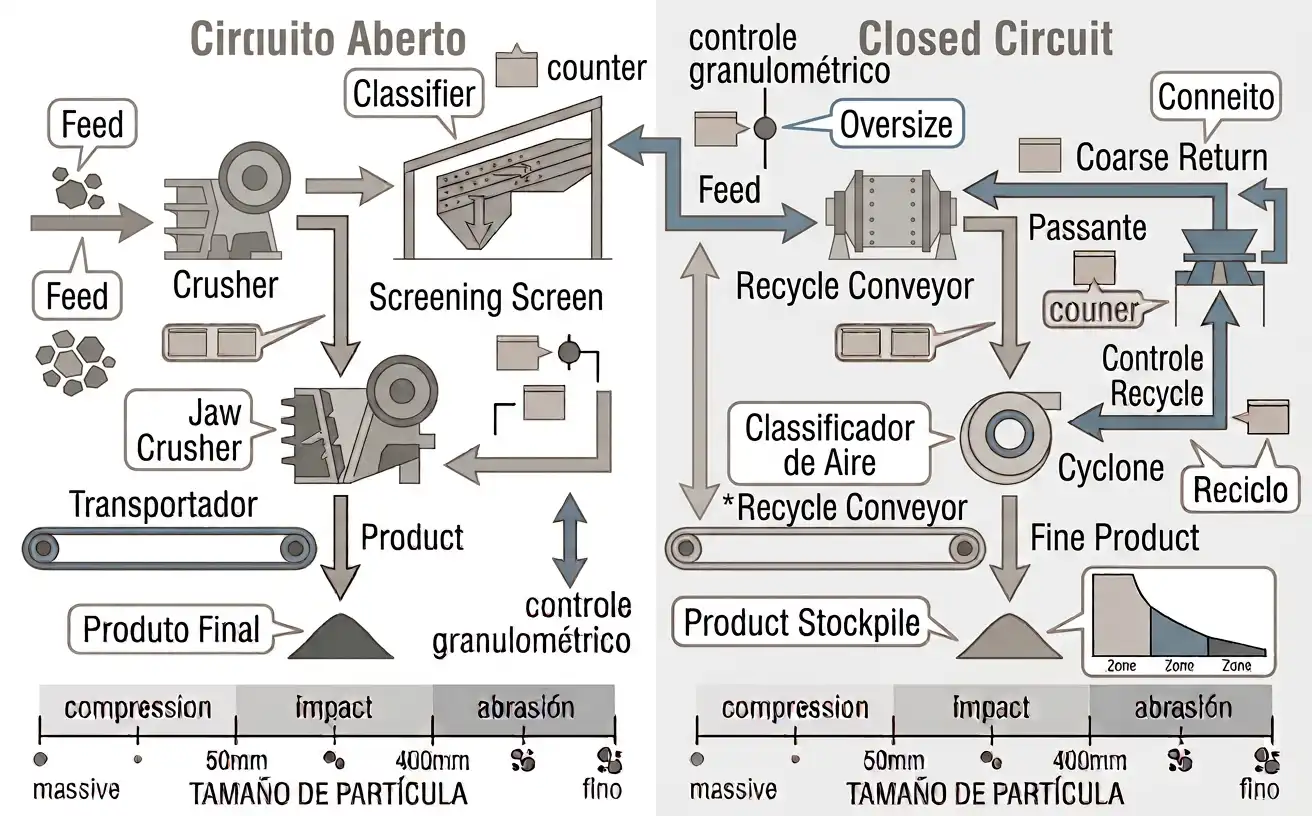
An open circuit passes material through a size-reduction stage without controlled recycle. A closed circuit uses size separation and recycle to control the product. This guide explains how both layouts work in crushing and grinding. It also explains how screens and classifiers close the loop. Circuit choice changes product control, load, equipment count, and operating behavior. It is intended for engineers, plant designers, procurement managers, and operators comparing flowsheets. It provides a practical basis for matching circuit design to product size and process duty.
What Is an Open Circuit and What Is a Closed Circuit?
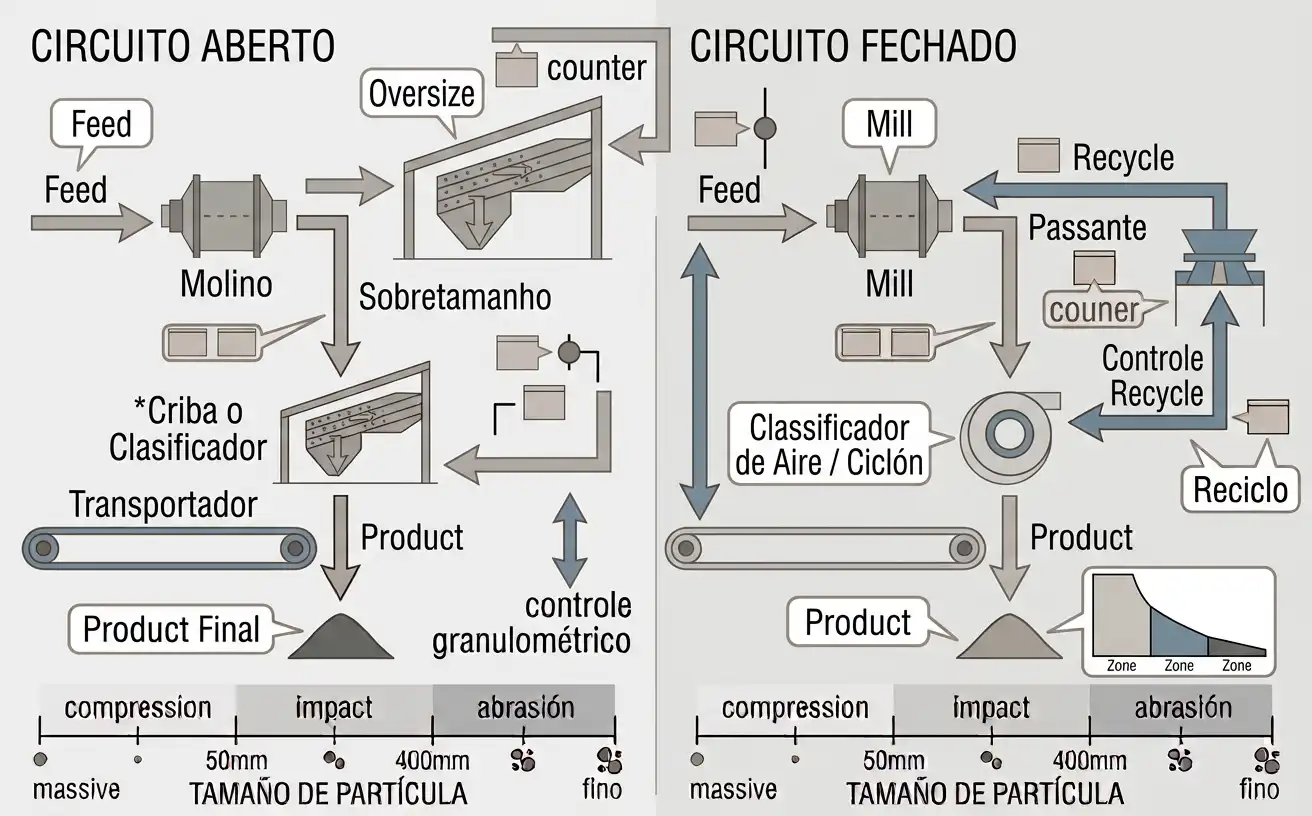
An open circuit has no controlled recycle of coarse material back to the same size-reduction stage. Material enters the machine, is reduced in size, and moves to the next operation or product stream. The circuit is therefore simple from a material-flow perspective.
A closed circuit adds a separation step after size reduction. Material is screened or classified, the acceptable fraction leaves as product, and the coarse fraction returns for another pass. The loop ends only when the material meets the selected size criterion.
For background on equipment families used in these flows, see the mining grinding mill types overview and the jaw crusher types guide.
Open-Circuit Flow: Where Simplicity Matters
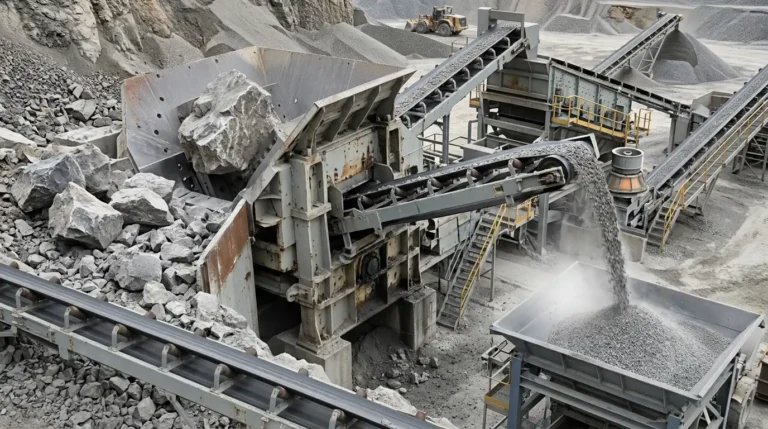
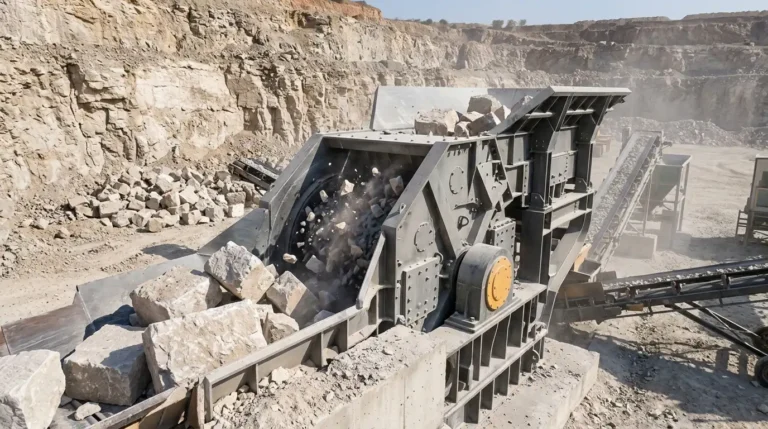
Open-circuit crushing or grinding is built around one directional material flow. A primary jaw crusher often works this way because its main duty is to prepare feed for the next stage rather than produce the final controlled size. The same logic can be used in grinding when a broad or relatively coarse product is acceptable.
The main advantage is a smaller equipment loop. There is no dedicated recycle stream and no size-separation device whose result controls the feed back to the machine. This can reduce capital equipment, simplify layout, and make material flow easier to understand.
The trade-off is weaker product-size control. Fine particles can leave early while coarse particles also leave, so the final size distribution can be wider. When the downstream process requires a strict top size or a narrow range, that limitation becomes more important.
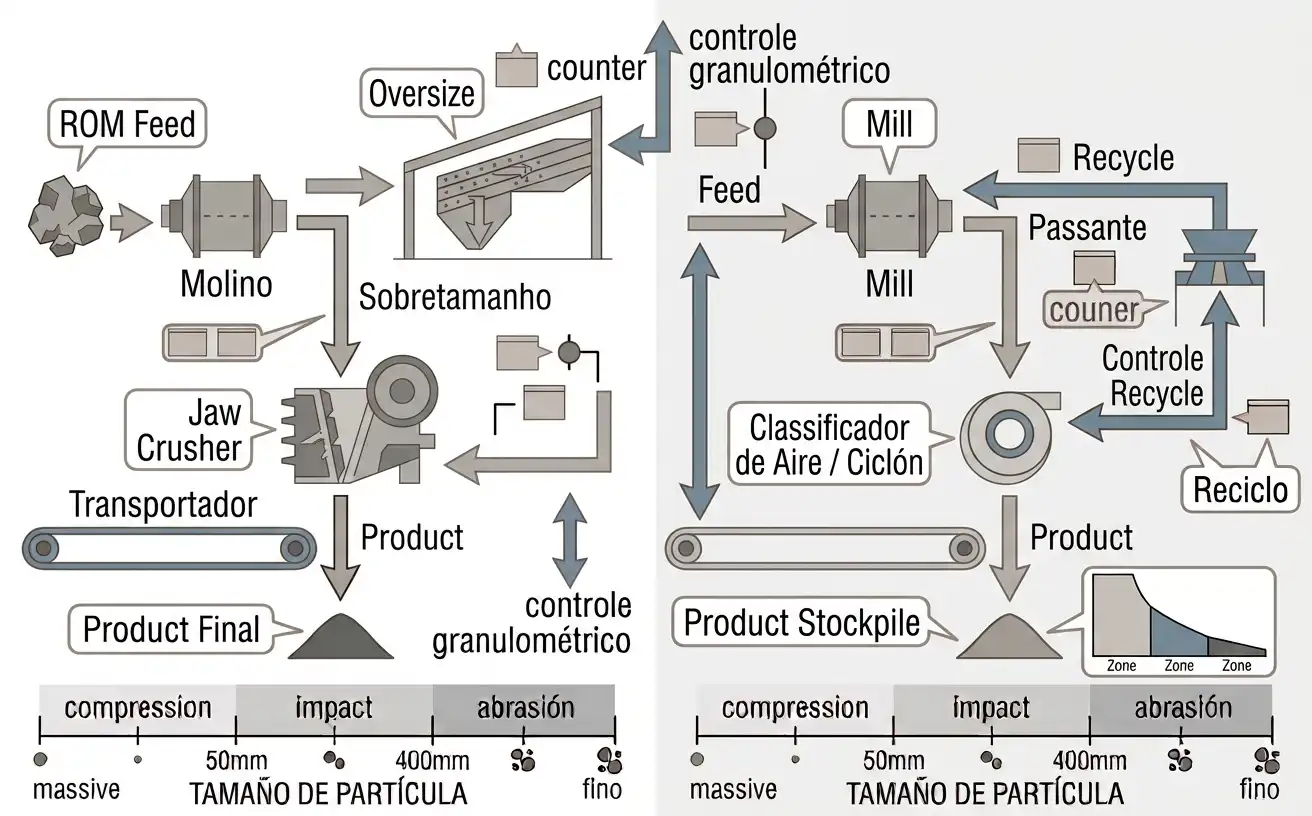
A practical reference is the C Jaw Crusher guide, which explains a primary crushing role rather than final-size classification.
Closed-Circuit Flow: Why the Recycle Stream Changes Control
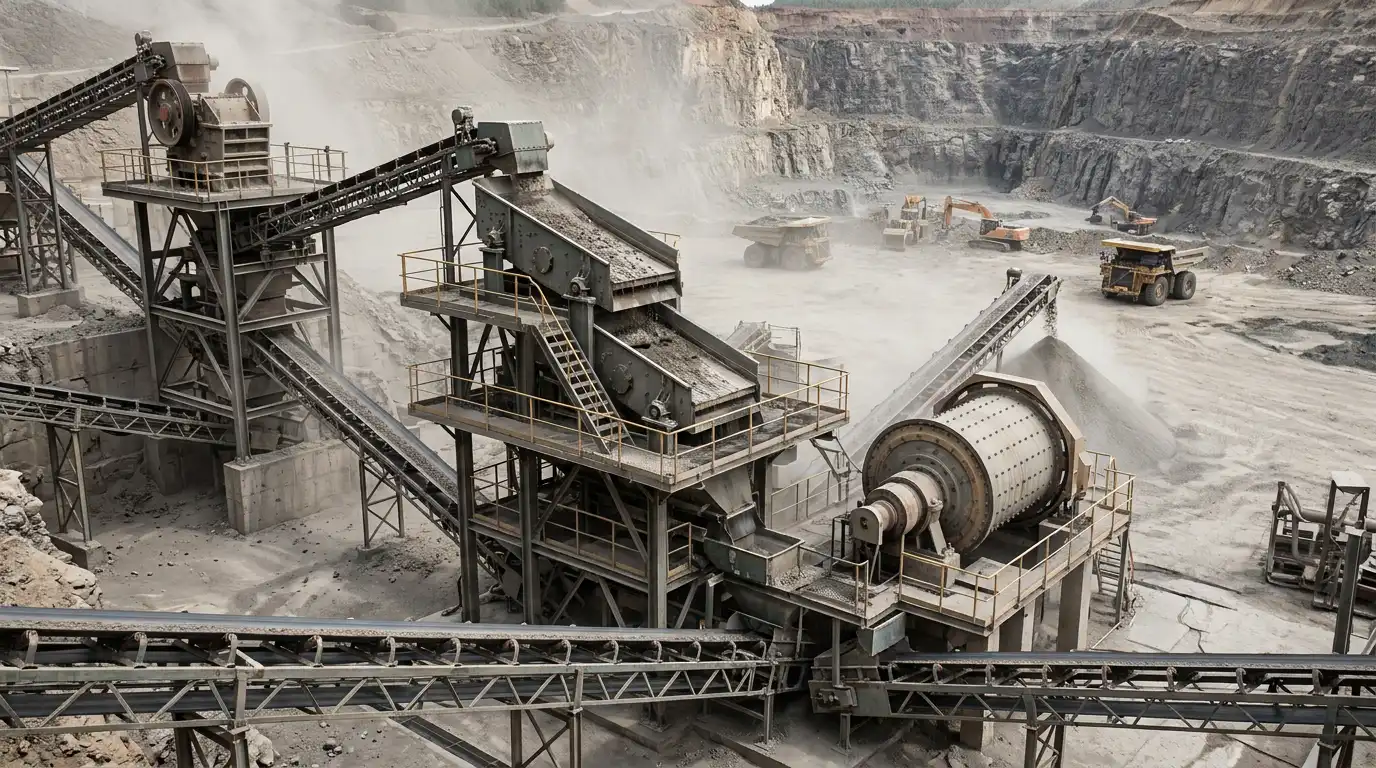
Closed-circuit operation introduces a feedback loop. After crushing, a vibrating screen can separate material by size, while after fine grinding a classifier can perform the same control function for powder. The undersize or qualified fraction moves forward, while the coarse fraction returns to the reduction stage.
This arrangement changes the machine duty. The crusher or mill does not need to make every particle meet the final target in one pass. Instead, it works against a stream that contains a controlled mixture of fresh feed and recirculated coarse material.
The benefit is tighter product control. Coarse particles are given another opportunity for reduction, while finished fines are removed from the loop. The cost is a more complex material-handling system and a circulating load that must be considered in equipment sizing and operation.
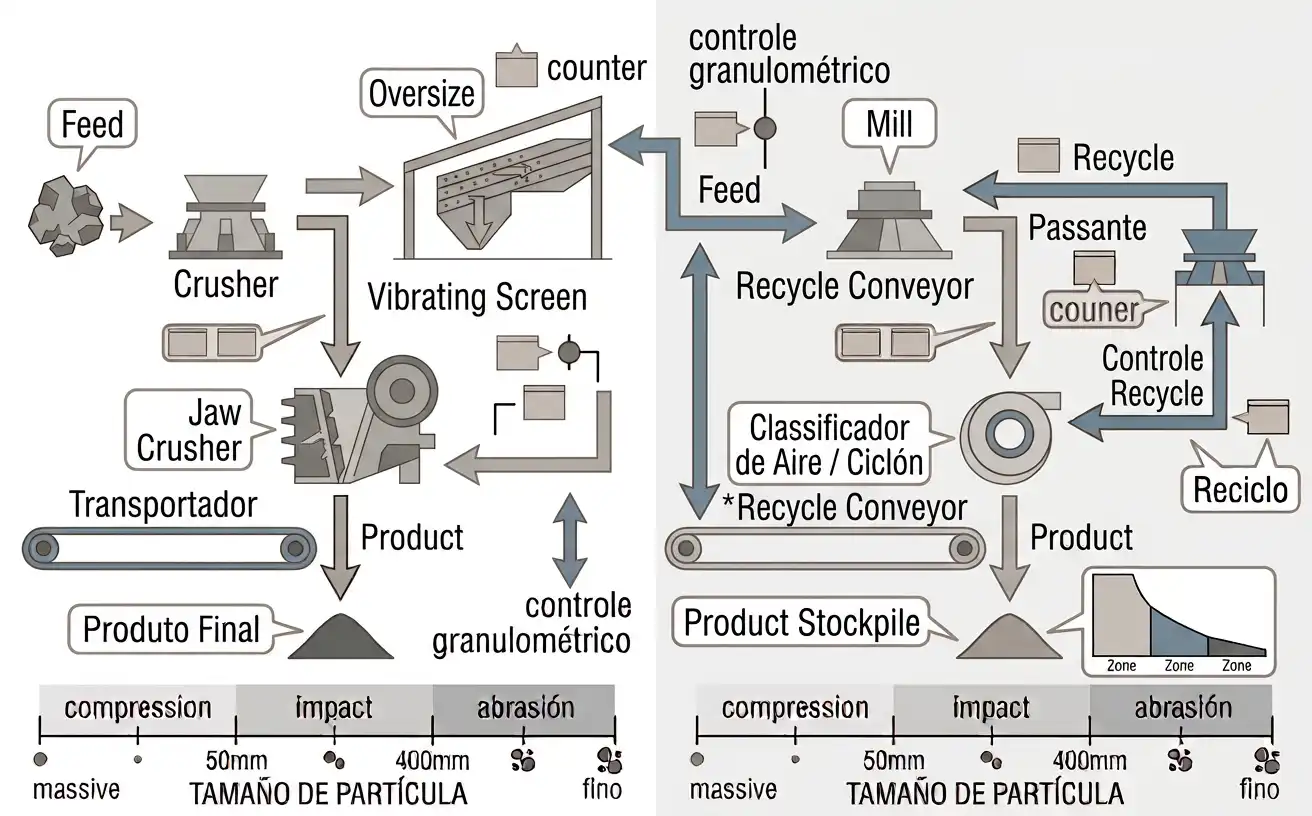
The same principle appears in the site’s jaw crusher commissioning procedure and cone crusher operating procedures, where feed, discharge, and operating conditions are treated as a connected process.
Open vs Closed Circuit: Key Engineering Differences
The circuit decision should be based on the required product and the role of the reduction stage. A circuit can be correct for one stage and unsuitable for another. Primary crushing may favor a simple one-way flow, while secondary or tertiary stages often need stricter size control.
Table 1 — Open-circuit and closed-circuit comparison
| Factor | Open Circuit | Closed Circuit |
|---|---|---|
| Material flow | One pass through the reduction stage | Qualified product exits; coarse fraction returns |
| Size control | Broader distribution is common | Tighter control is possible |
| Separation equipment | Not required for recycle control | Screen or classifier is required for the loop |
| Circulating load | No recycle load from the same stage | Recycle load must be managed |
| Layout | Simpler | More equipment and conveyors |
| Control demand | Lower | Higher |
| Typical role | Primary reduction or coarse product | Secondary, tertiary, or fine-size control |
| Main risk | Coarse material may pass forward | High recycle can overload the circuit if poorly controlled |
Source note: comparison synthesized from process literature and the first-party equipment architecture supplied for this project; values are qualitative because open/closed performance depends on material and duty.
The most important decision variable is not whether a circuit looks simple. It is whether the downstream process can accept the resulting size distribution. A closed loop adds equipment, but that added separation step is what makes controlled top size or fine product possible.
See the impact crusher types guide for examples of crusher stages where discharge control becomes a major part of circuit design.
Open and Closed Circuits in Grinding
Grinding shows the distinction even more clearly because the target particle size is often much finer. In an open grinding circuit, the mill discharges material without a classifier-controlled return stream. The resulting product can contain both adequately ground particles and material that still needs additional size reduction.
In a closed grinding circuit, the mill product goes to a classifier or hydrocyclone. Fine material leaves the circuit, while coarse material returns to the mill. The classifier therefore acts as the gate that defines which particles have completed the grinding duty.
The choice is not simply about energy consumption. Closed grinding introduces circulating load and depends on effective size separation. Poor classification can send too much coarse material back, while poor cut-point control can change the product size and mill load.
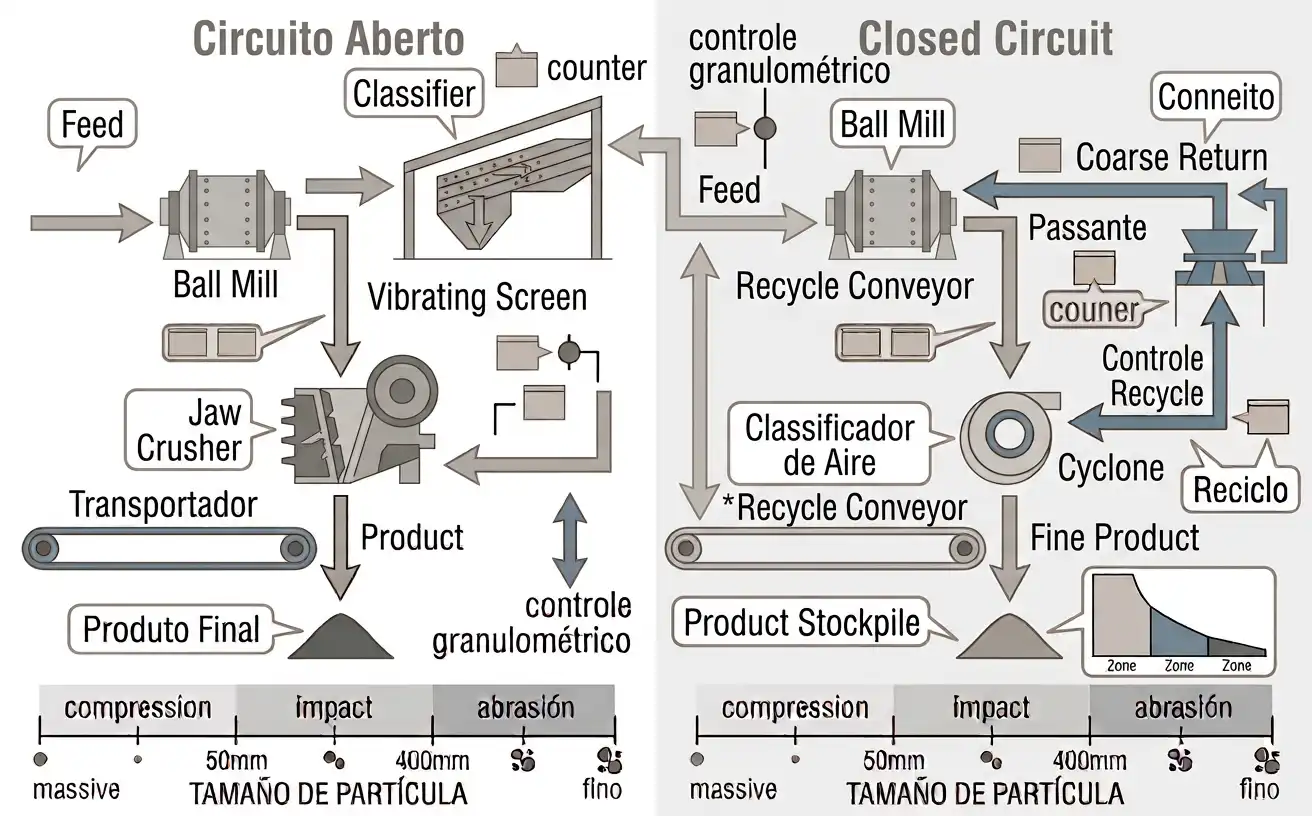
The site’s ball mill operation guide and wet vs dry ball mill comparison provide related process context. The MQ Ball Mill data supplied for this project also confirms both dry and wet configurations.
How Screens and Classifiers Close the Circuit
The separation device is the control point of a closed circuit. In coarse crushing, the screen decides which particles are small enough to continue. In fine grinding, a classifier or hydrocyclone performs a similar task at a finer scale.
The important distinction is that separation does not reduce particle size by itself. It controls where each size fraction goes next. That makes screen efficiency, classifier cut point, feed condition, and recycle rate part of the overall reduction process.
For fine powder systems, the separator can be built into the mill system. The MSF Ultrafine Mill supplied in the project data, for example, uses a classifier that returns coarse powder while qualified powder continues to collection. Its system description also includes a hammer crusher for pre-crushing. This is a direct example of a closed reduction flow in which crushing and grinding perform different duties within one plant.
For additional grinding-system context, see the Raymond mill system composition guide and complete grinding media guide.
How to Choose the Right Circuit for a Plant
Circuit selection should start with the product specification, not the machine catalogue. The target top size, acceptable size distribution, feed variability, downstream sensitivity, and required throughput define the process problem first.
Open circuit is a logical option when the product can tolerate a wider size distribution, the duty is mainly coarse reduction, or layout simplicity has priority. Closed circuit becomes more useful when a maximum product size matters or when fine grinding requires controlled particle classification.
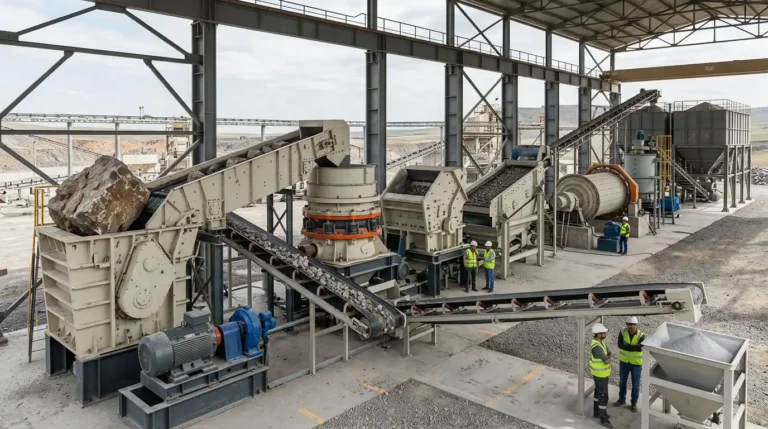
A hybrid plant is also possible. A primary crusher can operate in open circuit while later crushing or grinding stages operate in closed circuit. This is a common design logic because the duties of the stages are different.
No internal factory test data for open-versus-closed circuit performance was provided in the project source files. The selection guidance in this article is therefore process-level engineering synthesis, not a proprietary benchmark.
Practical Design Checks Before Procurement
Before selecting equipment for either circuit, the process design should define the following items:
- Feed top size and feed-size distribution.
- Target product top size and acceptable particle-size distribution.
- Material hardness, abrasiveness, moisture, and temperature.
- Required capacity at the actual duty point.
- Expected circulating load for a closed circuit.
- Screen or classifier cut point and separation efficiency.
- Space for conveyors, chutes, access, and maintenance.
- Control logic for feeders, crushers, mills, screens, and collectors.
A circuit with the right machine but the wrong balance can perform poorly. In procurement, the process duty should therefore be specified before the final equipment model is selected.
For related selection work, use the mining grinding mill types overview and ball mill dimensions and size selection guide.
Frequently Asked Questions
What is the main difference between an open circuit and a closed circuit?
An open circuit sends material forward without controlled recycle to the same reduction stage. A closed circuit separates the product by size and returns the oversize fraction for additional reduction. The main practical difference is product-size control.
Is closed-circuit crushing always better than open-circuit crushing?
No. Closed-circuit crushing gives stronger size control, but it requires a screen, recycle path, and additional control. Open-circuit crushing can be appropriate when the stage is primarily coarse reduction or when the next process can accept a broader size distribution.
Why is a classifier used in closed-circuit grinding?
A classifier separates particles by size after grinding. Fine particles can leave as product, while coarse particles are returned to the mill. This keeps the grinding stage focused on material that still needs size reduction.
Does closed-circuit grinding reduce overgrinding?
Removing fine particles from the grinding loop can limit their repeated exposure to grinding forces. The actual result depends on the cut point, separator performance, feed characteristics, and mill operating conditions.
Can one plant use both open and closed circuits?
Yes. Different stages can use different circuit configurations. The mining grinding mill types overview gives related process context. A plant may use open-circuit primary crushing and closed-circuit secondary crushing or grinding when tighter product control is required downstream.