

Mining Grinding Mill Types Overview: Where the Raymond Mill Fits In
What You Will Learn from This Guide
Mining grinding mills fall into a few mechanism families: tumbling mills, ring-roller mills like the Raymond mill, air-classified impact mills, and bed-compression mills. Each occupies a different position on the fineness ladder and suits different feed materials. This guide surveys that landscape and places the Raymond mill within it specifically. It serves an engineer or buyer narrowing a grinding-mill category, and after reading, you will know whether a Raymond mill fits your material and fineness target.
Overview
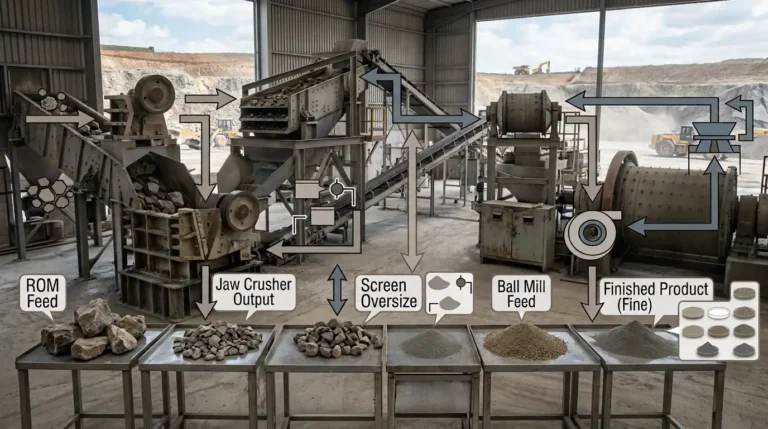
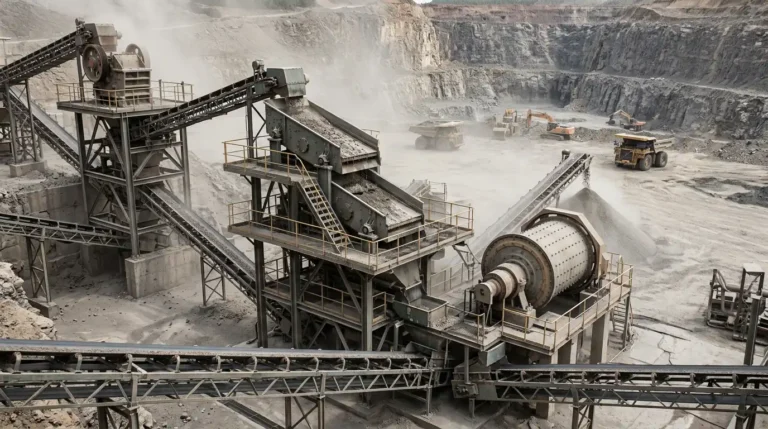
A crushing circuit reduces rock to a manageable size. A grinding mill takes that reduced feed and turns it into powder, at a fineness a crusher cannot reach. The mill families differ mainly in mechanism. Some tumble media against material. Some compress material between a ring and rollers. Some rely on internal air classification. Some compress a particle bed directly.
The Raymond mill belongs to the ring-roller family. It is not a universal grinding solution. It does not compete with every other mill type for the same job. Its position in the landscape comes down to two things: the fineness range it reaches efficiently, and the feed material it can process without excessive wear.
The Mill Landscape by Mechanism
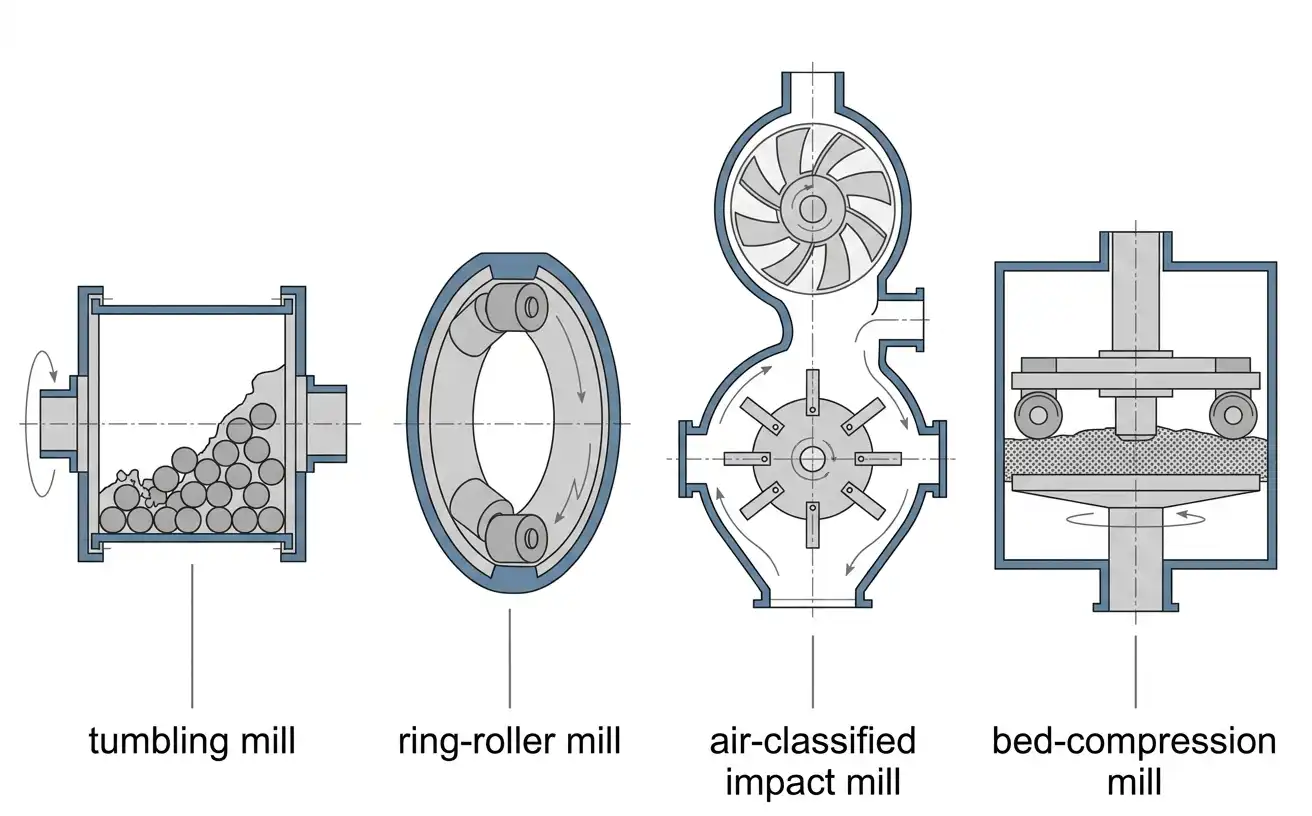
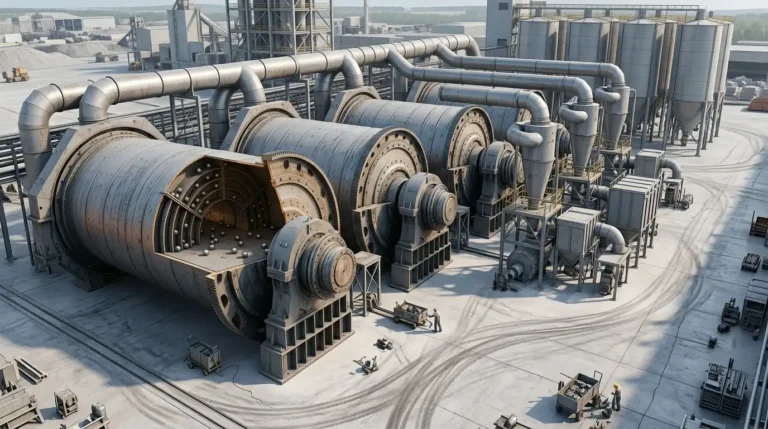
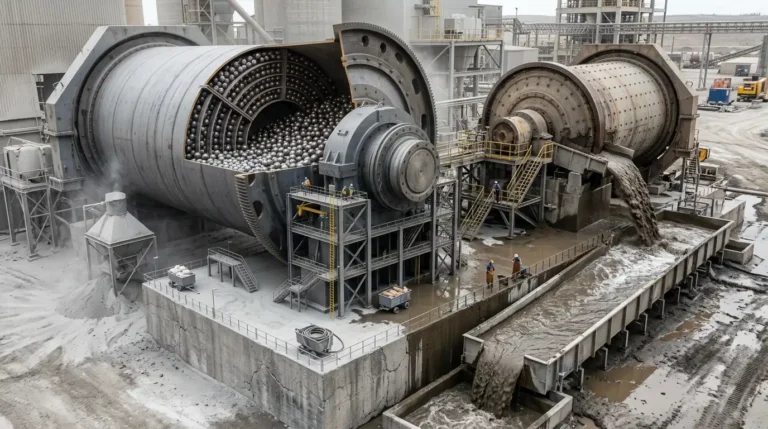
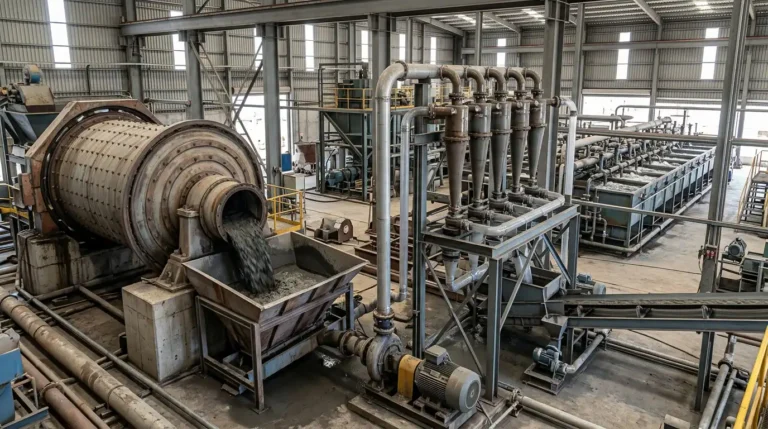
Tumbling mills reduce particle size through impact and attrition. Steel or ceramic media, or sometimes the ore itself, lifts and falls inside a rotating shell. Ball mills, rod mills, and SAG mills all belong to this family. They can generally run wet or dry.
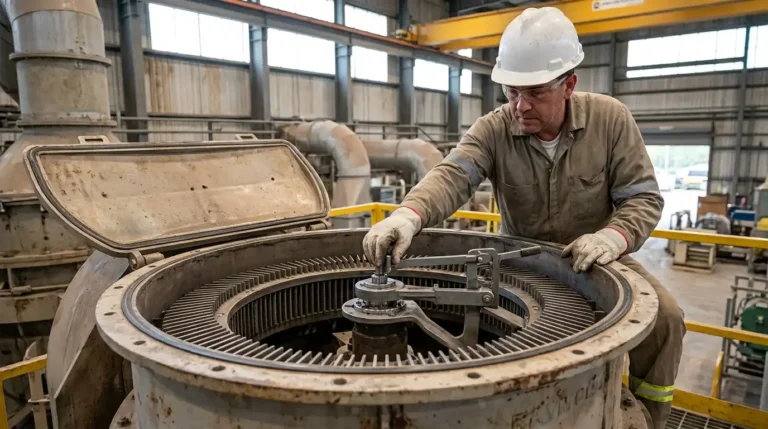
Ring-roller mills compress material between a stationary ring and rollers that swing outward under centrifugal force. The Raymond mill is the best-known example. This mechanism runs dry only. It applies force more directly than a tumbling mill, which generally lowers energy use per tonne processed.
Air-classified impact mills combine an impact-grinding stage with an internal classifier. The classifier continuously separates finished particles from those needing further reduction. This closed-loop design lets an ultrafine mill hold a consistent output well below what a tumbling or ring-roller mill can reach efficiently.
Bed-compression mills, including vertical roller mills, apply force across a bed of particles between rollers and a rotating table. This mechanism generally uses less energy per tonne than tumbling mills. The equipment costs more, though, and needs a more consistent feed to run efficiently.
The Fineness Ladder
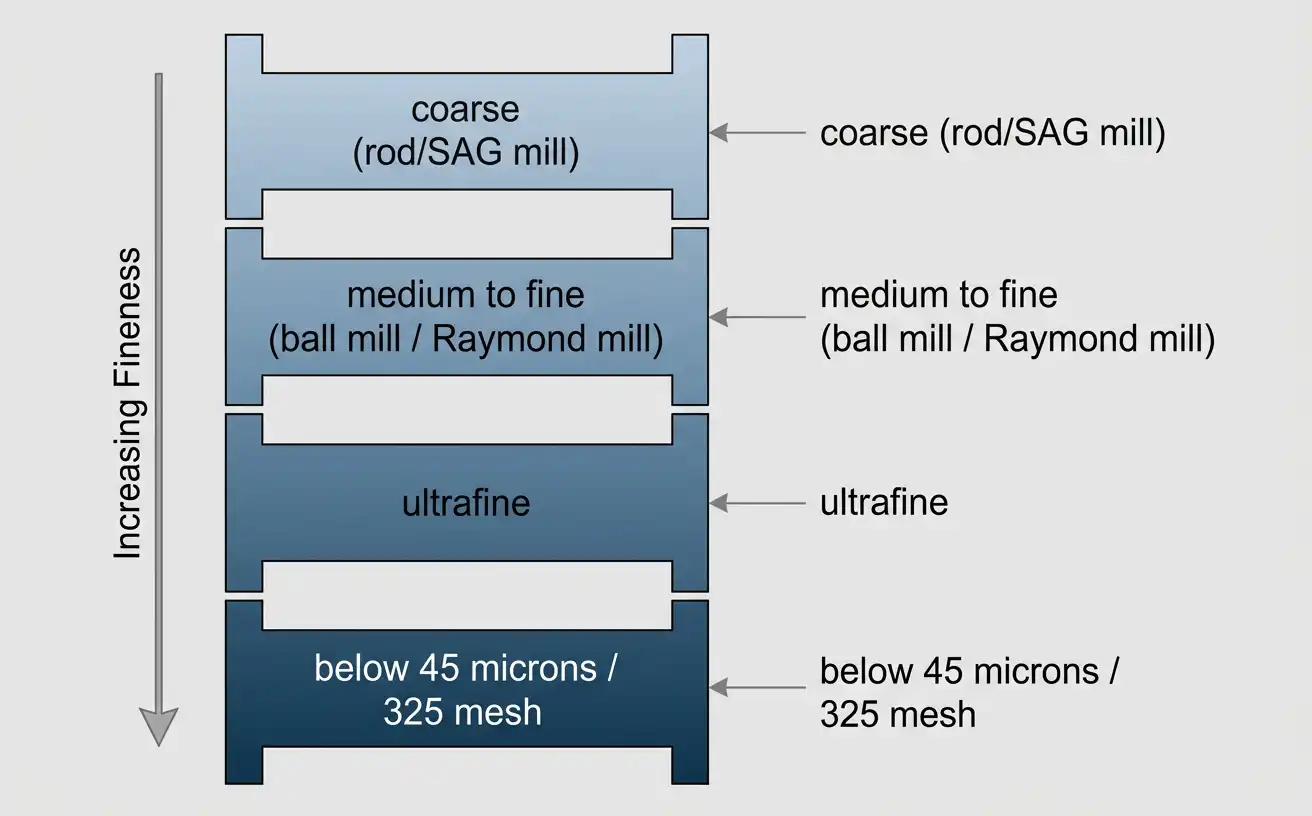
Fineness target is the single variable that narrows mill selection fastest. Coarse, primary-stage grinding uses rod mills or SAG mills. These prepare feed rather than produce finished powder. Medium-to-fine grinding, roughly 45 to 150 microns, is where ball mills and Raymond mills both operate, though for different feed types.
Below about 45 microns, or 325 mesh under the ASTM E11 sieve designation, an air-classified ultrafine mill generally outperforms both. A complete comparison of the horizontal ball mill against other grinding mills covers this fineness boundary in full detail, including side-by-side specification tables.
Where the Raymond Mill Fits
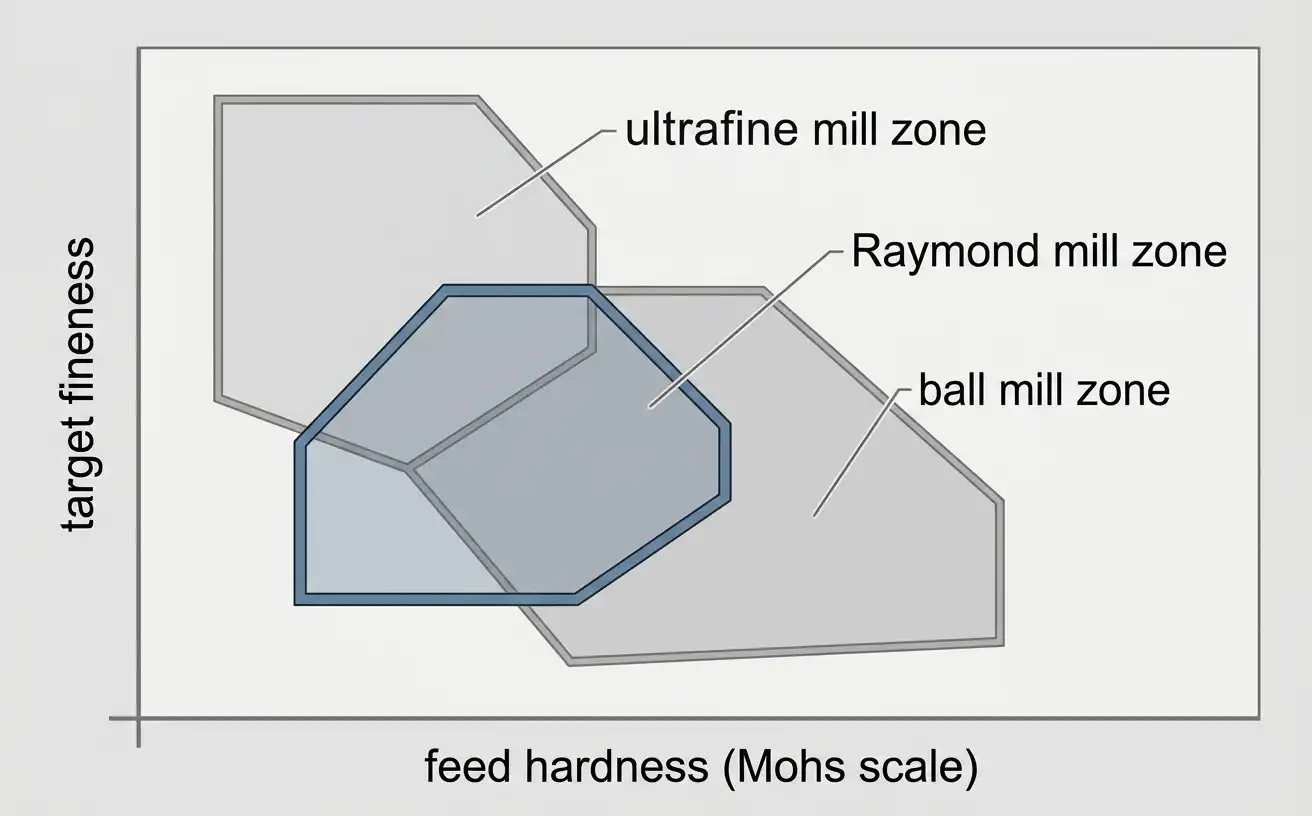
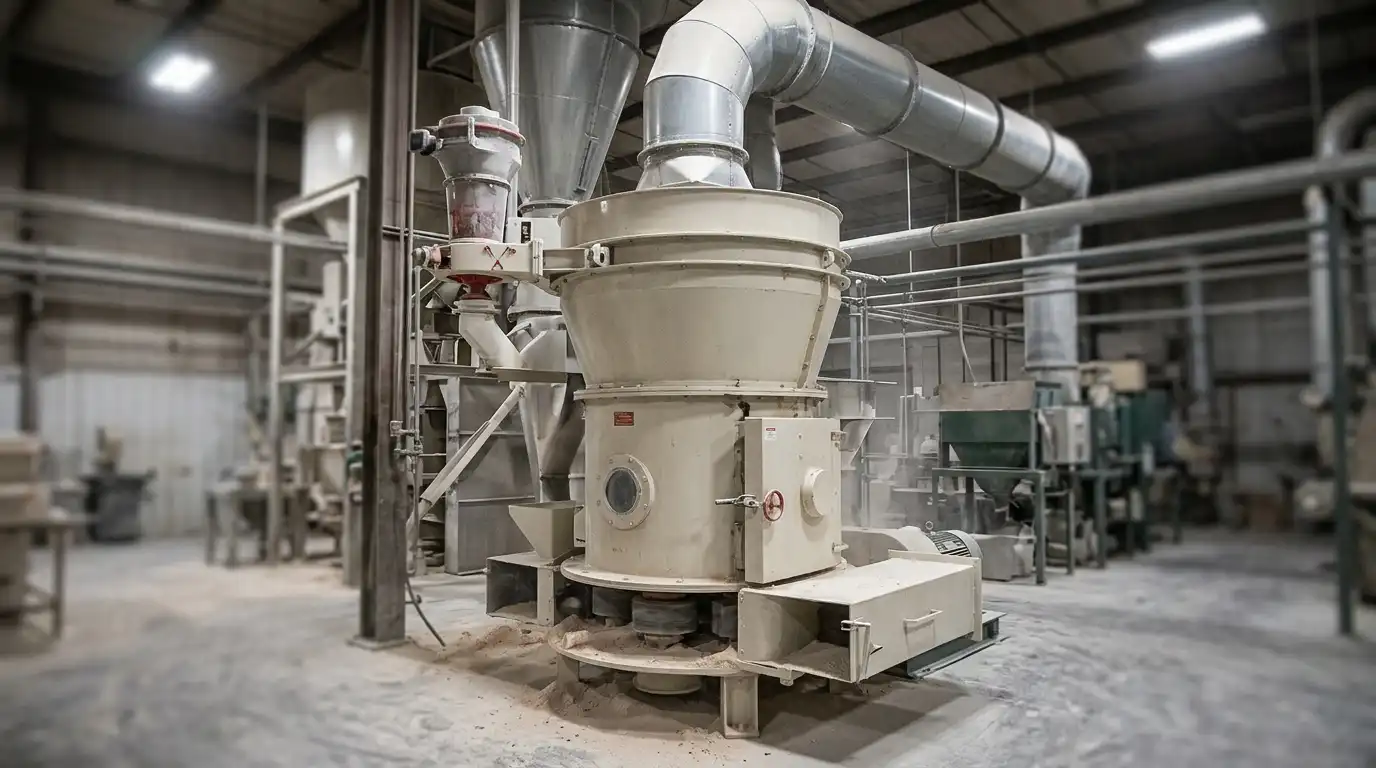
A MGW Intelligent Raymond Mill fits a specific, well-defined slot in the landscape. It handles non-metallic minerals with Mohs hardness up to about 7, such as limestone, barite, calcite, and dolomite. It needs feed moisture below roughly 6 percent. Excess moisture causes ring and roller blockage, unlike a wet ball mill circuit, which tolerates moisture by design.
Within that material window, a Raymond mill typically reaches 100 to 325 mesh, roughly 150 to 45 microns. It does so at lower installed power per tonne than a ball mill over the same range. This efficiency is the main reason it remains standard equipment for dry non-metallic mineral powder production.
The boundary works the other way too. Metallic ores, feed above roughly Mohs 7, and any wet-process application fall outside the Raymond mill’s practical range. These cases return the decision to a ball mill or a different mill family entirely.
Quick Selection Path
Three questions place most applications into the correct mill family. Is the feed a metallic ore, or does the process need a wet circuit? If yes, start with a ball mill.
Is the feed a dry, non-metallic mineral of moderate hardness, with a target fineness in the 100 to 325 mesh range? If yes, a Raymond mill is usually the more energy-efficient choice.
Does the application need output finer than 325 mesh, or a very narrow particle size distribution? If yes, an ultrafine mill is generally the better fit. It sometimes runs in sequence after a coarser first stage.
Applications by Industry and Material
Raymond mills serve industrial mineral processing directly: barite and calcium oxide powder production, alumina and bentonite grinding, and fertilizer carrier material. A 12 t/h Raymond mill grinding barite and a 25–30 t/h Raymond mill grinding calcium oxide illustrate this duty at production scale.
Ball mills remain the standard for metallic ore grinding ahead of mineral beneficiation, shown in a ball mill case grinding graphite ore. Ultrafine mills serve high-purity filler and specialty powder markets. An ultrafine mill case grinding dolomite illustrates this, where particle size distribution matters as much as raw fineness.
Maintenance Considerations Across Mill Types
Wear economics differ meaningfully by mechanism, not only by tonnage processed. Ball mill liners and grinding media wear through direct impact. They are commonly specified in abrasion-resistant white cast iron conforming to ASTM A532/A532M.
Raymond mill rollers and rings wear more slowly under normal dry, moderate-hardness duty. They are more expensive to machine, though, and must be replaced as matched sets rather than individually.
A detailed wear-part and total-cost-of-ownership comparison across mill types is available in the horizontal ball mill versus other grinding mills guide. This overview does not repeat that detail.
Cost and Procurement
Grinding represents a large share of total processing cost in mineral operations. Beneficiation and processing account for roughly 39 percent of total energy use in United States mining operations. Crushing and grinding together account for about 75 percent of the energy used within that stage. Because grinding carries that much weight in operating cost, the mechanism-driven efficiency difference between mill families matters more than purchase price alone.
A Raymond mill generally carries a lower capital cost than a comparably sized ball mill system with separate classification equipment. This reflects its more compact, integrated design. Buyers should still request throughput and power-draw figures tied to their specific material and target fineness. Published ranges vary by ore hardness and moisture content.
Frequently Asked Questions
What type of mill is a Raymond mill?
A Raymond mill is a ring-roller mill. It grinds material by compressing it between a stationary grinding ring and rollers that swing outward under centrifugal force. A ball mill instead tumbles media against the material.
Can a Raymond mill process metallic ore?
Generally no. Raymond mills are built for dry, non-metallic minerals with Mohs hardness up to about 7. Metallic ores and wet-process applications are typically handled by a ball mill instead.
What fineness range does a Raymond mill cover?
A Raymond mill typically reaches 100 to 325 mesh, roughly 150 to 45 microns. Below that range, an ultrafine mill with internal air classification generally becomes the more efficient choice.
Is a Raymond mill more energy-efficient than a ball mill?
For dry, non-metallic minerals within its hardness and fineness range, yes. A Raymond mill typically uses less installed power per tonne than a ball mill. Its compression mechanism applies force more directly than tumbling media does.
References and Sources
- ASTM International — E11-24 Standard Specification for Woven Wire Test Sieve Cloth and Test Sieves
- ASTM International — A532/A532M-10(2023) Standard Specification for Abrasion-Resistant Cast Irons
- U.S. Department of Energy — Energy and Environmental Profile of the U.S. Mining Industry
- MDPI (Minerals) — Optimization of High-Pressure Grinding Roll (HPGR) Performance in an Industrial-Scale HPGR/Tower Mill Comminution Circuit