

Jaw Crusher Operating Procedures: Startup Sequence, Feed Control, and Shutdown Sequence
What You Will Learn from This Guide
Daily jaw crusher operation runs on one underlying rule: start in the direction material flows, stop in the reverse direction. This guide covers the startup sequence, the feed control discipline that keeps the machine running well between start and stop, and the shutdown sequence that sets up the next shift for a clean start. It serves an operator or shift supervisor running a jaw crusher day to day, and after reading, you will have a routine sequence to follow instead of relying on habit alone.
This guide covers routine, shift-to-shift operation. For the one-time verification sequence used when a jaw crusher is first installed or returns from major repair, see the jaw crusher commissioning procedure guide instead.
Startup Sequence: Crusher Before Feeder
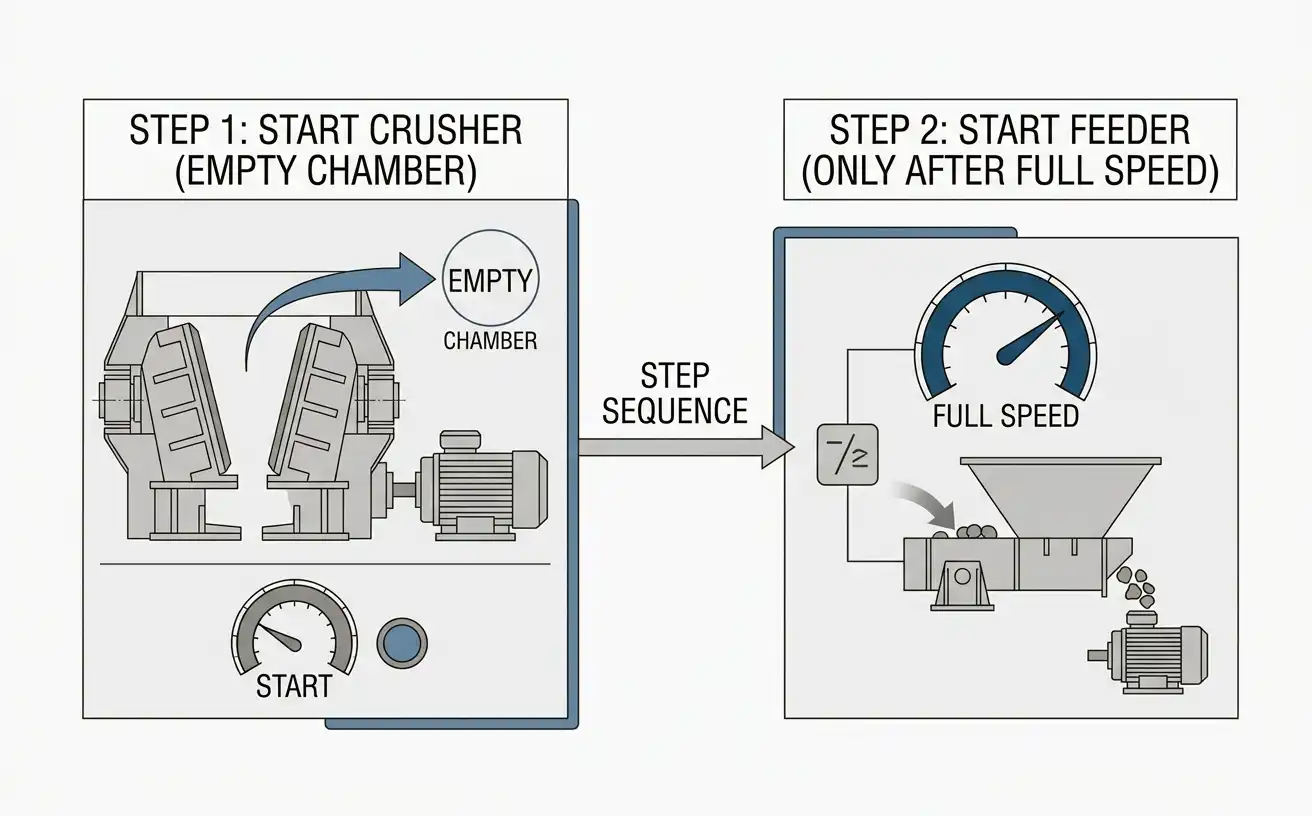
The crusher starts first, with an empty chamber, and the feeder starts only after the crusher reaches full running speed. This order exists for a mechanical reason. Starting a jaw crusher under load puts a sudden torque demand on the motor and drive.
This happens before the machine has any momentum to work with, since material is already sitting in the chamber. That can trip the motor or stress the toggle plate on the very first cycle of the shift.
A quick pre-start check comes before the motor even turns. Confirm the chamber is empty of material left from the previous shift. Confirm guards are in place, and confirm no one is near the machine before energizing it.
This is a brief daily habit, not the multi-hour verification a commissioning no-load run involves. Rotation direction and mechanical soundness were already confirmed when the machine was commissioned.
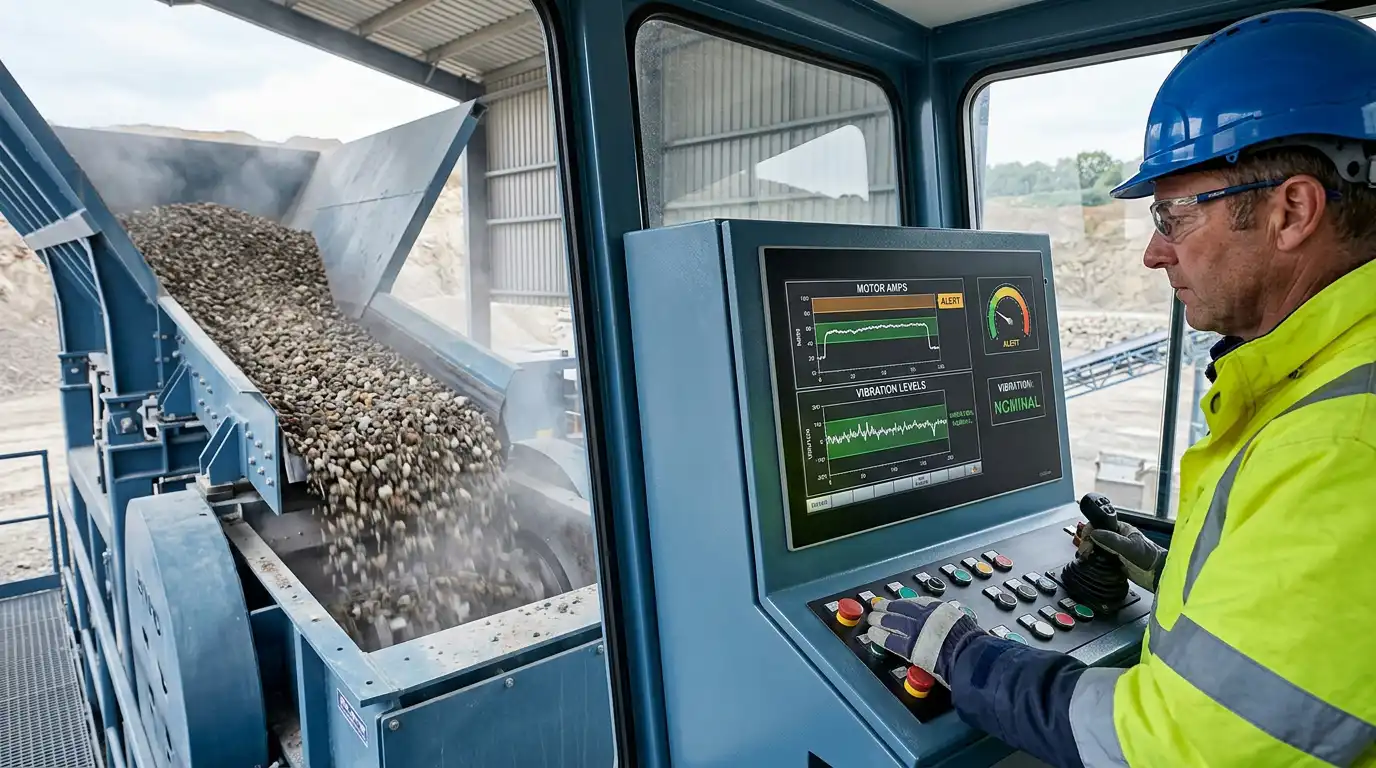
Once the crusher is running smoothly at full speed with no unusual noise or vibration, start the feeder. Bring feed rate up gradually rather than opening it to full flow immediately.
Feed Control: Even Distribution and Steady Rate
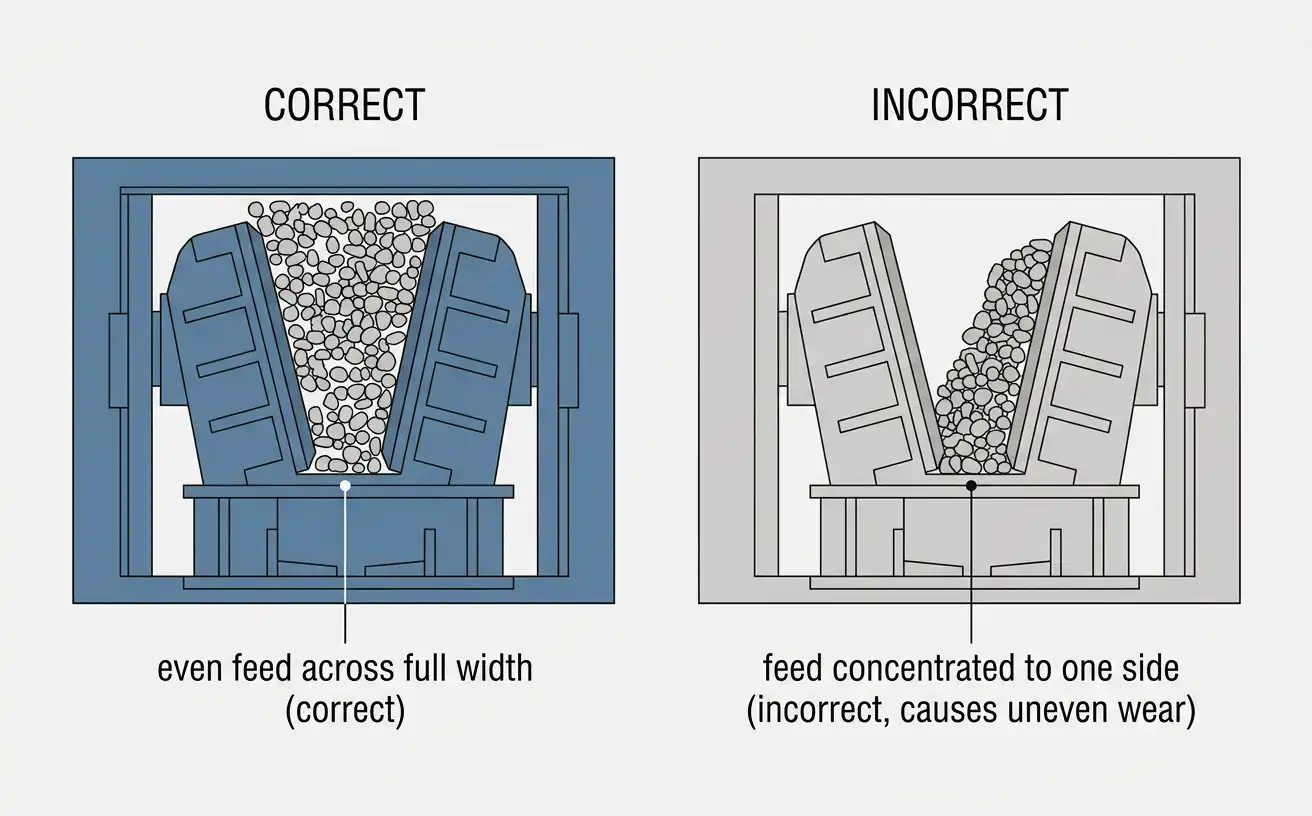
Feed distribution across the full width of the jaw matters as much as feed rate itself. Material concentrated to one side of the chamber wears that side of the jaw plates faster than the other. Over time, this uneven wear shows up as inconsistent product size and, eventually, misalignment that no amount of CSS adjustment fully corrects.
Feed rate sits between two failure modes, not just below one ceiling. Overfeeding backs up the hopper, forces oversized material through the chamber, and creates the conditions that lead to a jam. Underfeeding runs the crusher inefficiently, drawing power without using the full chamber for size reduction. A commonly cited target is running at 70 to 90 percent of rated throughput, adjusted for the specific material and circuit.
Feed size matters independently of feed rate. A commonly cited rule of thumb keeps maximum feed size at roughly 80 percent of the crusher’s feed opening. The exact figure depends on the specific model and material.
Oversized material is one of the most common causes of a jammed chamber. It is far easier to screen out upstream than to clear after the fact.
Watch for tramp metal specifically, separate from oversized rock. The toggle plate acts as a mechanical fuse against extreme overload. Metal entering the chamber can still cause structural damage or dangerous flying debris before that fuse does its job.
Shutdown Sequence: Feeder Before Crusher
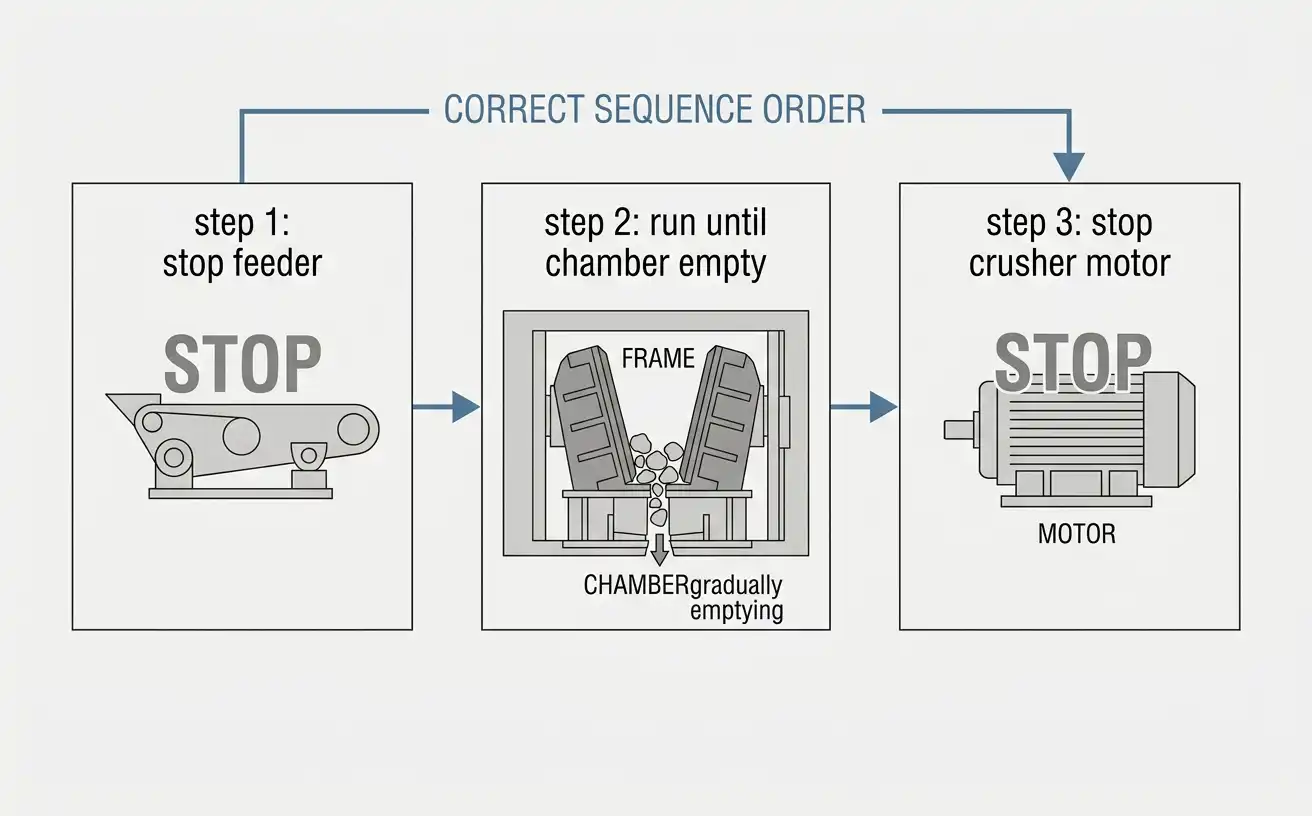
The shutdown sequence reverses the startup order. Stop the feeder first, let the crusher run until the chamber is completely empty, and only then stop the crusher motor. This is the same underlying rule as startup, applied in reverse. Material flows from feeder to crusher, so shutdown clears in that same direction before power comes off.
Stopping the crusher motor with material still in the chamber is the single most common cause of a difficult next-day restart. Material settles and can partially solidify overnight, especially damp or fine material, turning what should be a routine morning startup into a manual clearing job.
Downstream equipment, such as conveyors and screens, stops after the crusher itself, following the same direction-of-flow logic. A brief chamber inspection before leaving the machine catches abnormal wear or residual material before it becomes the next shift’s problem.
Why the Order Matters
The startup-before-load and shutdown-after-empty sequence is not a formality. A real safety record illustrates the risk on the other side of this discipline. A documented incident involved a miner clearing a jammed primary crusher with an air hammer.
A dislodged rock slid down and pinned the miner’s feet for nearly an hour before rescue. Jam-clearing situations, which a disciplined shutdown sequence exists specifically to prevent, are where this kind of injury happens.
A jammed chamber is never cleared with the machine running or energized. Stop the feeder, stop the crusher, and follow full lockout/tagout procedures before anyone approaches the chamber, regardless of how routine the blockage looks.
A Practical Daily Operating Checklist
- Chamber confirmed empty and guards confirmed in place before starting the crusher motor.
- Crusher brought to full running speed, empty, before the feeder starts.
- Feed distributed across the full width of the chamber, not concentrated to one side.
- Feed rate held in the target range for the material and circuit, avoiding both overfeeding and underfeeding.
- Feeder stopped first at shutdown, crusher run until the chamber is empty, then the crusher motor stopped.
- Any jam or blockage cleared only after full lockout/tagout, never with the machine running.
Frequently Asked Questions
Why does the crusher start before the feeder instead of together?
Starting the crusher first, with an empty chamber, lets it reach full running speed before any load is applied. Starting under load puts a sudden torque demand on the motor and drive before the machine has momentum. This can trip the motor or stress the toggle plate.
What happens if the crusher is shut down with material still in the chamber?
Material left in the chamber can settle and partially solidify before the next shift, especially if it is damp or fine. This is the most common cause of a difficult next-day restart and can require a manual clearing job instead of a routine startup.
How should feed material be distributed across the chamber?
Feed should spread evenly across the full width of the jaw, not concentrate to one side. Uneven feeding wears one side of the jaw plates faster than the other, which eventually shows up as inconsistent product size and misalignment.
What should never be done to clear a jammed jaw crusher?
Never clear a jam with the machine running or energized. Stop the feeder, stop the crusher, and apply full lockout/tagout before anyone approaches the chamber. Documented mining incidents involving crusher jams have resulted in serious injury when this procedure was not followed.