

Impact Crusher Types: PF Series, European-Type Hydraulic, Primary, and Tertiary Fine-Crushing
What You Will Learn from This Guide
Impact crusher types split along two separate lines: PF Series versus European-type hydraulic describes the adjustment mechanism, while primary versus tertiary describes the duty stage. This guide explains both distinctions and how they combine in practice. It serves an engineer or buyer narrowing an impact crusher shortlist, and after reading, you will be able to specify both the adjustment type and the duty configuration your application actually needs.
Working Principle
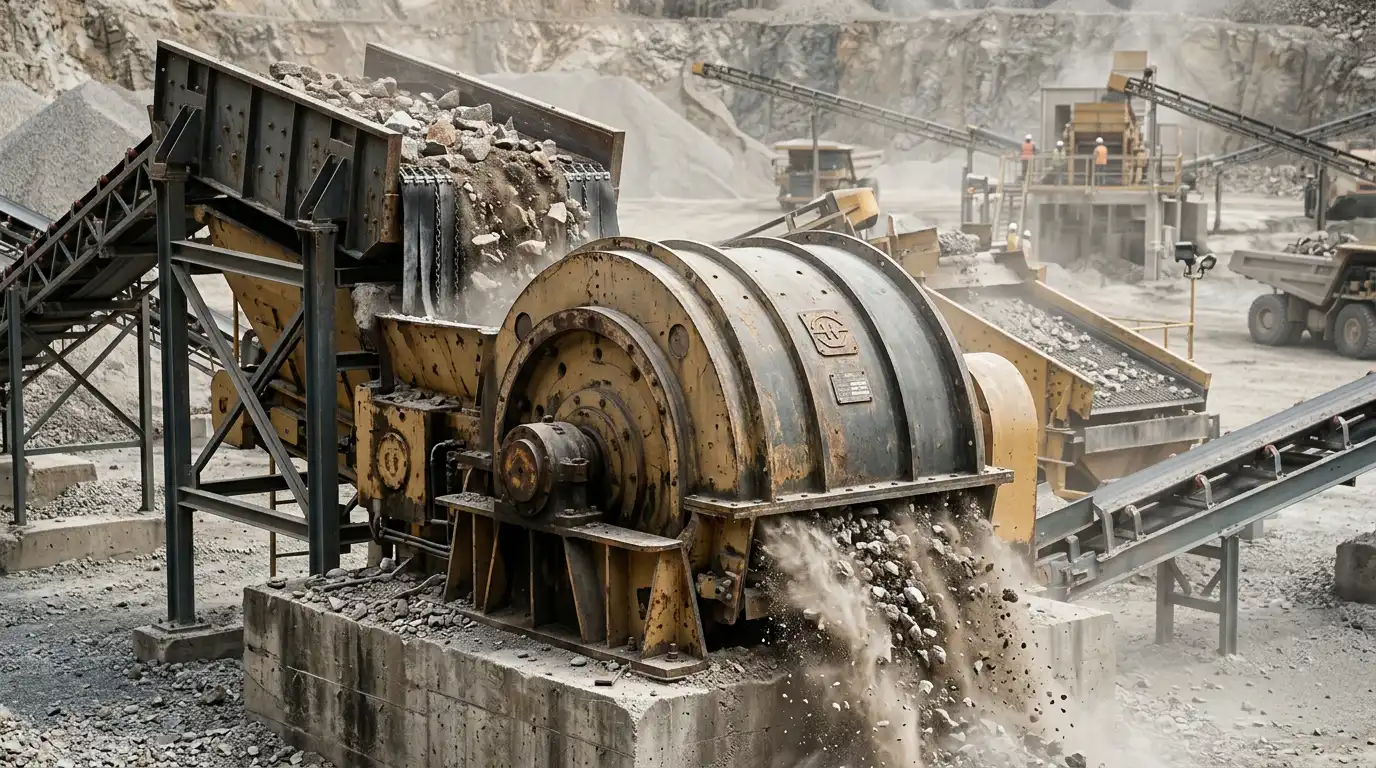
A horizontal shaft impact crusher breaks rock with kinetic energy, not compression. A rotor fitted with blow bars spins at high speed, typically several hundred to over a thousand RPM. Material entering the chamber is struck directly by the blow bars.
That first impact throws fractured material against hinged breaker plates, sometimes called aprons or curtains. This second impact breaks it further. Material also collides with other rock inside the chamber, adding a third breaking action. The process repeats until pieces are small enough to pass through the gap between the rotor and the breaker plates.
PF Series and European-Type Hydraulic: Two Adjustment Philosophies
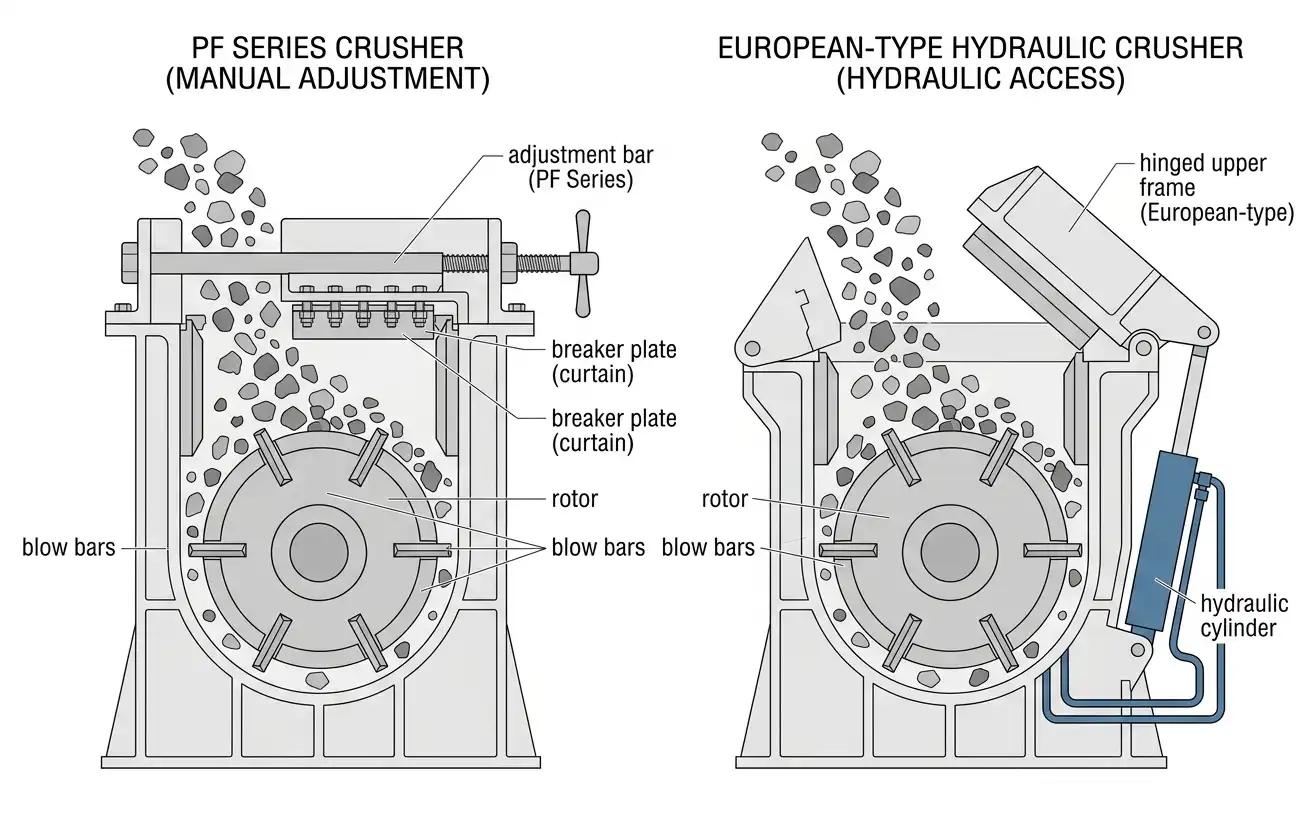
A PF Impact Crusher uses a bolted, mechanically adjusted breaker plate system. Adjustment bars set the gap between the rotor and the plates. This keeps the machine simple and lower cost, but changing the gap or accessing the chamber for maintenance takes manual work and downtime.
A PFW Hydraulic Impact Crusher uses a different frame design entirely. The upper frame is hinged to the lower frame and opens hydraulically. This gives fast access to the rotor and breaker plates for maintenance, and it often pairs with a hydraulic gap-adjustment system as well.
The trade-off is straightforward. A PF Series unit costs less and suits sites where the gap is set once and rarely changed. A PFW unit costs more but cuts maintenance downtime meaningfully on sites doing frequent blow bar changes or gap adjustments.
Primary vs Tertiary: Two Duty-Stage Configurations
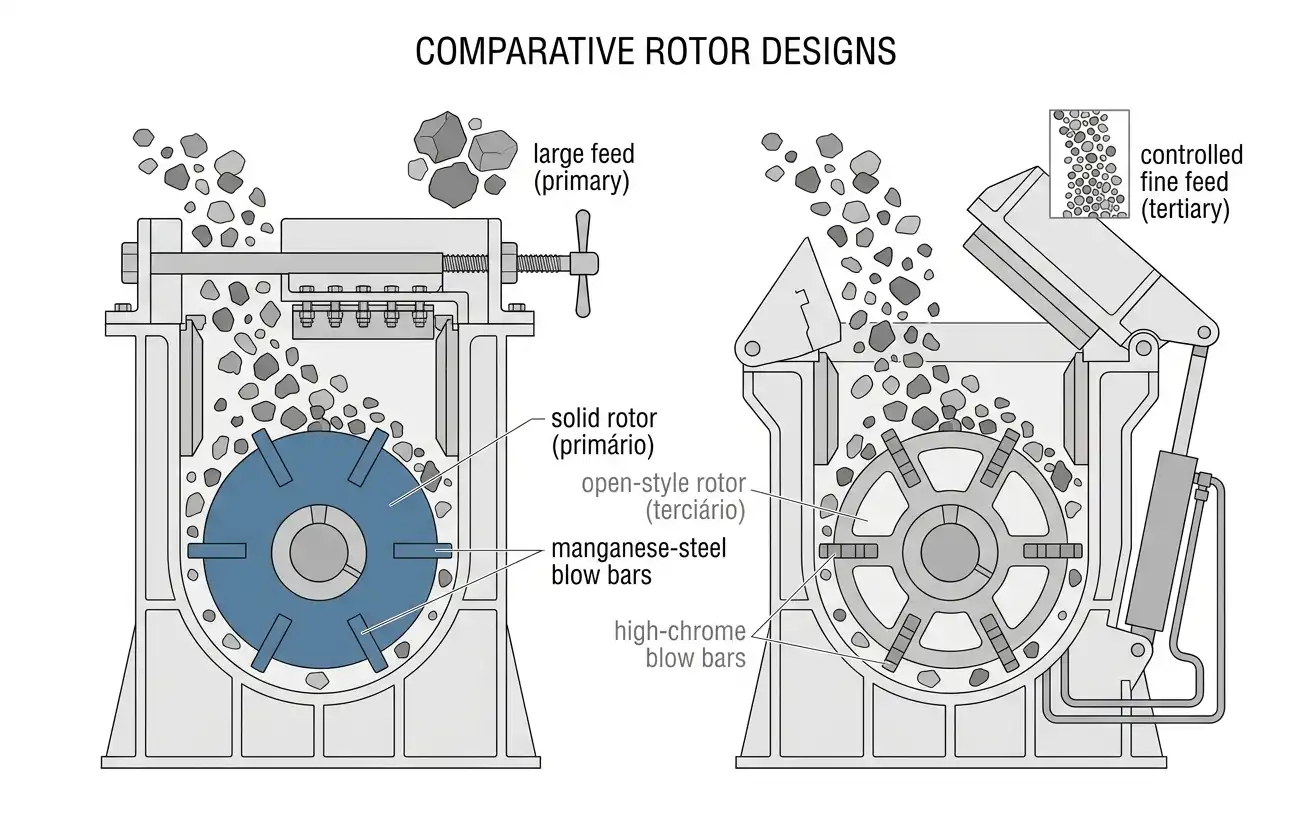
A primary impact crusher takes large, freshly blasted rock directly from a quarry face. It uses a massive, solid rotor for high inertia and durability under heavy impact loads. Blow bars are typically manganese steel, which resists impact well and work-hardens under repeated use, though it wears faster than harder alloys on abrasive rock.
A tertiary fine-crushing impact crusher sits later in the circuit, taking feed already reduced by an earlier stage. It uses an open-style rotor design, paired with heavy, gravity-hung breaker plates for consistent performance at a finer setting.
Blow bars here are commonly high-chrome white iron. This alloy resists abrasion well but has lower impact resistance. Feed size must be controlled tightly and kept free of tramp metal.
This is a genuine structural difference, not just a naming convention. A rotor built for primary duty is not simply run at a tighter setting to serve as a tertiary unit. The rotor construction and blow bar metallurgy both change with the stage.
Specifications Comparison
Table 1. Impact crusher configuration comparison
| Configuration | Adjustment mechanism | Rotor construction | Typical blow bar material | Best-suited stage |
|---|---|---|---|---|
| PF Series | Bolted, manual | Varies by size | Manganese steel or high-chrome | Any stage, budget-conscious |
| European-type hydraulic (PFW) | Hydraulic, fast access | Varies by size | Manganese steel or high-chrome | Any stage, frequent adjustment |
| Primary | Bolted or hydraulic | Massive, solid | Manganese steel | Primary, large ROM feed |
| Tertiary fine-crushing | Bolted or hydraulic | Open-style | High-chrome white iron | Tertiary, controlled fine feed |
Source: general industry classification of impact crusher configurations as commonly described across equipment manufacturers and engineering literature. Exact feature sets vary by model and should be confirmed against a specific supplier’s documentation.
The table splits cleanly into two axes for a reason. Adjustment mechanism and duty stage are independent choices. A buyer specifies both, not one or the other.
Selecting Among the Four
Start with duty stage, since it constrains everything else. Large, blasted rock straight from a quarry face calls for a primary configuration with a solid rotor and manganese blow bars. Already-reduced feed needing a fine, controlled output calls for a tertiary configuration with an open rotor and high-chrome blow bars.
Adjustment mechanism comes next, and it is a cost-versus-convenience decision more than a technical one. Frequent gap changes or blow bar replacement favor the hydraulic European-type frame. Infrequent adjustment on a stable process favors the lower-cost PF Series.
Material hardness and abrasiveness cut across both choices. Softer, less abrasive rock such as limestone tolerates manganese blow bars well at any stage. Harder, more abrasive rock pushes toward high-chrome blow bars regardless of whether the unit sits in a primary or tertiary position.
Applications by Material and Industry
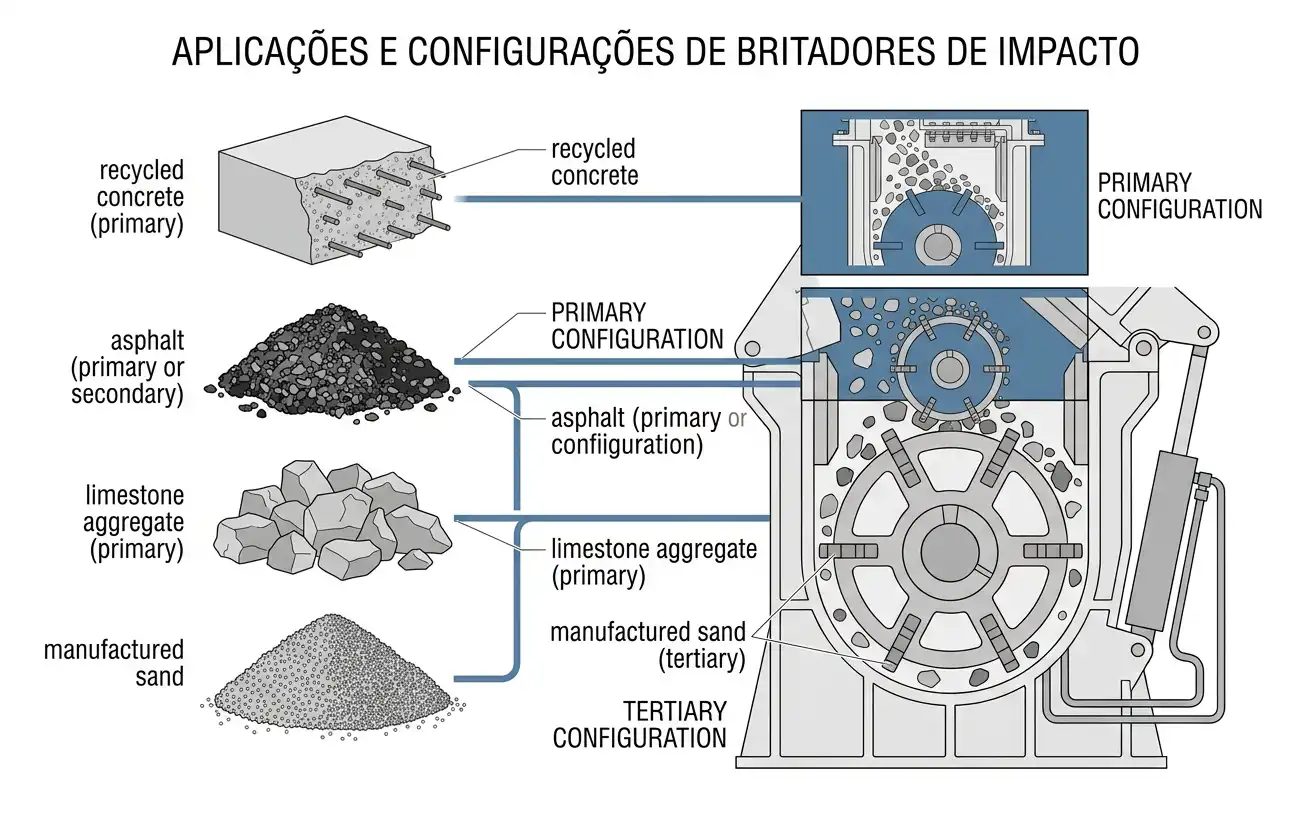
Impact crushers excel at concrete and asphalt recycling, since the impact action liberates embedded rebar effectively and produces a cubical product recycling specifications often require. Primary configurations handle limestone and other softer aggregate rock directly from blasting, avoiding a separate jaw or gyratory primary stage in some circuits.
Tertiary configurations serve fine aggregate and manufactured sand production, where product shape and consistent gradation matter as much as raw throughput. Harder rock such as granite or basalt is workable in an impact crusher. Abrasive wear costs rise faster there than in a jaw or cone crusher processing the same material. That is a genuine trade-off against the impact crusher’s better product shape.
Maintenance and Wear Parts
Blow bars are the primary wear item and the largest ongoing cost driver on any impact crusher. Manganese steel suits large-feed, high-impact duty and work-hardens as it wears, extending service life under those specific conditions. High-chrome white iron suits abrasive, well-controlled feed, trading impact resistance for wear resistance.
Breaker plates wear more slowly than blow bars but still need scheduled inspection, since a worn plate changes the effective gap and product size. On a PFW-style hydraulic frame, this inspection is faster to perform. That speed is part of the ongoing cost case for the hydraulic design, beyond the purchase price alone.
Cost and Procurement
A PF Series unit generally costs less than a comparable PFW hydraulic unit at the same capacity, reflecting the simpler frame and adjustment system. Within either adjustment type, a primary configuration typically costs more than a tertiary unit at a similar feed capacity. Its solid rotor and heavier construction account for that difference.
Blow bar material is a recurring cost decision, not a one-time purchase choice. Buyers should request wear-life data tied to their specific rock type and feed size. Manganese and high-chrome blow bars are not interchangeable substitutes for each other on the same application.
Frequently Asked Questions
What is the difference between a PF Series and a European-type hydraulic impact crusher?
A PF Series crusher uses a bolted, manually adjusted breaker plate system, which costs less but takes longer to service. A European-type hydraulic crusher, such as a PFW unit, opens on a hydraulic cylinder for faster maintenance access and often hydraulic gap adjustment.
What makes a primary impact crusher different from a tertiary one?
A primary impact crusher uses a massive, solid rotor and manganese-steel blow bars suited to large, freshly blasted feed. A tertiary fine-crushing impact crusher uses an open-style rotor and high-chrome blow bars suited to smaller, tightly controlled feed at a finer setting.
Can the same rotor be used for both primary and tertiary duty?
Generally no. The rotor construction and blow bar metallurgy are matched to the duty stage. A solid primary rotor is not simply reset to a tighter gap to serve tertiary duty. The open-style tertiary rotor and its breaker plate arrangement are built differently for that finer, more controlled application.
Which blow bar material lasts longer, manganese steel or high-chrome white iron?
Neither is universally longer-lasting. Manganese steel resists impact well and suits large-feed, high-impact duty, work-hardening as it wears. High-chrome white iron resists abrasion better but has lower impact resistance. It is the better fit for abrasive, well-controlled fine feed rather than large blocky material.
References and Sources
- National Institute of Technology Rourkela — Design and Analysis of a Horizontal Shaft Impact Crusher
- Pit & Quarry — P&Q University Lesson 7: Crushing & Secondary Breaking
- U.S. Patent 11,052,400 — Locking Device for Locking a Hammer to a Rotor in a Horizontal Shaft Impact Crusher
- U.S. Patent 11,000,854 — Rotor Positioning Device