

What Is Flotation? How Froth Flotation Separates Valuable Minerals
What You Will Learn from This Guide
Flotation is a mineral processing method that separates valuable particles from waste rock, using differences in how their surfaces interact with water and air. This guide covers the surface chemistry behind flotation and the reagents and equipment that control it. It also covers the grinding step that often decides how much mineral the process recovers. It serves a process engineer evaluating a flotation circuit, and after reading, you will see where grinding, not just reagent choice, drives recovery.
How Flotation Separates Minerals by Surface Chemistry
Most minerals attract water at their surface. A small number naturally repel it, or can be made to repel it with chemical treatment. Flotation uses that difference to separate particles. The ore has already passed through the grinding stages covered in the guide to mining grinding mill types by this point.
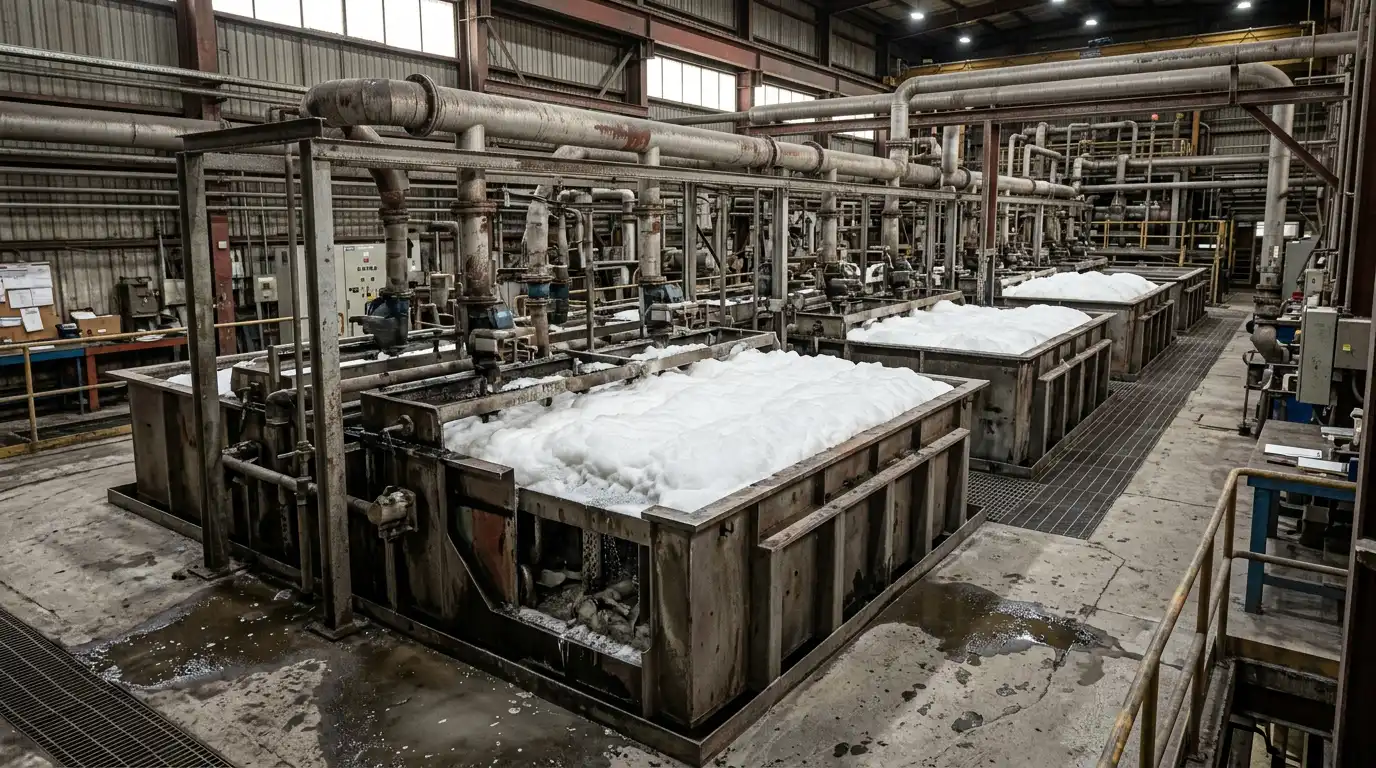
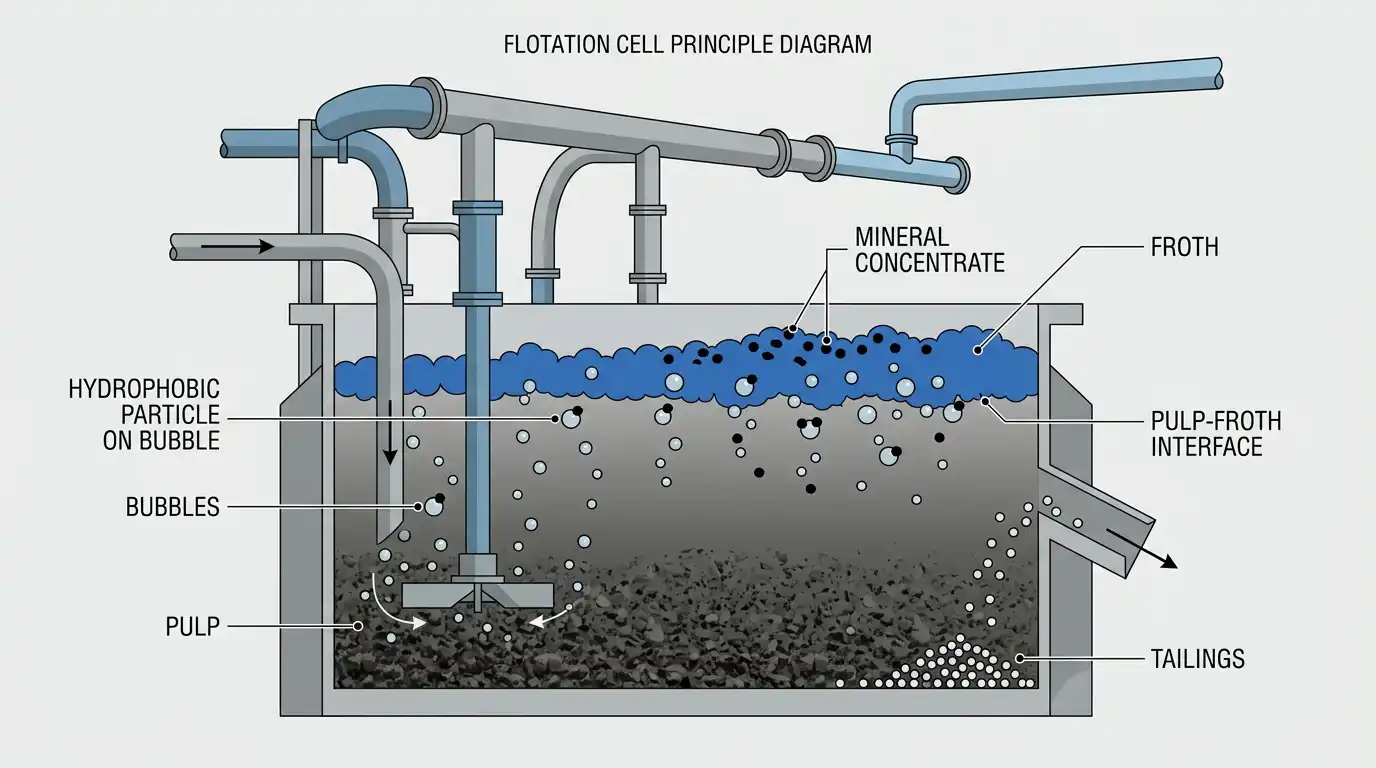
The process suspends ground ore in water to form a slurry, called pulp. Air then enters the pulp as fine bubbles. Water-repelling particles attach to these bubbles and rise to the surface as froth.
Water-attracting particles stay suspended instead and sink with the pulp. An operator skims the froth off the top of the cell as concentrate. The remaining pulp, called tailings, carries the waste rock out of the process.
Particle size, pulp pH, and the surface chemistry imposed by reagents all influence which particles end up in which stream.
The Reagents That Make Flotation Selective
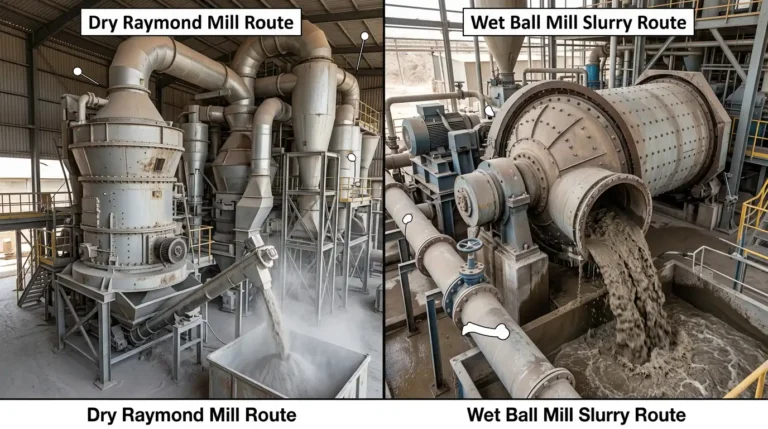
Few minerals are naturally hydrophobic enough to float on their own. Flotation plants add chemical reagents to control which particles repel water and which stay water-attracting. This happens in the same wet pulp environment discussed in the wet vs. dry ball mill comparison.
Collectors are the primary reagent class. They coat the target mineral’s surface with a thin hydrophobic layer, so it attaches readily to air bubbles. Anionic and cationic collector types exist, and the right choice depends on the target mineral’s own surface chemistry.
Frothers stabilize the air bubbles once they form. They keep the froth layer intact long enough for an operator to skim it off. Without a frother, bubbles burst too quickly to carry their mineral load.
Modifiers round out the reagent set. Depressants suppress flotation of unwanted minerals that would otherwise float alongside the target. Activators enhance flotation of a mineral that would otherwise float poorly, and pH regulators adjust the pulp’s chemistry, since collector performance usually depends on pH.
Mechanical Cells, Columns, and Pneumatic Cells
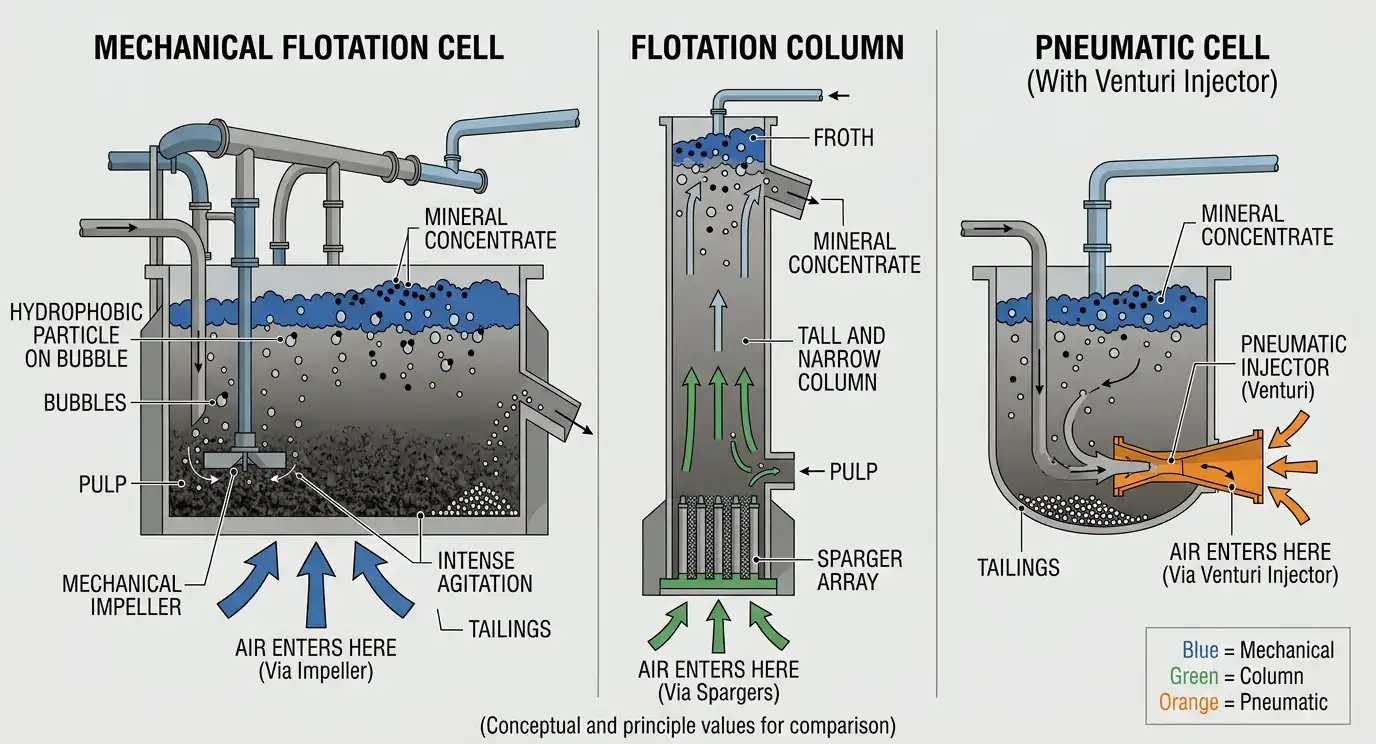
Three main equipment families generate the bubbles that carry mineral to the froth layer. Each uses a different method, and each suits different ore and plant conditions. That includes how fine the feed was ground, per the ball mill size selection guide.
Mechanical cells use an impeller to agitate the pulp and draw in air. This is the most widely installed flotation cell design. It handles a broad range of particle sizes and pulp densities without major modification.
Flotation columns inject air through spargers at the base of a tall vessel, with no mechanical agitation. The column’s height gives bubbles more contact time with particles as they rise. This typically improves selectivity for fine particles over a mechanical cell.
Pneumatic cells also introduce air without mechanical agitation, through a different mechanism than a column. Independent laboratory testing on fluorite ore found that a pneumatic cell recovered more calcium fluoride than a mechanical cell, using the same collector. The pneumatic cell also pulled in more unwanted gangue mineral alongside it.
Comparison of recovery performance across flotation cell types, tested on the same fluorite ore and collector
| Cell type | Collector | CaF2 recovery (%) | Gangue recovery (%) |
|---|---|---|---|
| Mechanical | DP-I | 79.8 | 24.2 |
| Mechanical | DP-II | 78.9 | 24.6 |
| Pneumatic | DP-I | 82.8 | 26.9 |
| Pneumatic | DP-II | 87.9 | 31.1 |
The pneumatic cell delivered the highest fluorite recovery in this test. It also recovered more gangue mineral. Selecting a cell type is a trade-off between maximizing valuable-mineral recovery and controlling the purity of the final concentrate.
Why Grinding Before Flotation Matters More Than Most Operators Expect
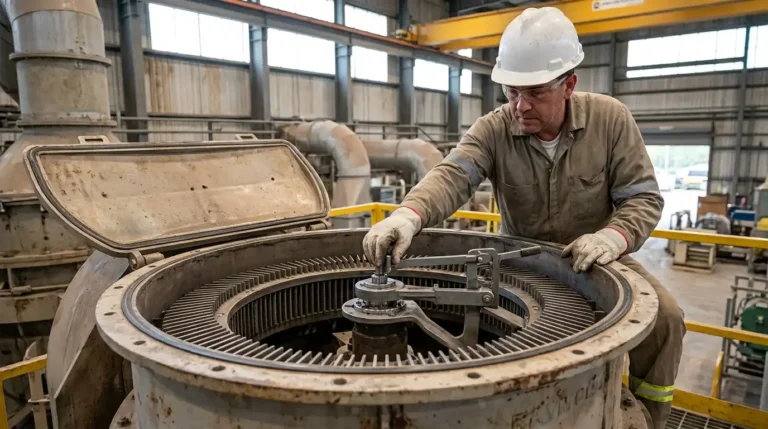
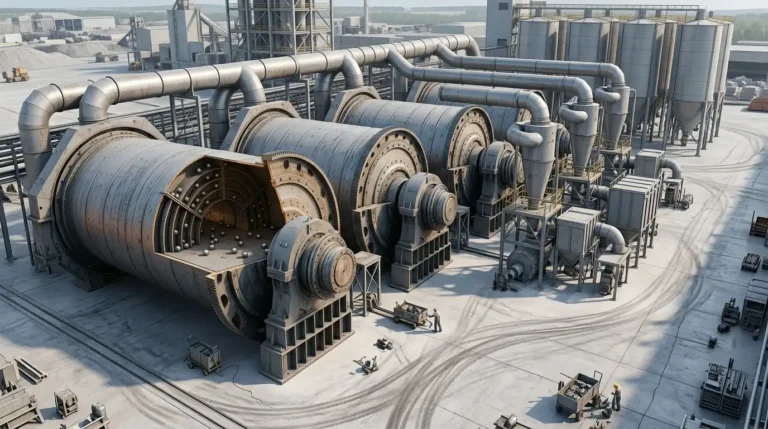
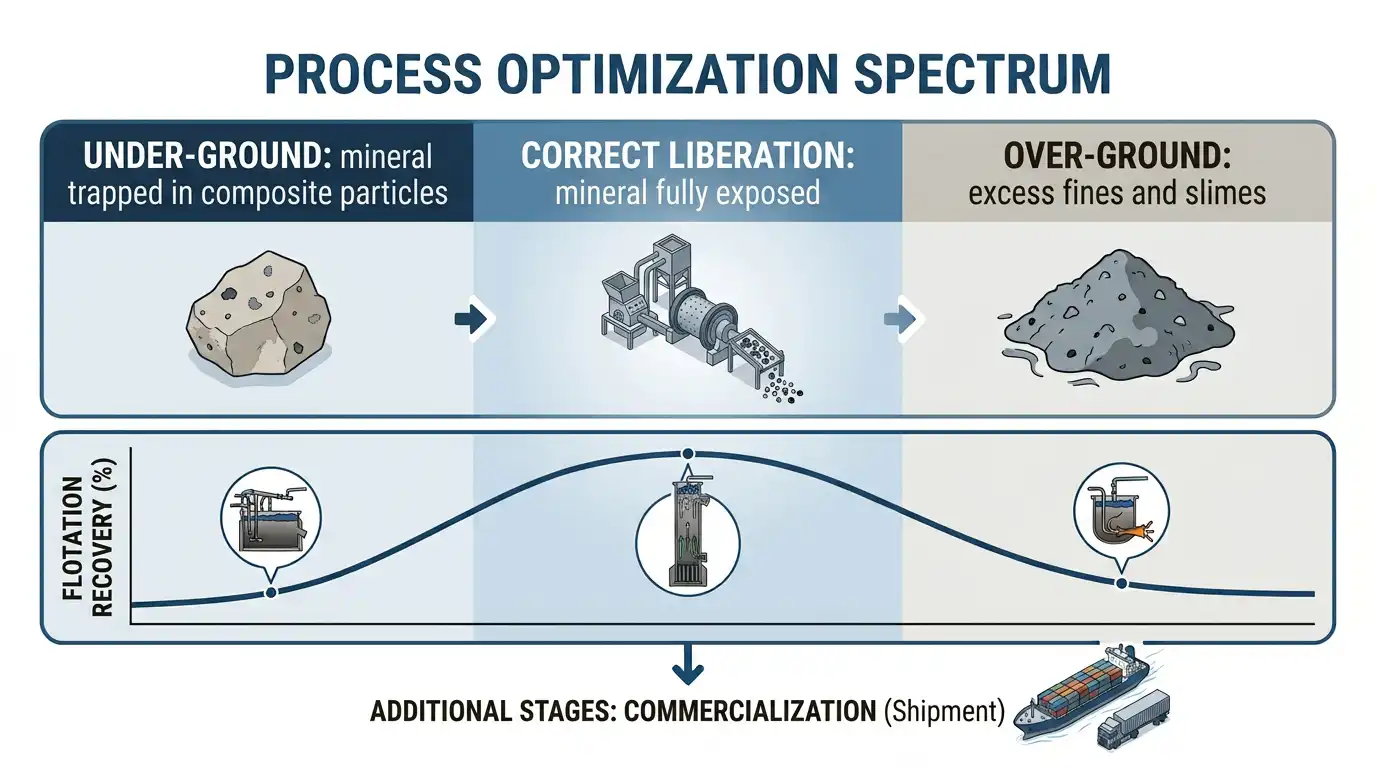
A flotation reagent cannot act on mineral still locked inside a particle of waste rock. The ore must first be ground fine enough, using equipment like the MQ Ball Mill, to free the target mineral from the surrounding gangue.
Academic research on industrial copper sulfide flotation circuits found that liberation degree affects recovery more strongly than particle size alone. Two particles of the same size can float very differently. One may have its valuable mineral fully exposed, while the other does not.
Grinding too coarse leaves mineral locked inside composite particles that cannot float, regardless of reagent dosage. Grinding too fine creates a separate problem: excess slimes and fines. The same research found that particles below a certain size reduce both the flotation rate and the maximum achievable recovery.
This makes the grinding circuit a genuine flotation-performance decision, not only a crushing step upstream of it. A ball mill’s wet grinding configuration suits feeding a flotation circuit directly, reaching a liberation-appropriate grind size for beneficiation feed.
Matching the mill’s output size to the ore’s own liberation characteristics is what connects grinding to the recovery number a flotation plant reports. A generic fineness target, applied without that liberation data, risks the same under- or over-grinding penalty the research describes.
Frequently Asked Questions
What is the difference between a collector and a frother in flotation?
A collector makes the target mineral’s surface hydrophobic, so it attaches to air bubbles. A frother stabilizes those bubbles once they form, so the froth layer holds together long enough to skim off. A flotation circuit generally needs both, since a collector alone produces bubbles that burst before reaching the surface.
Why does particle size matter in flotation?
Particle size affects how easily a bubble can lift a particle to the surface. It also affects how completely the valuable mineral was liberated from waste rock during grinding. Research on industrial flotation circuits found that liberation degree, which depends on grind size, affects recovery more strongly than particle size alone.
Can flotation recover minerals that are not naturally hydrophobic?
Yes. Most minerals processed by flotation are naturally hydrophilic, meaning they attract water rather than repel it. Collector reagents coat the target mineral’s surface with a hydrophobic layer, once it has been ground to size by equipment like the MQ Ball Mill.
That layer is what lets an otherwise water-attracting mineral attach to air bubbles and float.
Is a mechanical flotation cell better than a flotation column?
Neither design is universally better. Mechanical cells handle a wide range of particle sizes and pulp densities with simpler operation. Columns and pneumatic cells often improve selectivity on fine particles, at the cost of recovering more unwanted gangue mineral alongside the target.
References & Sources
- MDPI, Minerals journal — Comparative Performance of Novel Collectors in Fluorite Flotation
- Universidad Técnica Federico Santa María (Chile) — Caracterización del Proceso de Flotación Industrial a Partir de Relaciones Tamaño-Liberación
- Universidade Federal de Minas Gerais (UFMG) — Flotação de Minério de Ferro