

Standard vs Shorthead Chamber: Dividing Medium and Fine Crushing
What You Will Learn from This Guide
A Standard chamber uses a gentler mantle slope and stepped liners for medium crushing. A Shorthead chamber uses a steeper angle and smoother liners for fine crushing. This guide explains that geometry difference and how the two chambers divide labor across a crushing circuit. It serves an engineer or plant designer sequencing secondary and tertiary crushing stages, and after reading, you will be able to match chamber type to circuit position instead of treating them as interchangeable.
Working Principle and the Parallel Zone
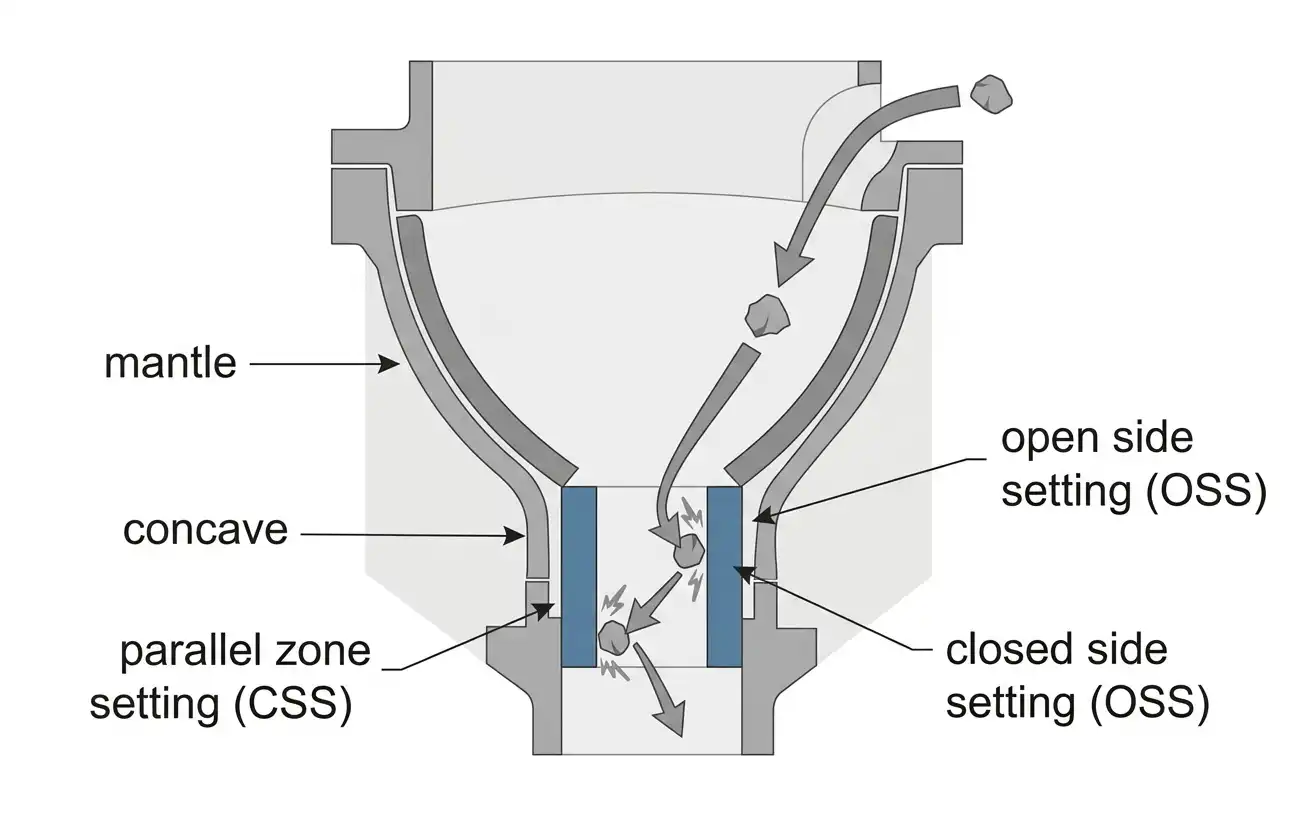
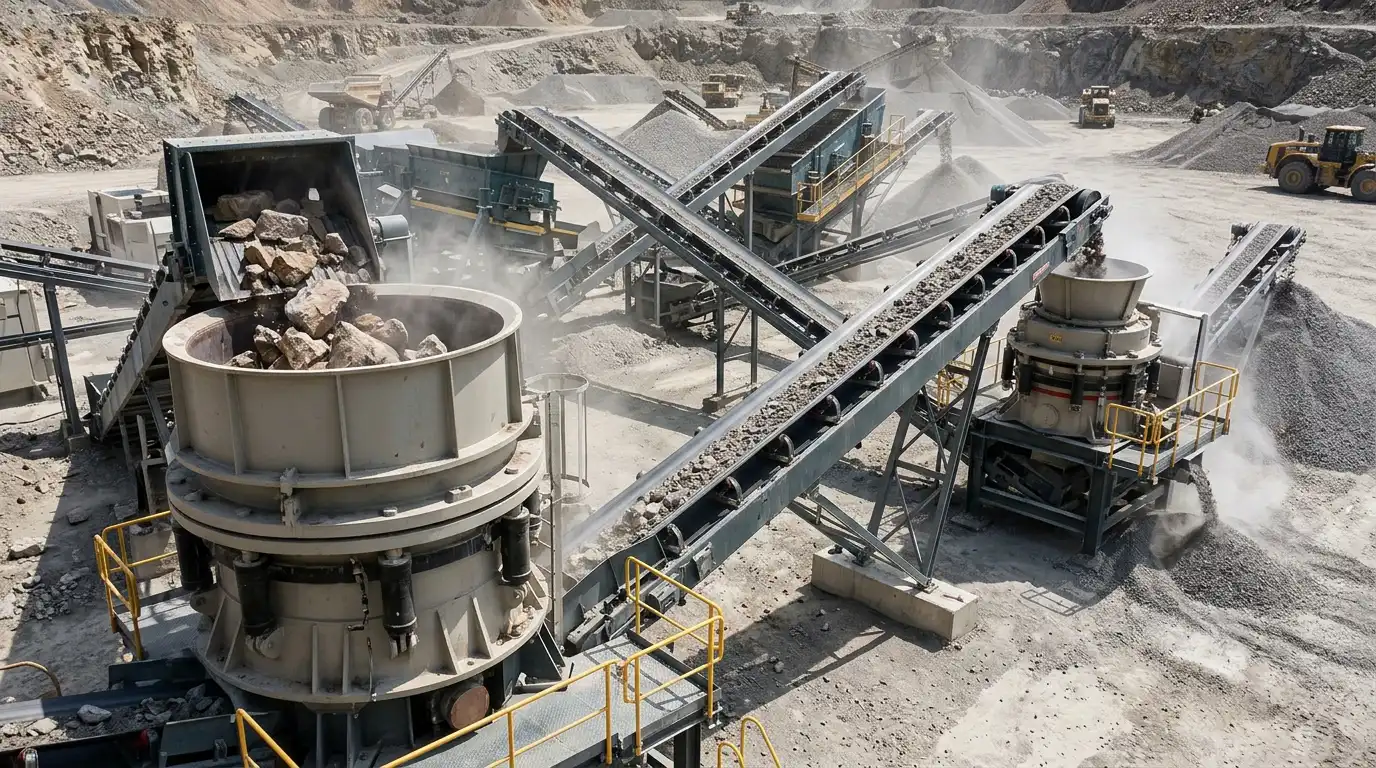
Both chamber types gyrate a mantle inside a concave. Rock is compressed as the gap narrows and released as it widens. What controls final product size is not just the narrowest gap. A specific feature does that job: the parallel zone.
The parallel zone is a section near the discharge where the mantle and concave run parallel rather than converging. Material passing through it gets struck more than once before it exits. This makes product size track the closed side setting (CSS) rather than the wider open setting. It is a feature of every cone crusher chamber, not just fine ones.
Structural Differences: Chamber Geometry
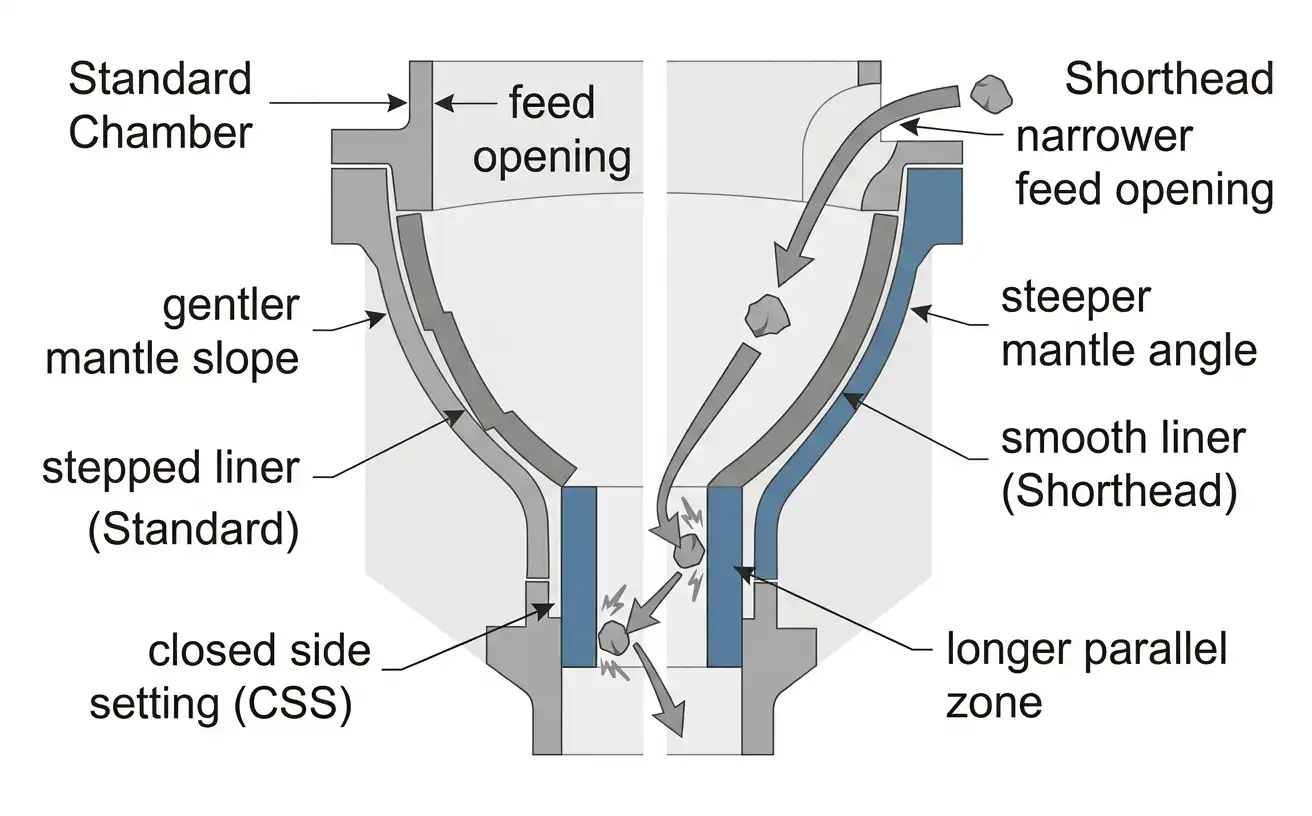
A Standard chamber uses stepped liners and a gentler mantle slope. This geometry keeps the upper chamber more open. It accepts a larger feed size and moves higher tonnage through at a coarser setting.
A Shorthead chamber uses smoother liner faces and a steeper cone angle. The chamber itself is more compact, with a narrower feed opening. It also carries a longer parallel zone relative to its size. That extra length is what lets a Shorthead chamber hold tighter control over a finer product.
Division of Labor: Standard for Medium Crushing
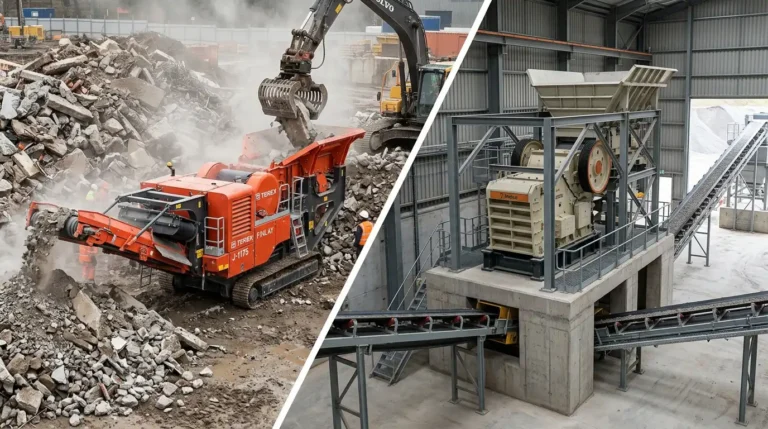
A Standard chamber typically sits in the secondary position. It takes feed already reduced by a primary jaw or gyratory crusher. It produces a coarser, medium-crushed product. It usually runs in open circuit, meaning material passes through once, without being screened and recirculated back into the same machine.
This role prioritizes throughput and reduction ratio over precise product control. A Standard chamber’s job is to reduce blocky primary-crusher output into a workable size range. Hitting a tight final specification is not its job.
Division of Labor: Shorthead for Fine Crushing
A Shorthead chamber sits downstream, typically in the tertiary or quaternary position. It takes feed already reduced by a Standard or medium chamber. It produces a finer, more tightly controlled product. It commonly runs in closed circuit, with a screen returning oversize material back to the crusher for another pass.
This role prioritizes product control over raw throughput. A Shorthead chamber’s narrower feed opening also matters here. It cannot accept the blocky, coarse feed a Standard chamber handles. That is why the two are sequenced rather than substituted for each other.
Staging the Two Together
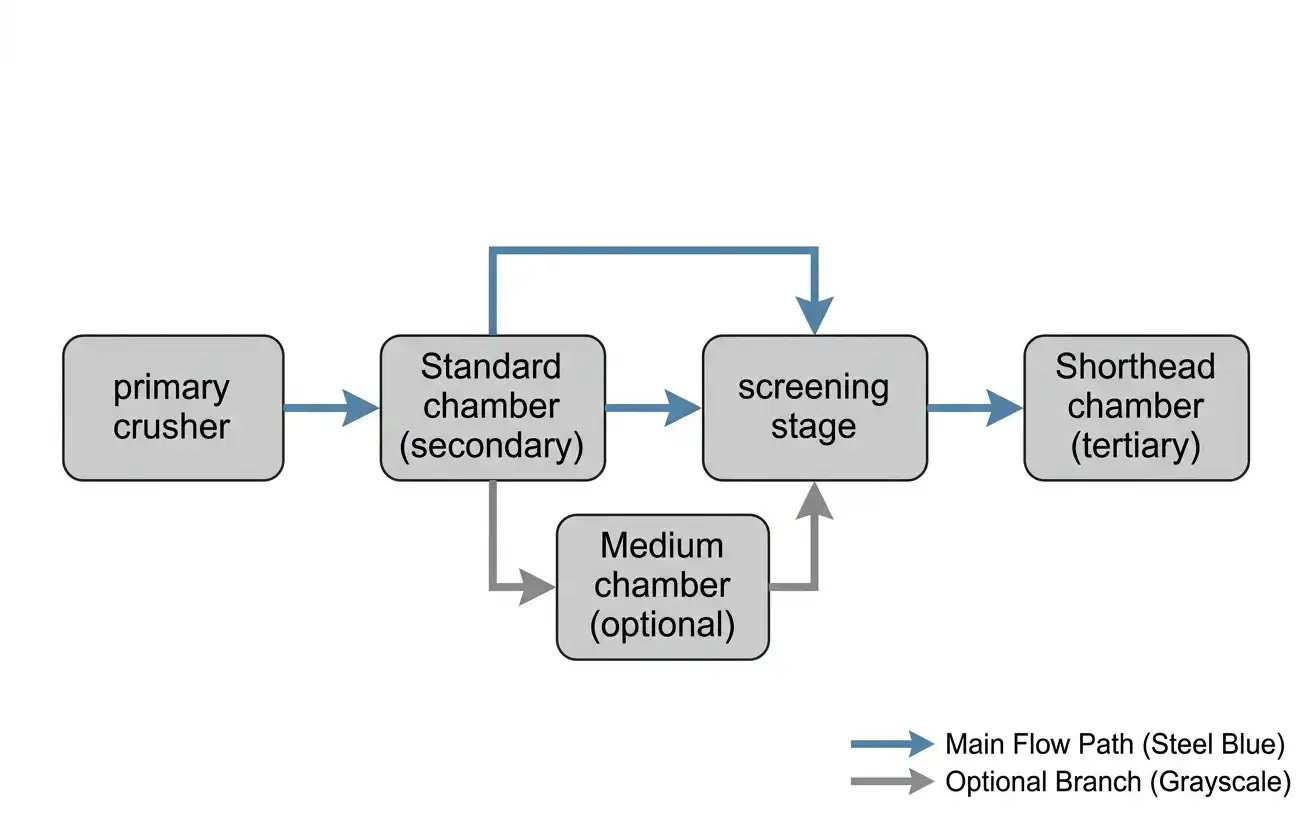
A crushing circuit commonly runs a Standard chamber first and a Shorthead chamber second. A conveyor, and often a screening stage, connects them. Some manufacturers also offer a Medium chamber, positioned between the two in both geometry and role. It suits a circuit needing finer output than Standard, without the full precision of Shorthead.
Chamber sizes within a single crusher model typically span three to six variants. This lets a plant tune the coarse, medium, and fine balance without changing the base machine. This range exists because no single chamber geometry serves every stage well.
Selecting the Right Chamber
Feed size is the first check. A Shorthead chamber’s narrower opening cannot accept the same block size a Standard chamber handles. The upstream stage’s output size has to fit the downstream chamber’s feed limit before anything else matters.
Target product size and circuit type come next. A specification calling for a tight, closed-circuit final product points toward a Shorthead chamber. A specification calling for high-tonnage, open-circuit intermediate reduction points toward a Standard chamber. Where the target sits between the two, a Medium chamber, where offered, is worth evaluating before defaulting to a wide-set Shorthead.
Applications by Material and Industry
Standard chambers handle the bulk secondary-crushing workload in quarrying and mining. They reduce primary-crusher output from granite, basalt, and general aggregate feed into a size range suited for further processing. Shorthead chambers handle the finishing stage for construction aggregate, road base material, and any application with a specific final gradation requirement.
The two frequently run on the same site, in the same circuit, rather than serving separate operations. A plant producing multiple product gradations from one feed stream often needs both chamber types working in sequence.
Maintenance and Wear Parts
Both chamber types wear at the mantle and concave, typically in manganese steel. Both need liner replacement tied to tonnage and feed abrasiveness, not a fixed calendar. The wear pattern differs by geometry.
A Standard chamber’s stepped liner wears across a broader working face. A Shorthead chamber’s smoother, steeper liner concentrates wear closer to the parallel zone instead.
A Shorthead chamber runs a narrower CSS range. Because of that, liner wear affects product size specification faster than it does in a Standard chamber’s wider tolerance band. Sites running Shorthead chambers on tight product specs should check CSS more frequently as liners wear.
Cost and Procurement
Chamber type is usually a configuration choice within a given crusher model, not a separate machine purchase. The price difference between Standard and Shorthead liner sets is smaller than the difference between crusher sizes. Buyers should still confirm liner cost and expected wear life for their specific chamber and feed material combination. A Shorthead chamber’s tighter tolerances can mean more frequent liner changes on abrasive feed.
Retrofitting an existing crusher from Standard to Shorthead, or the reverse, is often possible within the same base machine. This is worth checking before assuming a new crusher purchase is required to rebalance a circuit’s crushing stages.
Frequently Asked Questions
What is the main difference between a Standard and a Shorthead cone crusher chamber?
A Standard chamber uses a gentler mantle slope and stepped liners, suited to medium crushing at higher throughput. A Shorthead chamber uses a steeper angle and smoother liners, suited to fine crushing with tighter product control.
Can a Shorthead chamber replace a Standard chamber in the same circuit position?
Generally no. A Shorthead chamber’s narrower feed opening cannot accept the coarser, blockier feed a Standard chamber handles in the secondary position. The two are sequenced rather than substituted for each other.
Why does a Shorthead chamber need a longer parallel zone?
The parallel zone gives material more than one impact before it exits. This locks product size to the closed side setting rather than the wider open setting. A longer parallel zone gives a Shorthead chamber tighter control over a finer product than a Standard chamber’s shorter zone provides.
Is a Medium chamber necessary between Standard and Shorthead?
Not always. A Medium chamber, where a manufacturer offers one, fills the gap for applications needing finer output than Standard but not the full precision of Shorthead. Many circuits run efficiently with just Standard and Shorthead stages.