

Key to Improved Performance and Particle Size: HST Central Feed and HP Full Feed
In crushing production, many customers face a seemingly simple yet crucial question: why do cone crushers produce such different particle shapes and outputs?
The answer often lies not only in the equipment itself but also in the different feeding methods.
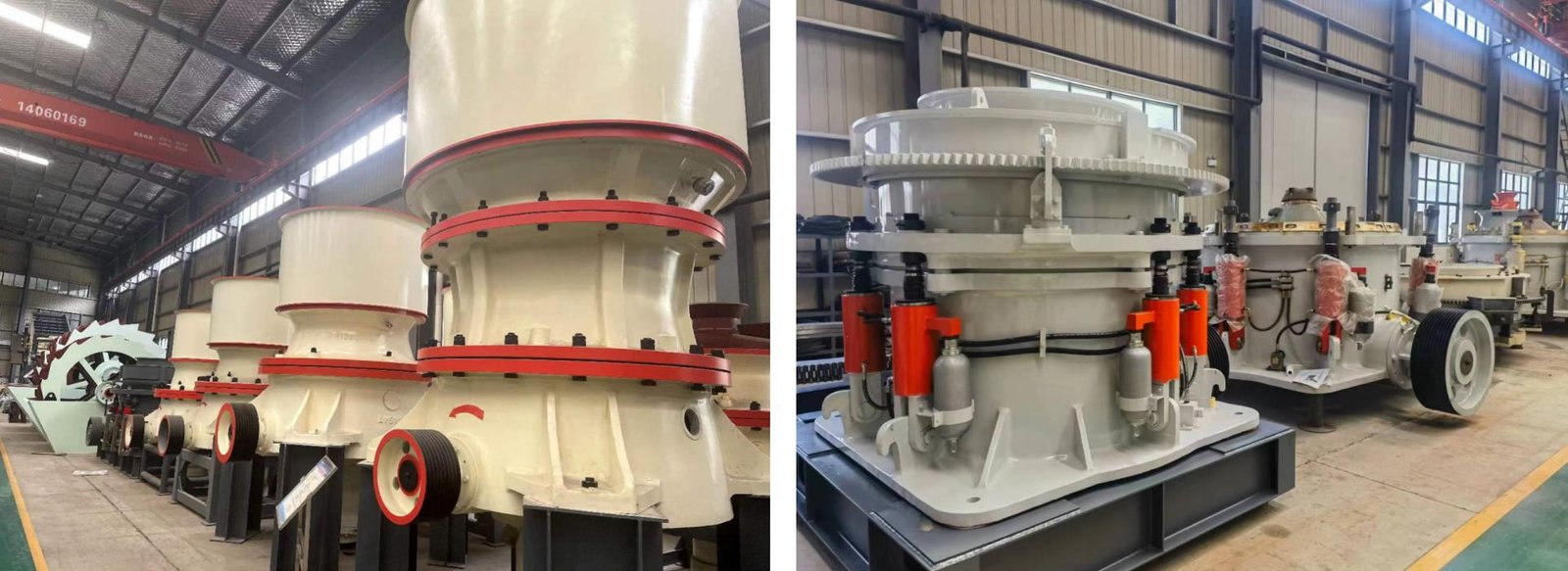
Heavy-duty center-feed (HST) and full-feed high-pressure (HP) are two typical operating methods currently available on the market. What might appear to be a simple difference in the feeding method can significantly impact output, particle shape, stability, and even operating costs.
Operating Principles of HST and HP Cone Crushers
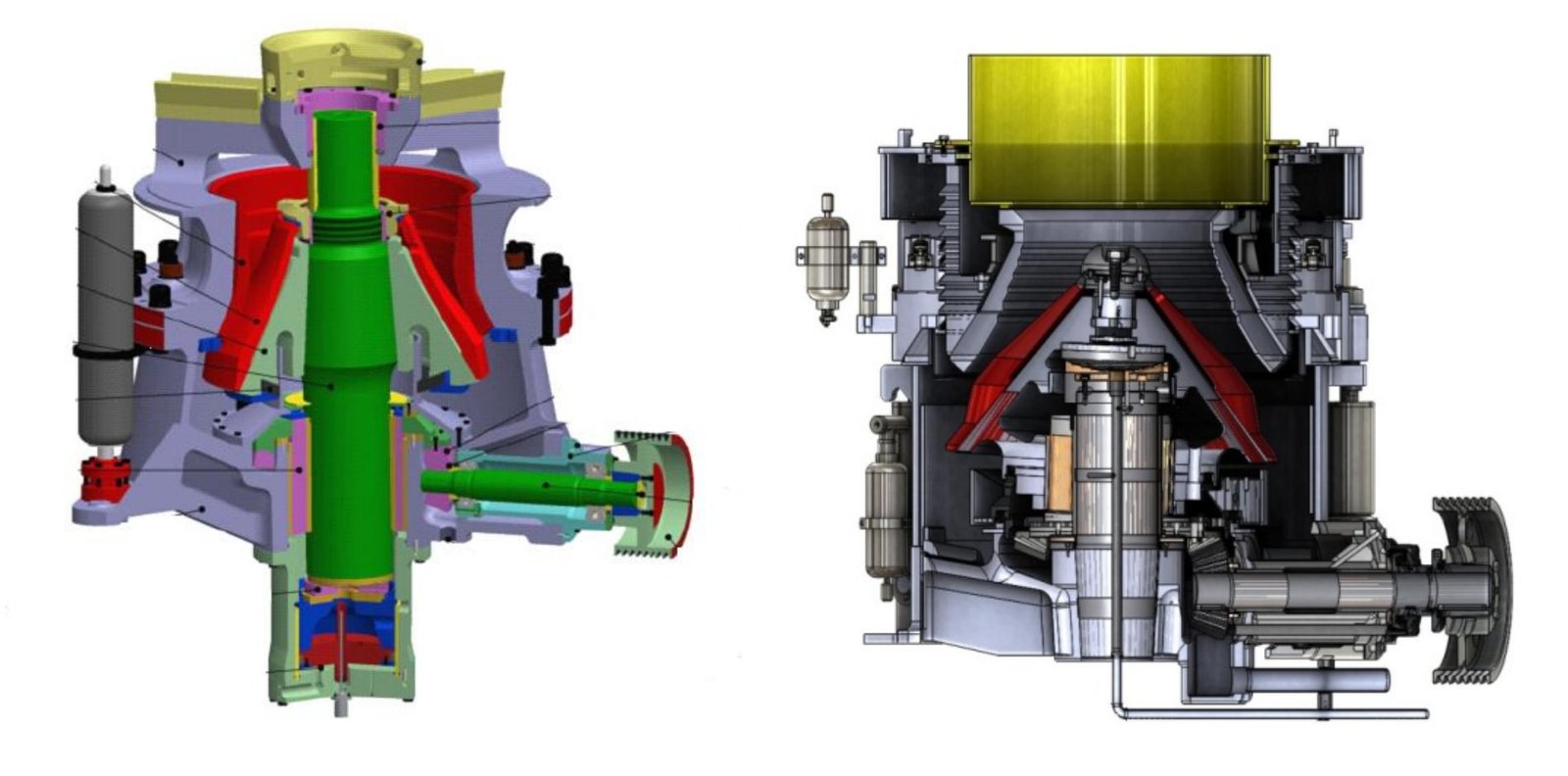
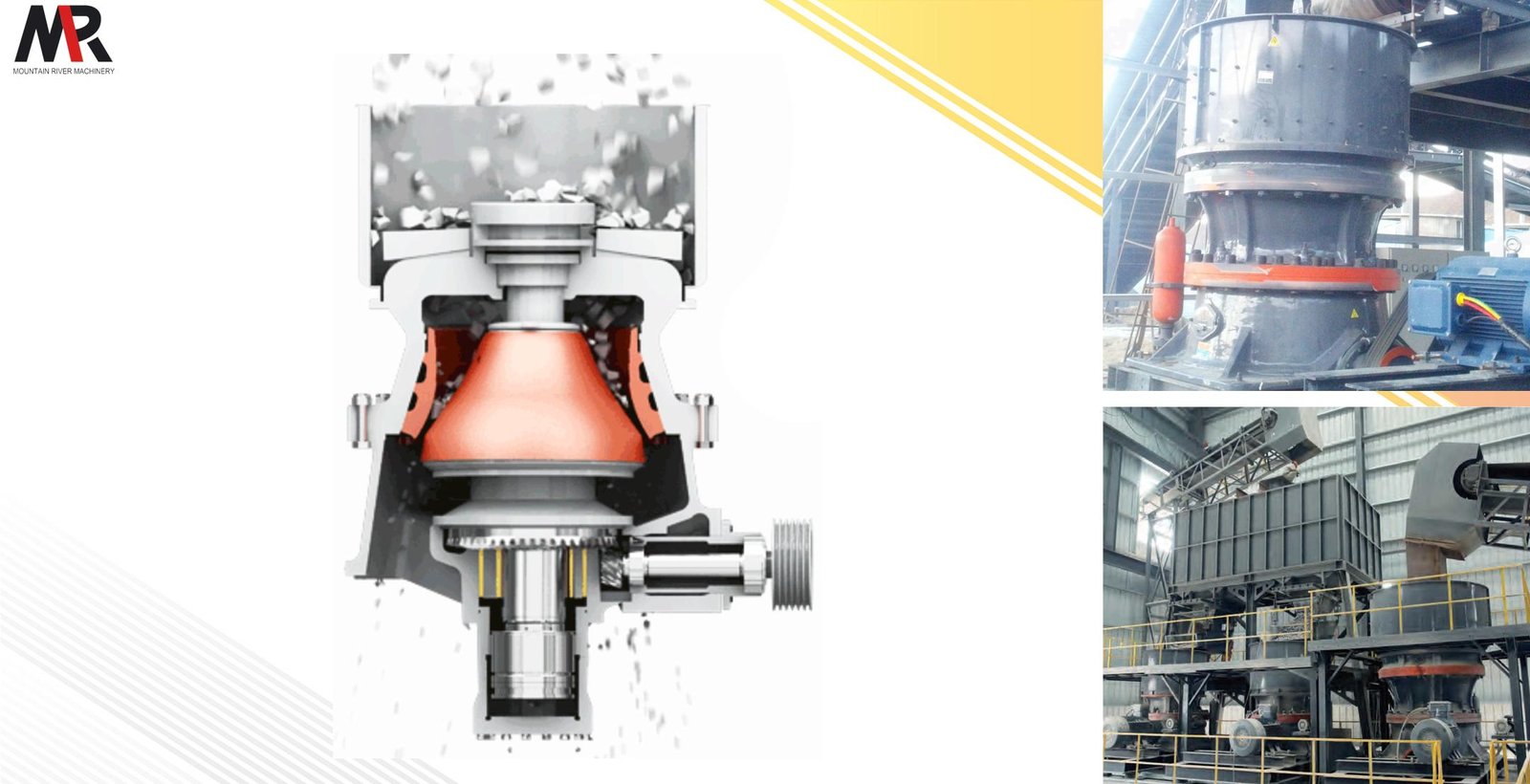
HST: The horizontal shaft is driven by an electric motor, which in turn drives the eccentric sleeve via gears. The eccentric sleeve rotates the cone, achieving continuous crushing of the stone.
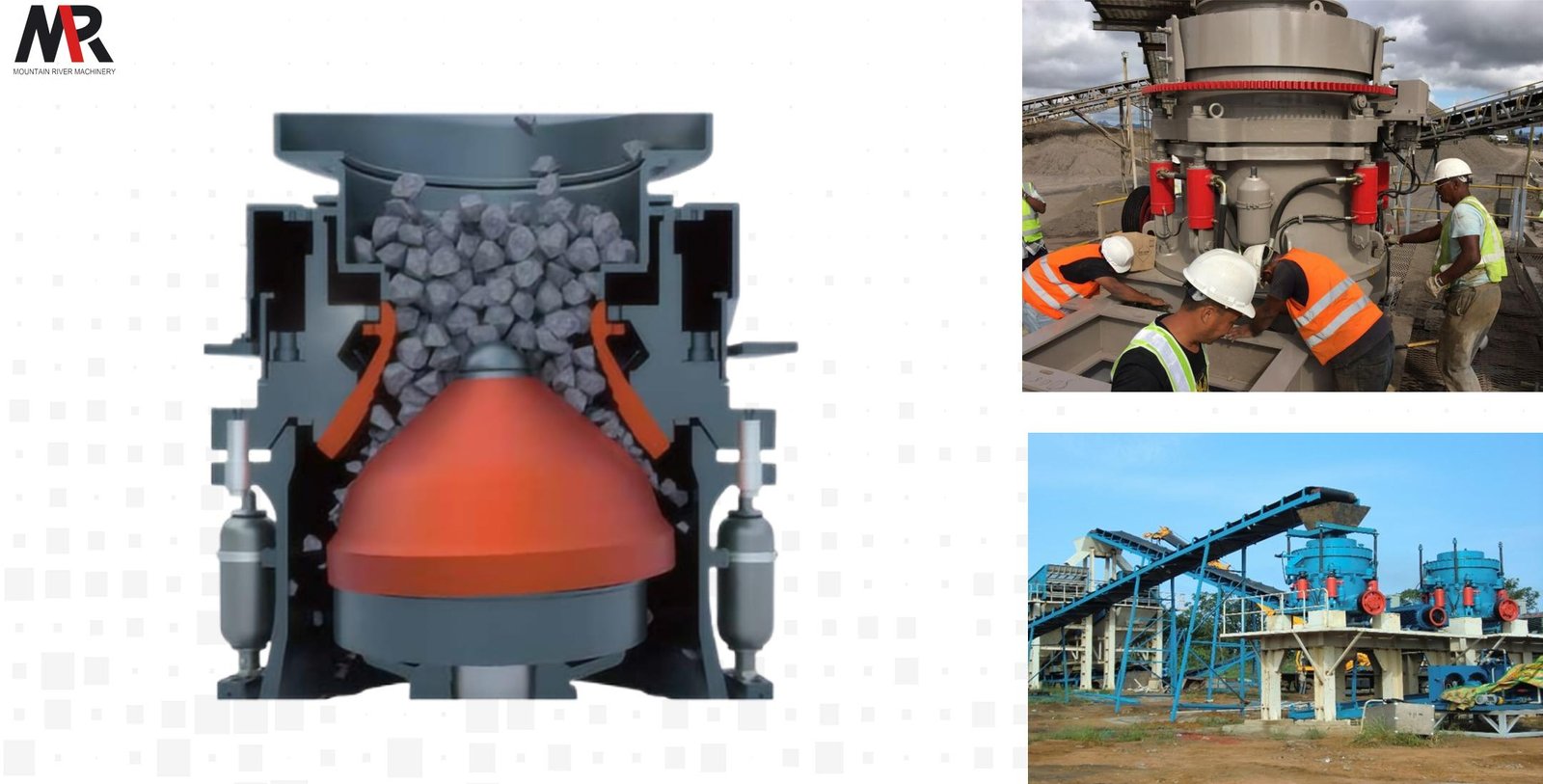
HP: The pulley drives the rotation of the horizontal shaft, while the eccentric sleeve rotates via bevel gears. Therefore, the eccentric sleeve directly drives the cone to crush the stone, while the main shaft remains stationary.
What are HST center feed and HP full feed?
The main difference lies in how the material enters the crushing chamber.
HST center feed: The material enters from the center of the crusher, falling evenly into the chamber and gradually undergoing compression crushing.
HP full feed: The material must completely fill the crushing chamber, achieving compression crushing, which is known as “full chamber operation.”
In practice, these differences directly affect crushing efficiency and stress state.
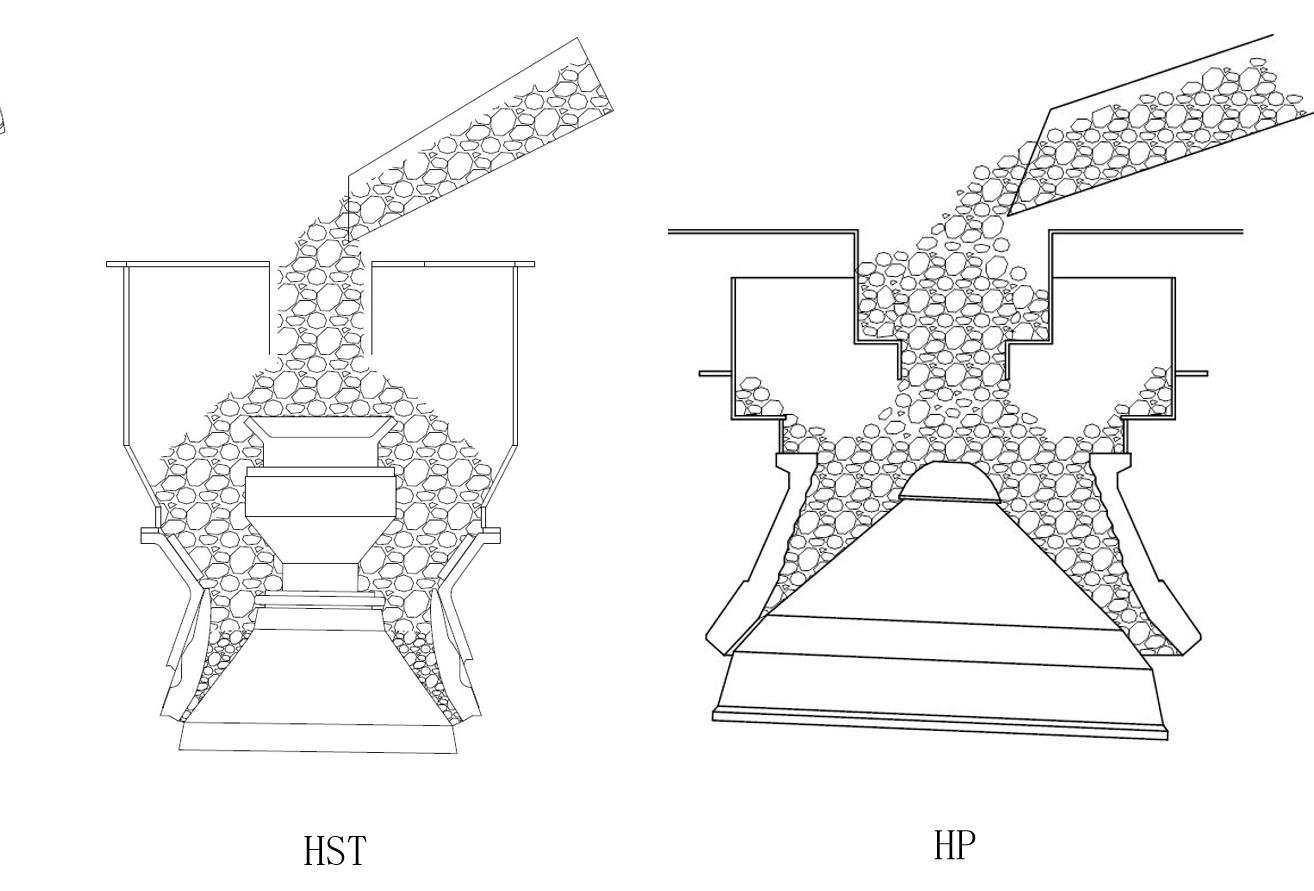
HST and HP Performance Comparison
Both crushers are high-performance and achieve layered compression crushing. However, due to structural differences, each has its own advantages.
Advantages of the HST Series:
1. Excellent stress conditions in the moving cone, long service life of components (bearings and copper parts).
2. Good intermediate crushing effect, high production capacity.
3. Fully intelligent control: dynamically adjusts the discharge output, motor power, and crusher pressure under load, and displays all operating parameters in real time. This allows for unattended operation, with automatic detection and adjustment of the discharge output, thus maximizing the crusher’s power.
Advantages of the HP series (especially the larger models):
1. High yield of fine particles smaller than 8 mm.
2. Good morphology of the crushed product and excellent layer compression crushing effect.
3. High energy efficiency in fine crushing.
How to choose between HST and HP?
It’s not a question of which is better, but which is more suitable. Equipment selection should be based on the specific project. If plant feed conditions are stable and management is standardized, HP can offer good performance. However, if raw material fluctuates significantly and high standards of stability and final product quality are required, HST central feed is usually more advantageous.
If you are planning a new crushing production line or are experiencing problems with unstable output and unsatisfactory particle shape from your current equipment, please contact us. We can offer a more practical configuration based on your raw materials, capacity, and plant conditions, enabling the equipment to reach its full potential.