

Which Is Better Cone Crusher Or Jaw Crusher?
Introduction
When it comes to crushing equipment, two main types are often compared: cone crushers and jaw crushers. Both are capable of crushing materials into specific sizes, but they have different features and advantages. In this article, we will explore the key differences between cone crushers and jaw crushers to determine which one is better.
Overview of Cone Crushers and Jaw Crushers
Cone crushers and jaw crushers are both used to crush hard and medium-hard materials, such as ores, rocks, and minerals. They are commonly used in the mining, construction, and recycling industries.
Cone crushers work by compressing the material between an eccentrically rotating mantle and a concave bowl. The mantle is located on the main shaft and gyrates within the bowl, creating a crushing action that compresses the material. The final product size is determined by the gap between the mantle and bowl liner.
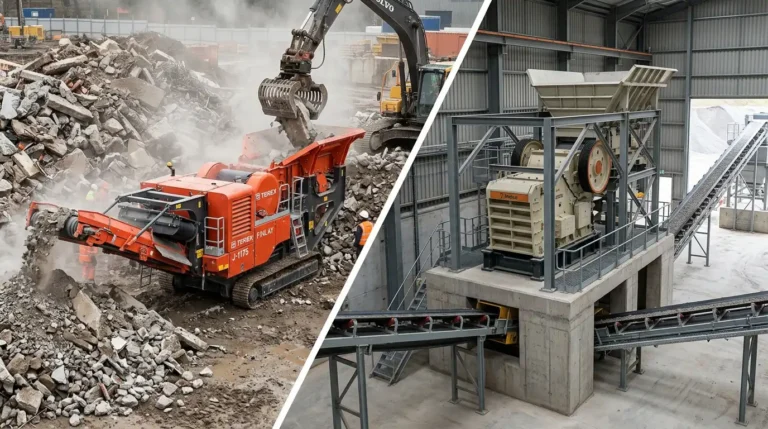
Jaw crushers work by using compressive force to break down materials. The material is fed into the jaws of the crusher and crushed between two opposing jaws. The final product size is determined by the gap between the jaws.
Advantages of Cone Crushers
One of the main advantages of cone crushers is their ability to produce a more uniform product size. Unlike jaw crushers, which create a singe-sized product, cone crushers can create a variety of sizes. They can also handle a wide range of materials, from soft to hard and from brittle to tough.
Another advantage of cone crushers is their ability to operate at higher speeds. This allows for a higher throughput rate and more efficient use of energy. Cone crushers are also more reliable and require less maintenance than jaw crushers.
Advantages of Jaw Crushers
Jaw crushers also have several advantages over cone crushers. One major advantage is their ability to handle abrasive materials. Jaw crushers are able to break down materials that are covered in heavy amounts of dust, debris, or other abrasive substances.
Another advantage of jaw crushers is their simplicity. They are easy to operate and do not require as much training or expertise as cone crushers. Jaw crushers are also more versatile, as they can crush materials of various hardness levels, from soft to extremely hard.
Disadvantages of Cone Crushers
Despite their many advantages, cone crushers do have a few drawbacks. One major disadvantage is their high operational costs. Cone crushers require a lot of energy to operate effectively, which can lead to high electricity bills.
Cone crushers also have a limited feed opening size. This means that they can only accept materials that are smaller than the opening size. This can be a problem if the material you need to crush is larger than the opening size.
Disadvantages of Jaw Crushers
Jaw crushers also have a few disadvantages. One major disadvantage is their tendency to break down over time. Jaw crushers are prone to wear and tear, and the more they are used, the more likely they are to experience breakdowns.
Another disadvantage of jaw crushers is their limited capacity. They can only crush a certain amount of material at a time, which can lead to a bottleneck in the crushing process.
Conclusion
In conclusion, both cone crushers and jaw crushers have their own unique advantages and disadvantages. Cone crushers are better suited for certain applications, such as hard and abrasive materials, while jaw crushers are better suited for softer materials.
Ultimately, the decision of which type of crusher to use will depend on your specific needs and preferences. If you require a more uniform product size or need to process abrasive materials, cone crushers may be the better choice. If you need to crush a variety of materials of various hardness levels and require a simpler machine, jaw crushers may be the better choice.