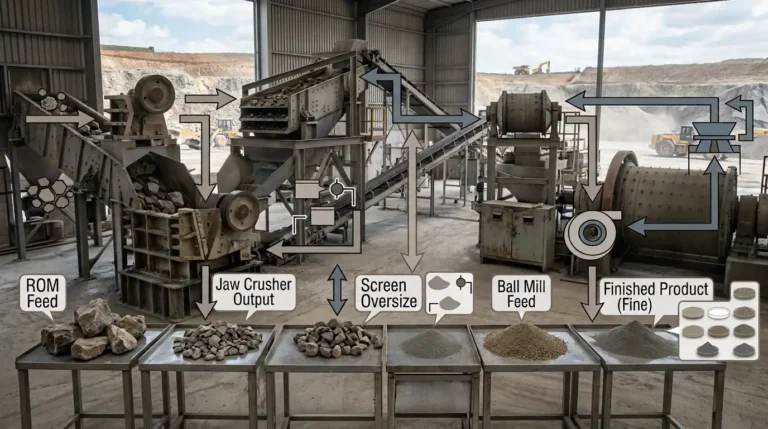


Troubleshooting Static Separator Blades on Heavy-Duty Raymond Mills
What You Will Learn from This Guide
Product fineness drifting off target is one of the most common complaints on a heavy-duty Raymond mill. The static separator blades are frequently the actual source. This guide explains what those blades physically do, the specific failure modes that show up under heavy-duty operation, and how to tell them apart before reaching for the adjustment lever. It serves technicians and plant engineers troubleshooting fineness problems. After reading, you will understand why simply re-adjusting the blade angle often treats the symptom without fixing the actual cause.

What Static Separator Blades Actually Do
A static separator sits above the grinding chamber, built around a ring of angled blades. Airflow carrying ground material has to pass through that ring. Each blade’s angle determines the deflection path the airflow takes, which in turn determines the centrifugal force acting on the particles moving through it.
That centrifugal force is the actual mechanism behind classification. Coarser, heavier particles get thrown outward and fall back for another pass through the grinding chamber. Finer particles stay entrained in the airflow and continue on as finished product.
The blade angle is typically adjustable through a lever or control ring mechanism. It connects to all the blades at once, letting an operator shift the cut point coarser or finer without opening the mill.
Symptom: Product Fineness Drifting Coarse Over Time
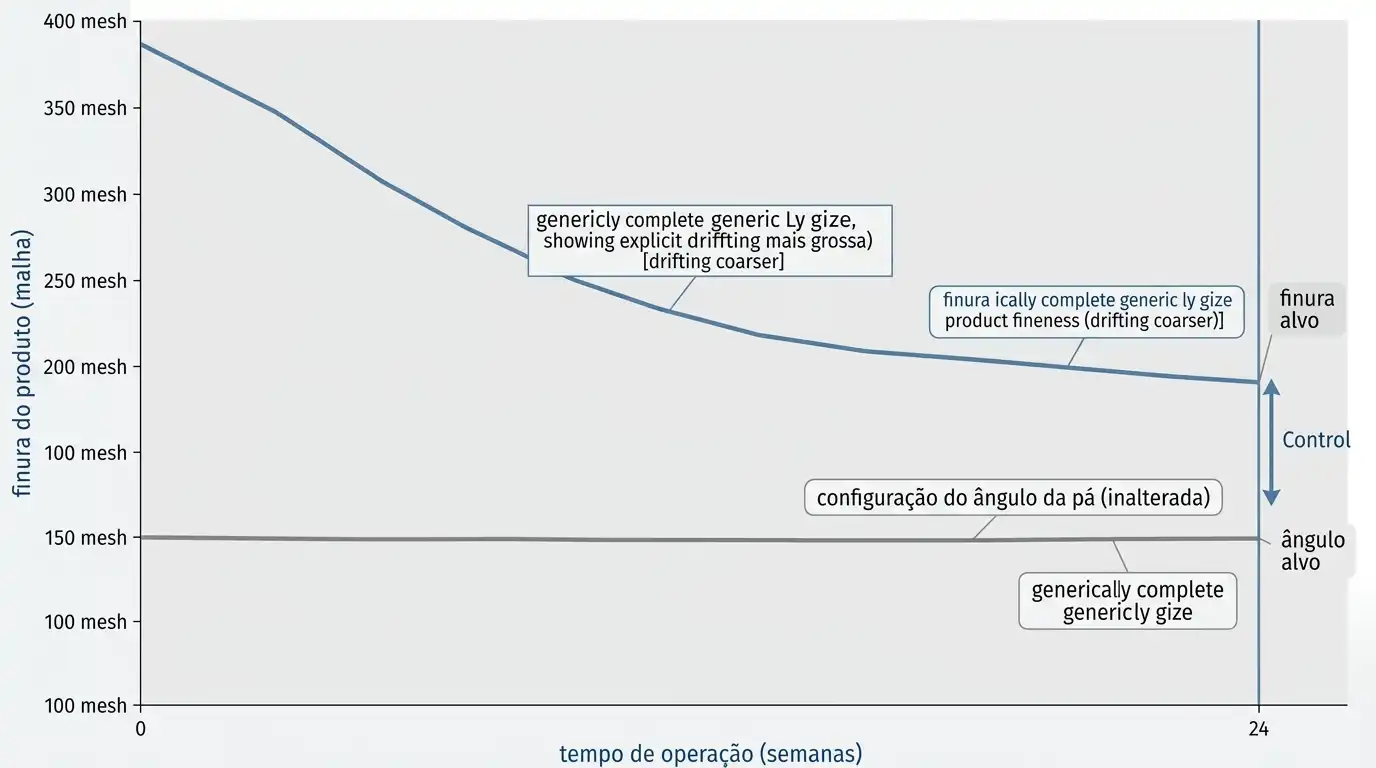
The most common real-world complaint is straightforward. Product that used to hit target fineness gradually comes out coarser, even though nobody touched the blade adjustment. This drift often happens slowly enough that it goes unnoticed until a quality check flags it well outside specification.
The instinctive response is to tighten the blade angle back toward a finer setting and move on. That fix often works temporarily. It does not address why the cut point moved in the first place, so the same drift tends to reappear again down the line.
Root Cause: Blade Wear from Abrasive Material Flow
Static separator blades sit directly in a constant stream of airborne particles. Abrasive minerals wear those blade edges down over time. A worn blade no longer presents the same effective angle to the airflow that it did when new. That happens even though the external adjustment setting has not moved at all.
This is exactly why fineness can drift coarser with the adjustment mechanism untouched. The blade geometry itself has changed underneath a setting that looks unchanged from the outside. Heavy-duty operation on harder, more abrasive material accelerates this wear. That is part of why this failure mode shows up more aggressively on demanding duty than on lighter applications.
Root Cause: Material Buildup on Blade Surfaces
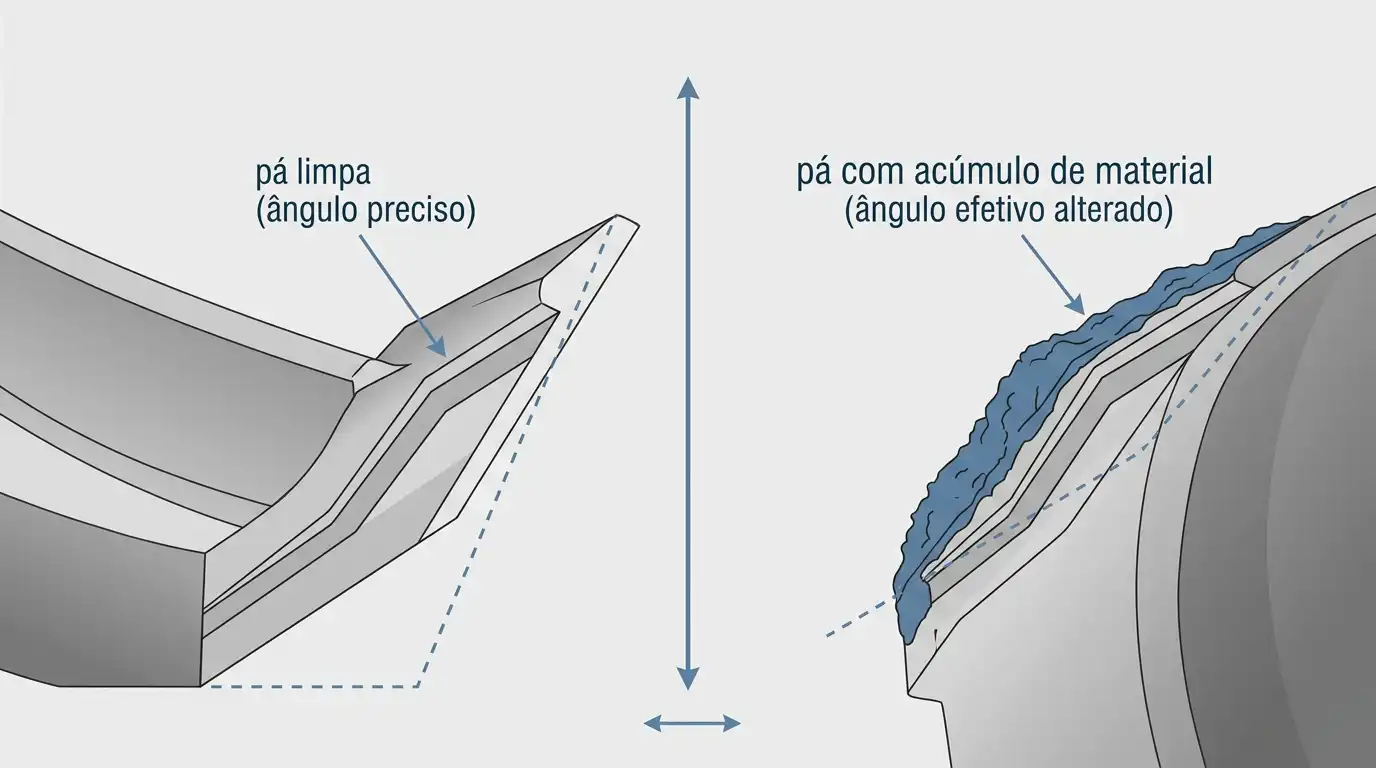
Wear is not the only way a blade’s effective profile can change without the adjustment setting moving. Moisture-sensitive or sticky material can cake onto blade surfaces. That buildup alters the effective angle the airflow actually encounters. This produces a very similar symptom to wear, a fineness drift with no adjustment change, but the underlying cause and the fix are completely different.
Wear needs a blade replacement. Buildup needs cleaning instead. It often also needs a look at why the material is sticking in the first place. That could trace to moisture content, material characteristics, or airflow conditions inside the separator.
Telling these two apart usually requires an actual inspection, not a guess from the symptom alone. Both produce the same coarsening trend on a fineness trend chart.
Root Cause: Adjustment Mechanism Drift or Seizure
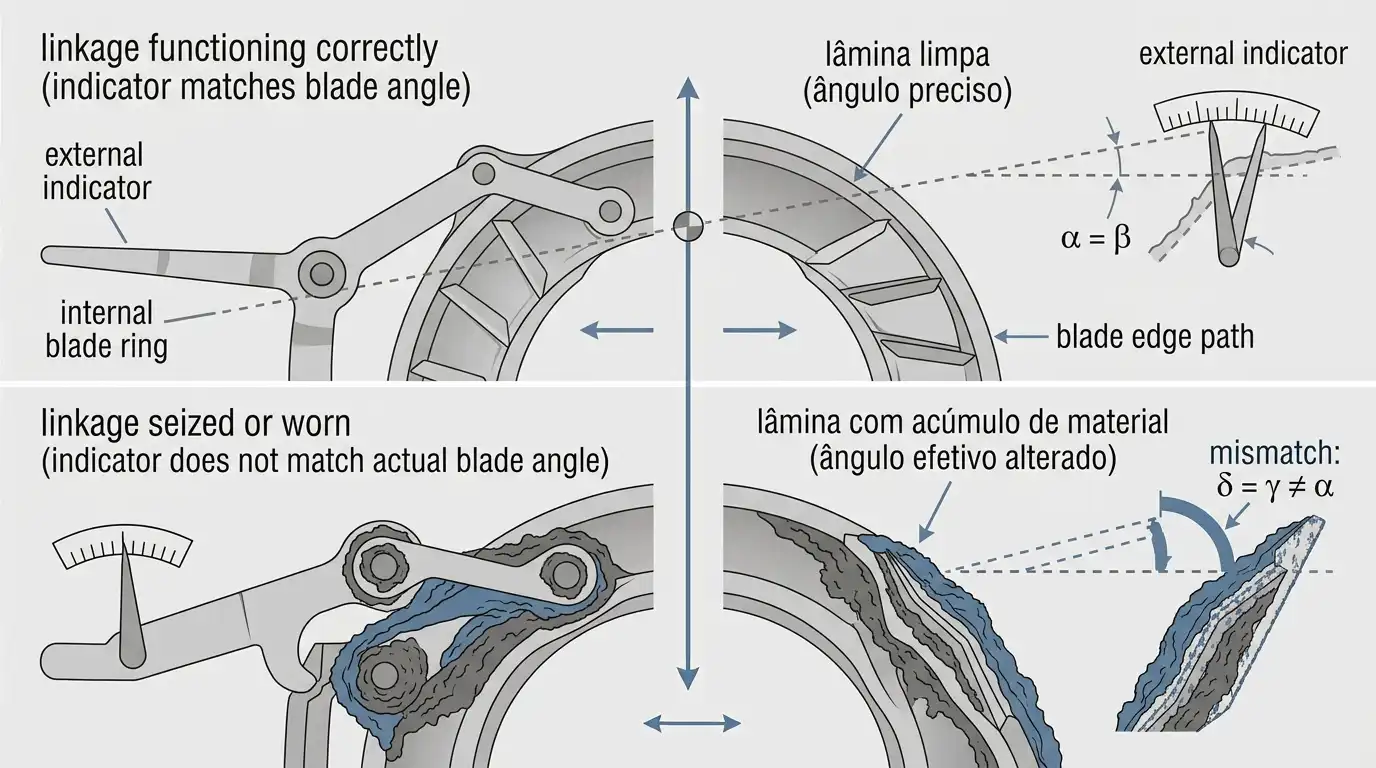
The lever or control ring connecting the external adjustment point to the blade ring is itself a mechanical assembly. It can fail independently of the blades. Linkage wear, corrosion, or partial seizure can mean the blades are not actually sitting at the angle the external indicator suggests.
This failure mode is worth checking specifically. It can mimic both wear and buildup from a pure fineness-trend perspective. It requires yet another different fix, though: repairing or replacing the adjustment linkage itself, not the blades.
A mechanism that feels stiff or sticks partway through its range is a warning sign. So is one that does not respond proportionally to adjustment. Both point toward the linkage as the actual cause, rather than the blades themselves.
Why Re-Adjusting the Angle Alone Often Doesn’t Fix It
All three root causes, wear, buildup, and linkage failure, produce the same visible symptom. Fineness drifts coarser while the recorded setting stays the same. Simply tightening the blade angle to compensate treats that shared symptom without identifying which actual cause is behind it.
That matters because the fix is different for each one. Compensating for wear with a tighter angle setting just runs a thinner, already-compromised blade edge harder. That often accelerates whatever failure comes next.
Compensating for buildup does nothing to stop new material from caking on again. Compensating for a seized linkage may not even be possible, if the mechanism cannot reliably reach the angle the operator thinks they are setting. A real fix starts with inspecting the blades and the adjustment mechanism directly, not with turning the adjustment further.
Frequently Asked Questions
Why does Raymond mill product fineness sometimes drift coarser even when nobody changed the blade setting?
The blade angle setting can stay unchanged while the blade’s actual effective profile changes underneath it. This most commonly comes from wear or material buildup on the blade surface. Both alter how the airflow deflects through the separator without any visible change at the external adjustment point.
How can I tell if coarsening fineness is caused by blade wear or material buildup?
Both produce a similar gradual coarsening trend. The reliable way to tell them apart is a direct inspection of the blades, not reading the fineness trend alone. Worn blades typically show visible edge loss or thinning. Buildup, in contrast, shows as a caked material layer that can often be cleaned off to restore the original profile.
Why doesn’t simply tightening the blade angle fix a coarsening fineness problem?
Tightening the angle compensates for the symptom without addressing the underlying cause. If wear is the actual cause, a tighter setting runs an already-thinned blade edge harder. If buildup is the cause, it does nothing to stop new material from caking on again, so the same drift tends to return.
What does it mean if the adjustment mechanism itself seems stiff or unresponsive?
A lever or control ring that feels stiff or sticks partway through its range suggests the linkage itself has drifted or partially seized. The same is true if it does not move the cut point proportionally to the adjustment made. That points toward repairing the adjustment mechanism rather than replacing the blades.