

HP Multi-Cylinder Hydraulic Cone Crusher vs Traditional Cone Crusher: Key Differences
What You Will Learn from This Guide
An HP multi-cylinder hydraulic cone crusher replaces the coil springs of a traditional cone crusher with several hydraulic cylinders, which handle both overload protection and discharge adjustment. This guide compares the two machines component by component. It serves an engineer or buyer already committed to a cone crusher and choosing between these two mechanisms. After reading, you will know which structural differences actually change your operating cost.
Overview
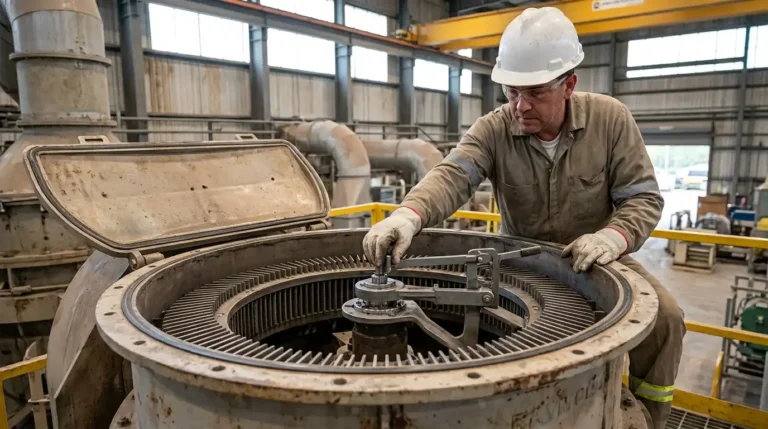
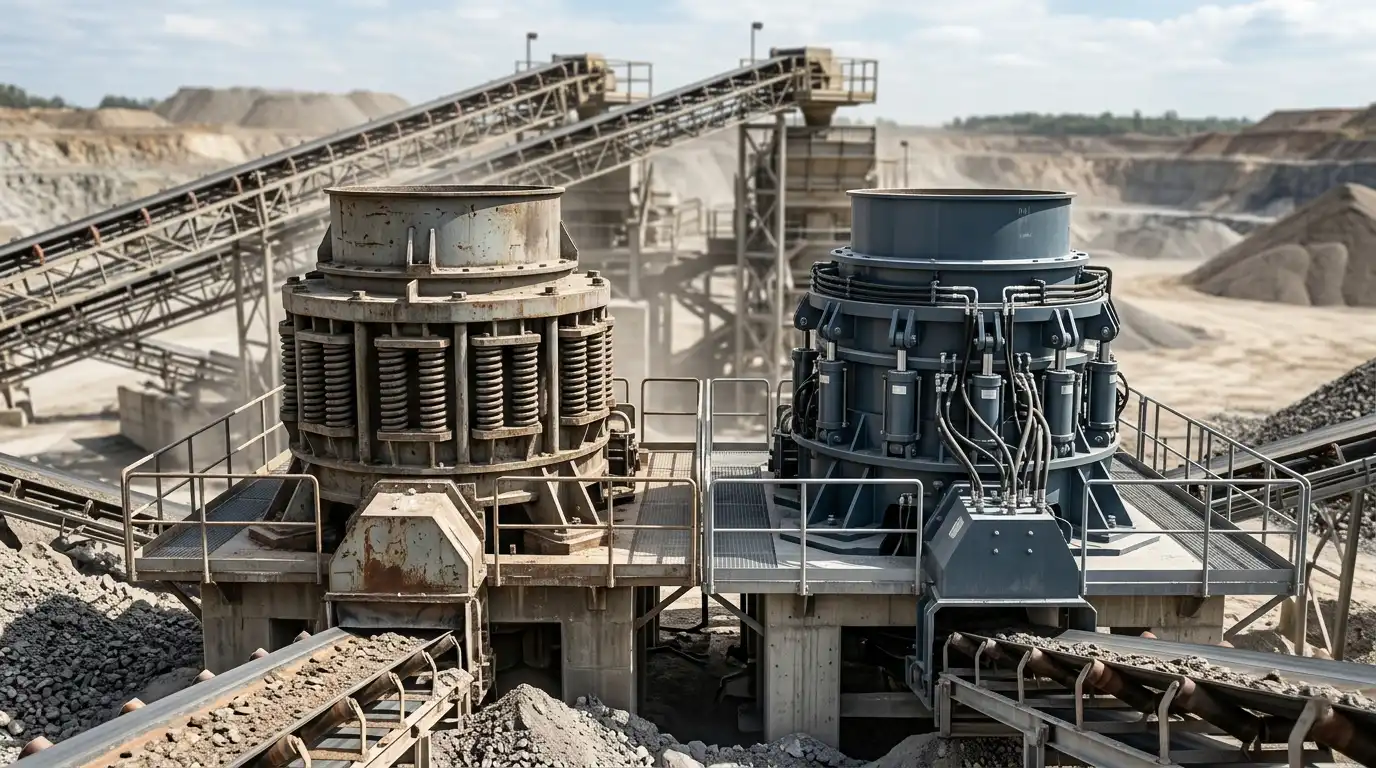
Traditional cone crushers, often called spring or Symons-type crushers, use coil springs for overload protection. An HP multi-cylinder hydraulic unit replaces those springs with several hydraulic cylinders arranged around the frame. Both machines break rock the same way, between a gyrating mantle and a fixed concave.
The mechanism difference is not cosmetic. It changes how the machine recovers from a tramp-iron event, how the discharge setting is adjusted, and how much automation the site can build around it.
Working Principle
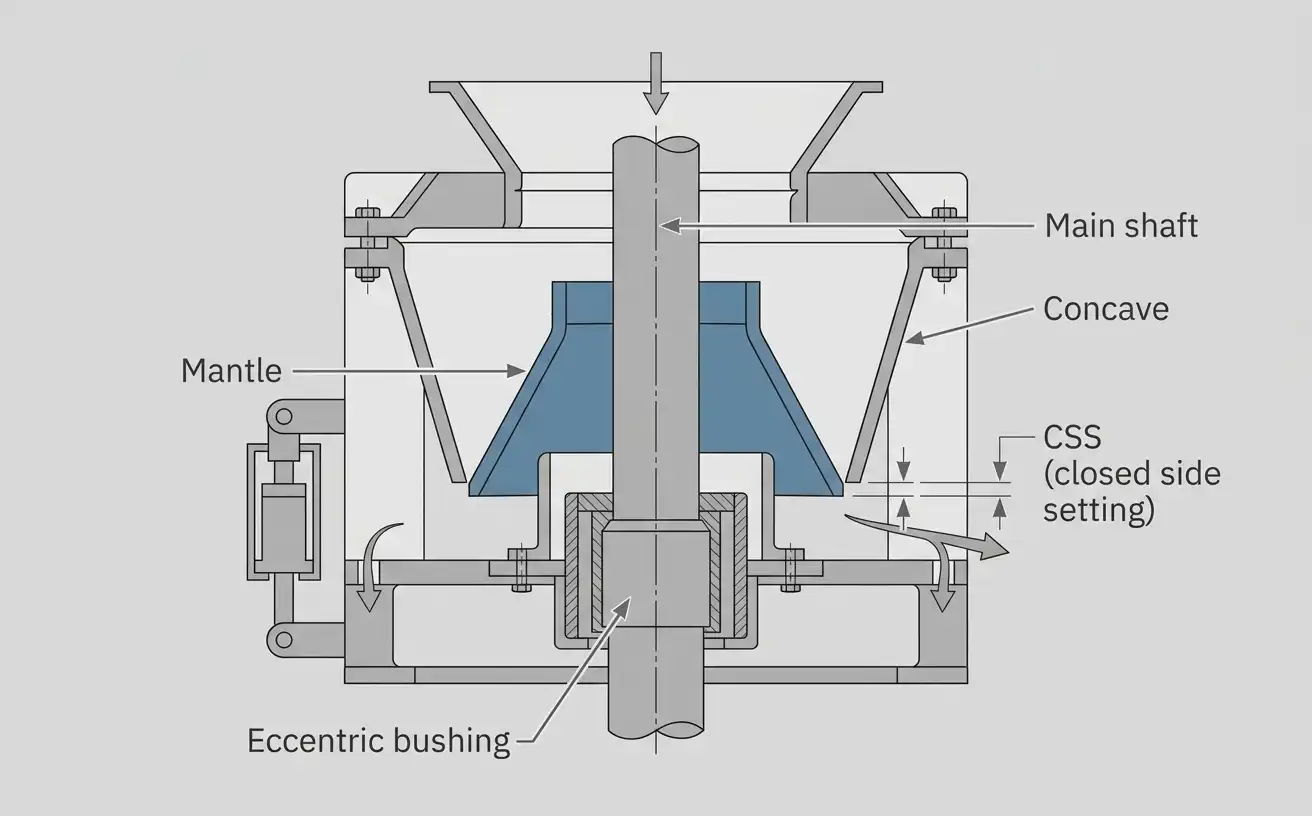
Both machines share the same core mechanism. An eccentric bushing drives the main shaft in a gyrating motion, sweeping the mantle around inside the concave. As the gap narrows, rock is compressed and fractured. As it widens, broken material moves down toward the discharge.
The closed side setting (CSS) is the narrowest point in that cycle. It sets the maximum product size. What differs between the two machines is not this basic motion, but what sits behind the mantle to absorb force and to reset the setting.
Structural Differences: Overload Protection
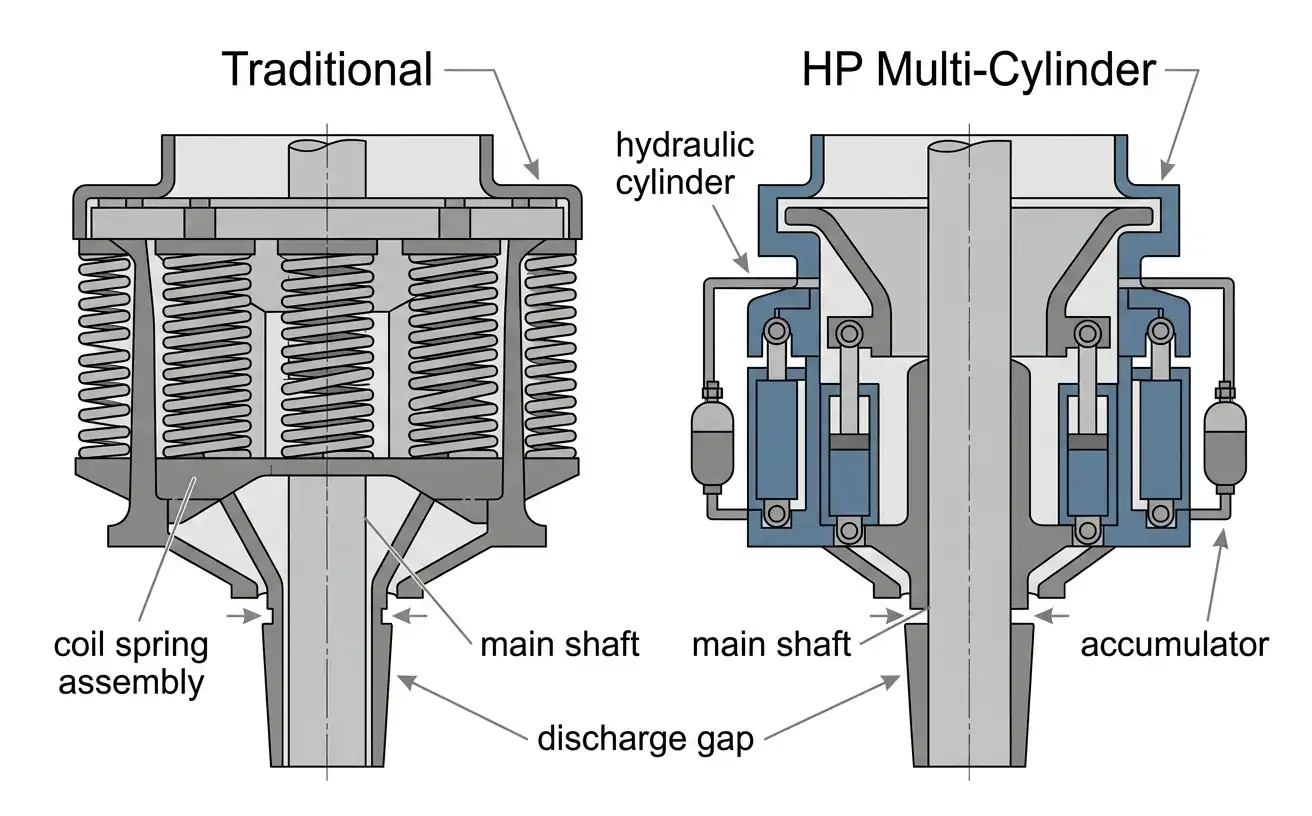
A traditional cone crusher relies on coil springs. When tramp iron enters the chamber, the springs compress and let the discharge gap widen. Once the object clears, the springs push the frame back to its set position.
An HP multi-cylinder unit uses hydraulic cylinders instead. Oil pressure relieves automatically when an uncrushable object is detected, and the setting resets once the event clears. If material jams the chamber rather than passing through, the traditional design generally needs a manual reset. The hydraulic design typically clears the chamber through the same cylinders that handle normal adjustment, without stopping the machine for manual work.
Structural Differences: Chamber Design and Product Shape
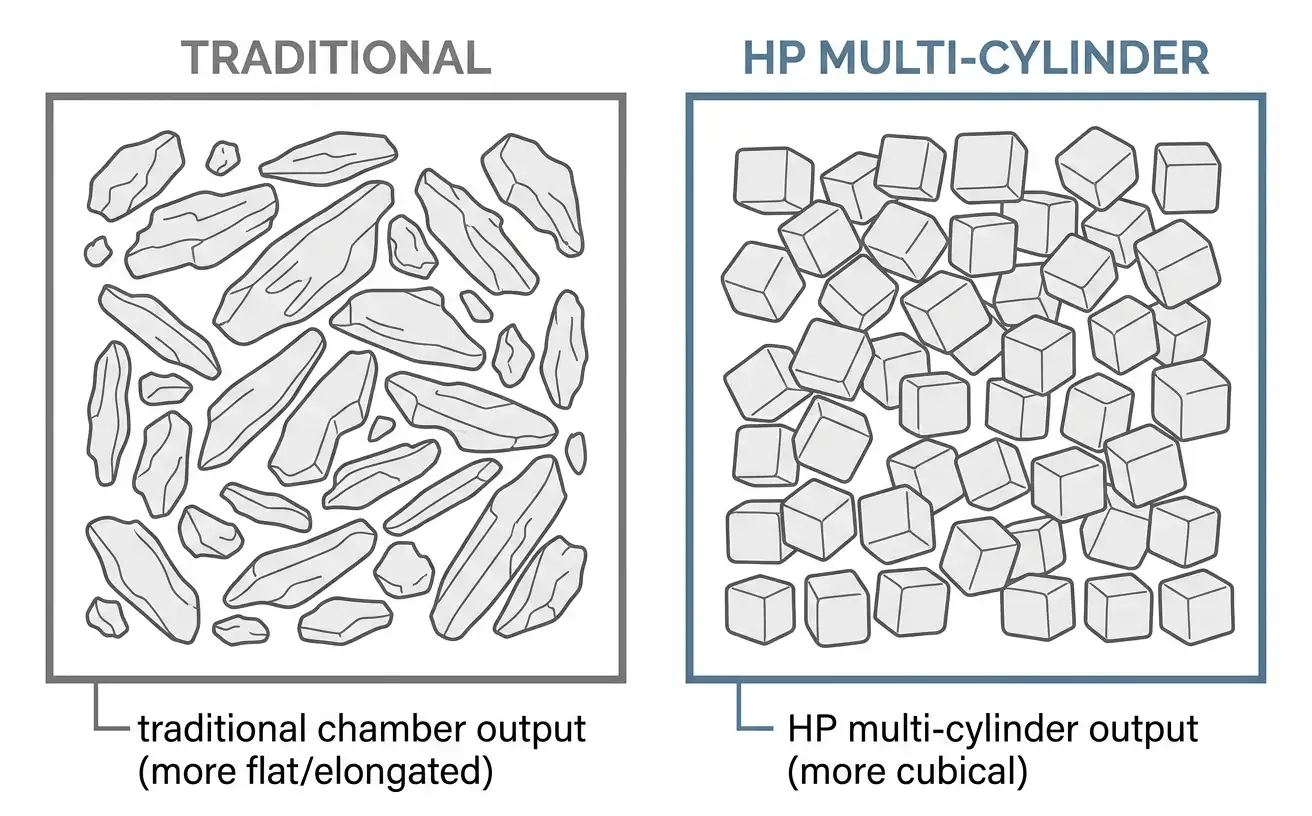
Multiple hydraulic cylinders let an HP-class machine hold a tighter, more repeatable chamber geometry than a spring frame typically allows. This supports stronger interparticle crushing, where rock breaks against other rock particles as well as against the mantle and concave.
Interparticle crushing generally produces a more cubical product with fewer flat or elongated pieces. A traditional spring crusher can also use interparticle crushing principles. The more precise, hydraulically held chamber on a multi-cylinder unit typically sustains that effect more consistently as feed conditions vary.
Structural Differences: Automation and Adjustment
A traditional cone crusher usually adjusts its CSS by manually rotating an adjustment ring, often with shims involved. This works, but it takes the machine offline and needs a technician at the crusher.
An HP multi-cylinder unit adjusts the CSS hydraulically, often from a control panel or a PLC system. This allows remote or automated adjustment, and it supports linking the crusher into a coordinated plant control system with feeders, screens, and conveyors. That difference is the strongest reason a highly automated plant chooses the hydraulic design over the traditional one.
Specifications Comparison
Table 1. Traditional vs HP multi-cylinder cone crusher comparison
| Feature | Traditional (spring) | HP multi-cylinder hydraulic |
|---|---|---|
| Overload mechanism | Coil spring compression | Multiple hydraulic cylinders |
| Chamber clearing | Manual reset | Hydraulic, automated |
| CSS adjustment | Manual, shimmed or ring-based | Hydraulic, remote or automated |
| Automation potential | Limited | High, PLC-compatible |
| Typical duty | Medium crushing, lower capital cost | Medium to fine crushing, harder ore |
Source: general industry classification of cone crusher mechanisms as commonly described across equipment manufacturers. Exact feature sets vary by model and should be confirmed against a specific supplier’s documentation.
Neither machine is universally better. The traditional design costs less to buy and is simpler to maintain in a low-automation setting. The HP design costs more but reduces labor and downtime on a continuous, high-tonnage line.
Selecting Between the Two
Three questions narrow the choice. First, how often does the operation change its CSS? A site running one fixed setting for months gains little from hydraulic adjustment. A site changing gradation often recovers that cost quickly.
Second, how often does tramp iron or jamming actually occur at this site? A quarry with clean, consistent feed sees few overload events either way. A site with variable or recycled feed material benefits more from automated hydraulic recovery.
Third, what automation level does the rest of the plant already run at? A fully manual plant gains less from a hydraulic crusher’s remote-control capability than a plant already running centralized PLC control across its other equipment.
Applications by Material and Industry
Both machine types handle common secondary and tertiary crushing duty: granite, basalt, and general quarry aggregate. An HP Multi-Cylinder Hydraulic Cone Crusher is documented handling high-hardness basalt in a 200 t/h basalt crushing plant. There, consistent product shape mattered as much as raw throughput.
A CS Symons Cone Crusher remains a reasonable choice for softer, less variable feed where automation is not a priority. A 100–150 t/h aggregate production plant shows this traditional design running a general aggregate line, where careful feed-rate control substitutes for hydraulic automation.
Maintenance and Adjustment Labor
Wear parts are largely the same across both designs: manganese-steel mantle and concave liners. They wear according to feed abrasiveness and tonnage, not according to which overload mechanism the machine uses. Neither design changes liner wear rate on its own.
The difference shows up in labor, not parts. A traditional crusher’s manual chamber-clearing and adjustment work adds technician hours every time it happens. An HP unit shifts that labor toward hydraulic system upkeep instead: seal condition, fluid cleanliness, and periodic function checks on the cylinders and accumulators.
Cost and Procurement
An HP multi-cylinder unit costs more to purchase than a comparable traditional cone crusher at the same frame size. This reflects the added hydraulic hardware, control system, and automation capability described above.
Buyers should weigh that premium against labor savings over the machine’s service life, not against purchase price alone. A site with frequent overload events or gradation changes often recovers the price difference within a few years through reduced downtime and technician hours.
Frequently Asked Questions
What is the main difference between a traditional and an HP cone crusher?
A traditional cone crusher uses coil springs for overload protection and manual adjustment. An HP multi-cylinder hydraulic crusher uses multiple hydraulic cylinders for both functions, with automated overload reset and hydraulic CSS adjustment.
Does an HP cone crusher produce a better product shape than a traditional one?
An HP unit’s tighter, hydraulically held chamber typically sustains strong interparticle crushing more consistently as feed conditions vary, which generally supports a more cubical product. A traditional crusher can also achieve good product shape, but less consistently under varying feed.
Is a traditional spring cone crusher obsolete?
No. It remains a lower-cost, mechanically simple option for sites with consistent feed, low automation needs, and infrequent overload events. The right choice depends on operating conditions, not on which design is newer.
How does chamber clearing differ between the two designs?
A traditional cone crusher generally needs a manual reset when material jams the chamber. An HP multi-cylinder unit typically clears the chamber hydraulically through the same cylinders used for normal adjustment, without stopping the machine for manual work.