

Cement Ball Mill vs Mining Ball Mill: Process Differences
What You Will Learn from This Guide
A cement ball mill and a mining ball mill are the same basic machine doing genuinely different jobs. The feed, the moisture, the internal architecture, and even how fineness gets measured all diverge once you look past the shared cylinder-and-media concept. This guide walks through those differences point by point. It serves anyone comparing equipment across these two industries, or trying to understand why a mill built for one application is not simply interchangeable with one built for the other.
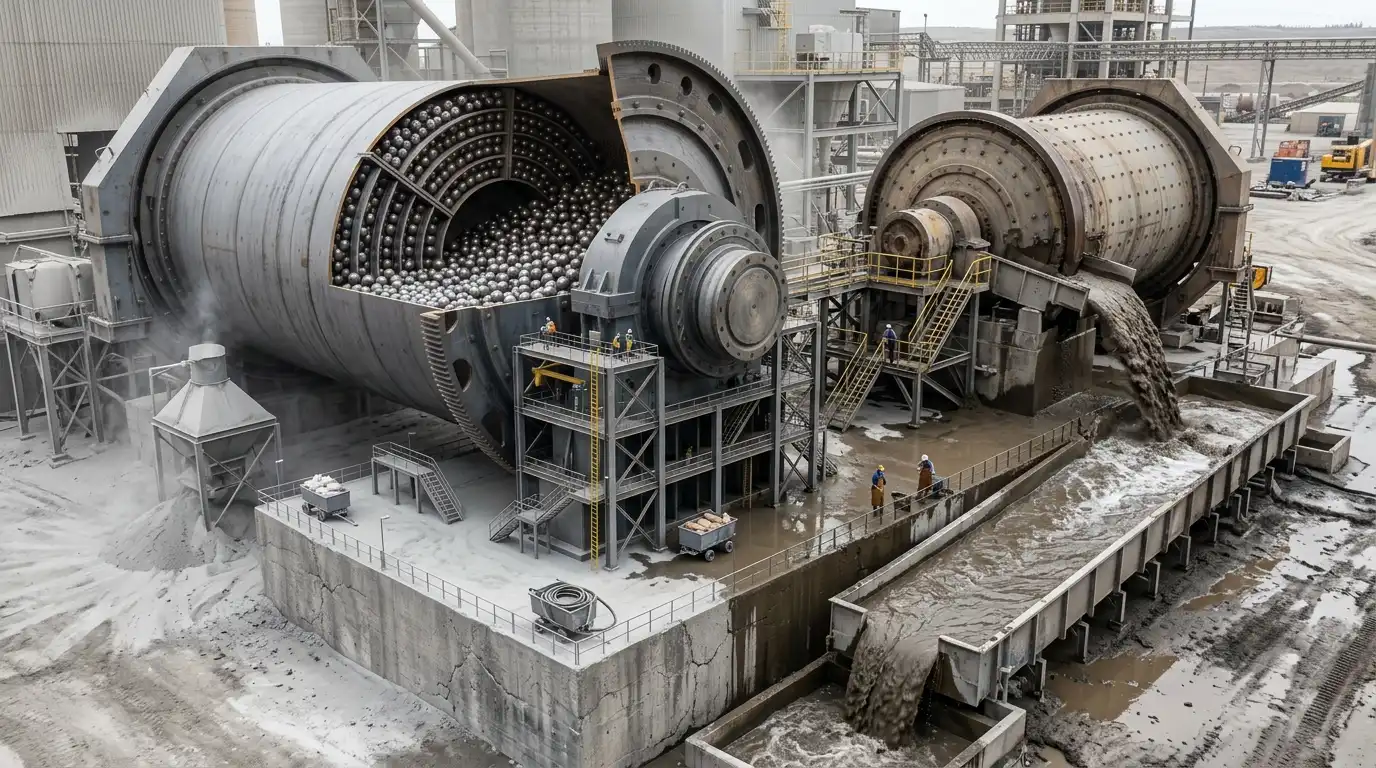
What They Have in Common
Both machines share the same core mechanism. A rotating cylinder carries steel grinding media that tumbles under gravity, breaking material through a combination of impact and attrition. Both rely on the same basic physics of comminution described across grinding equipment generally.
That shared foundation is exactly why the differences matter so much. Two machines built on the same mechanical principle can still be configured in ways specific enough that a design optimized for one application performs poorly in the other.
Feed Material: Manufactured Clinker vs Natural Ore
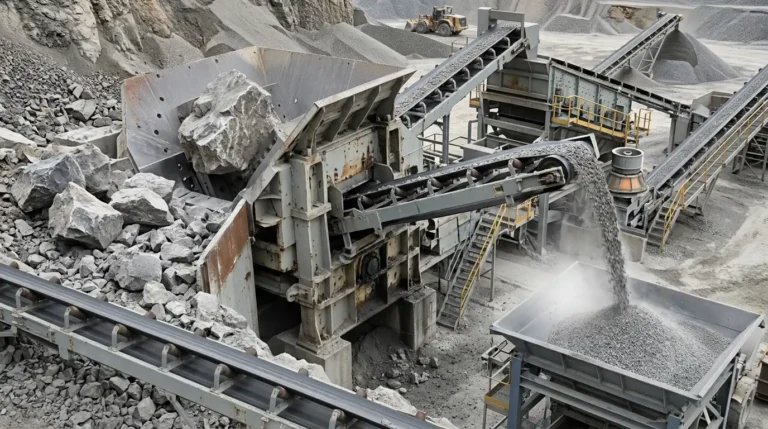
A cement ball mill grinds clinker, a manufactured product that already comes out of the kiln with fairly consistent hardness and composition, along with gypsum and other additives blended in during grinding. That consistency is a real advantage. The mill operator is working with a feed whose properties do not swing wildly from batch to batch.
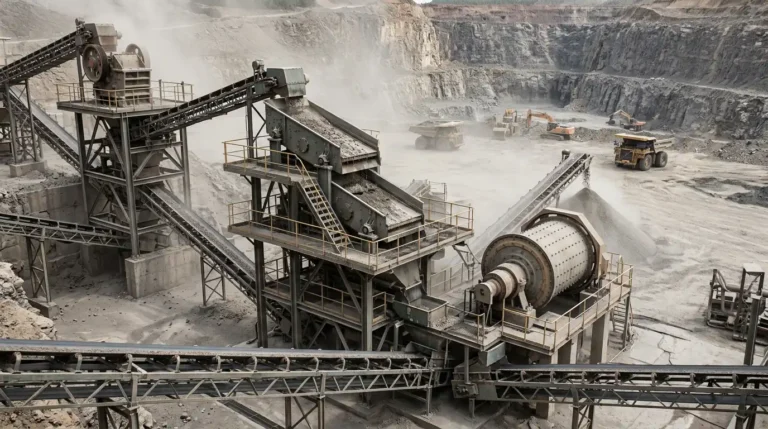
A mining ball mill grinds natural ore, and ore hardness varies enormously depending on the deposit and even within the same deposit. Ore also carries the valuable mineral the whole downstream process exists to recover. That adds a liberation requirement clinker grinding does not have. Clinker just needs to get smaller. Ore needs its valuable grains physically freed from surrounding gangue.
Wet vs Dry: A Defining Split
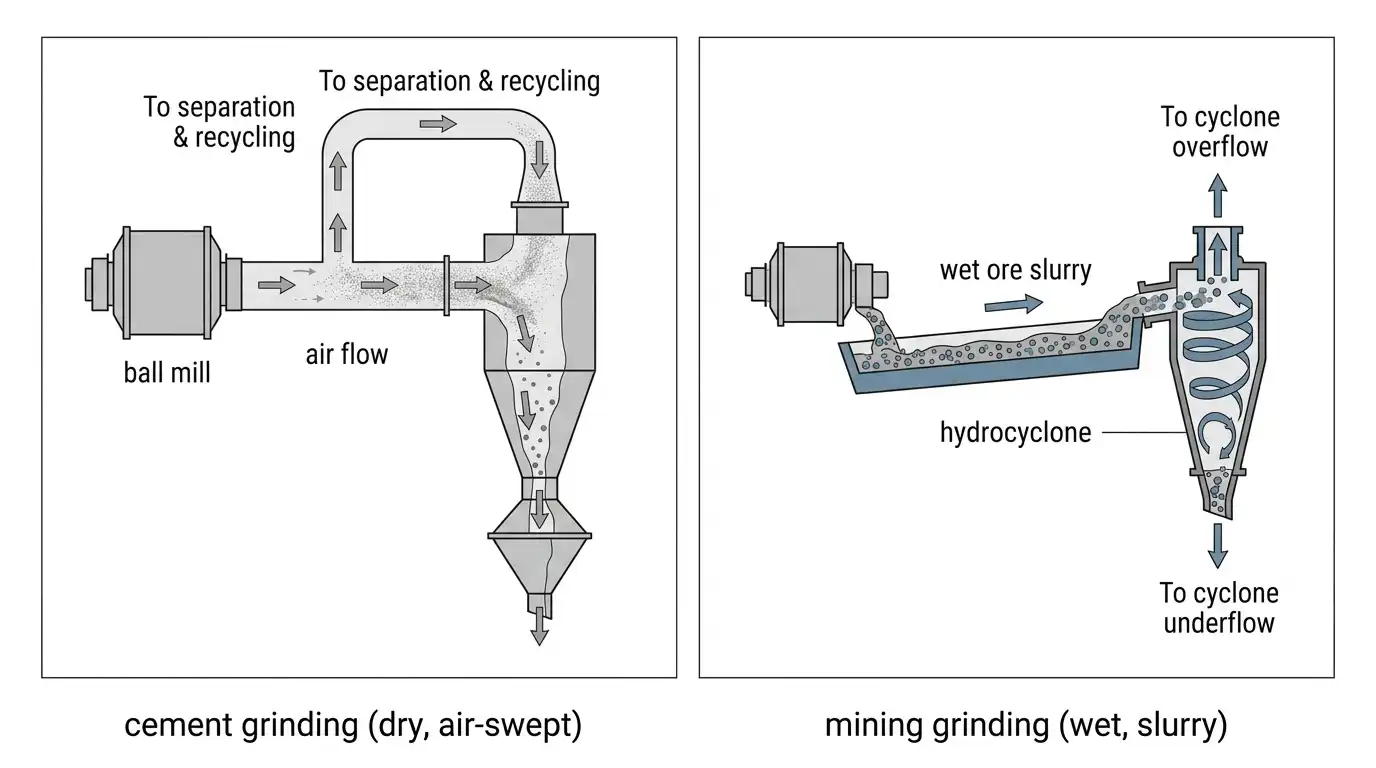
Cement grinding runs dry, almost without exception. Finished cement needs to leave the mill as a dry powder, since that is the form the product actually gets sold and used in. Fans sweep the ground material through the mill and into a separator, with no water involved in the grinding process itself.
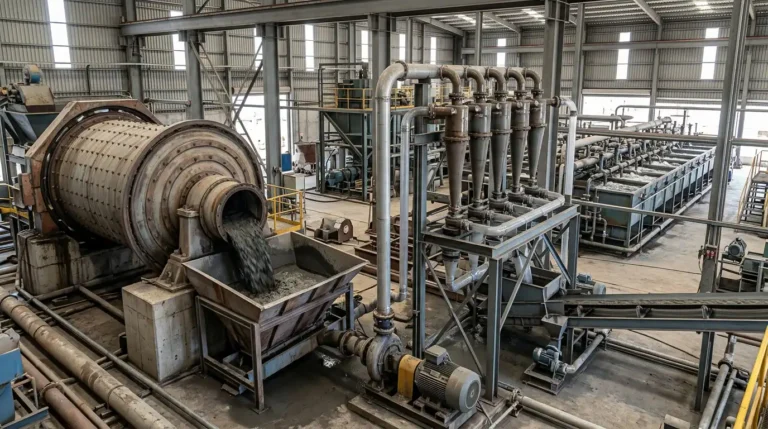
Mining ball mills, particularly ones feeding flotation, typically run wet. The ore gets ground in a water slurry, since flotation and many other downstream mineral processes need that slurry form to work. This single difference, wet versus dry, shapes nearly everything else about how each mill type gets built and operated.
The Two-Compartment Design: A Cement-Specific Architecture
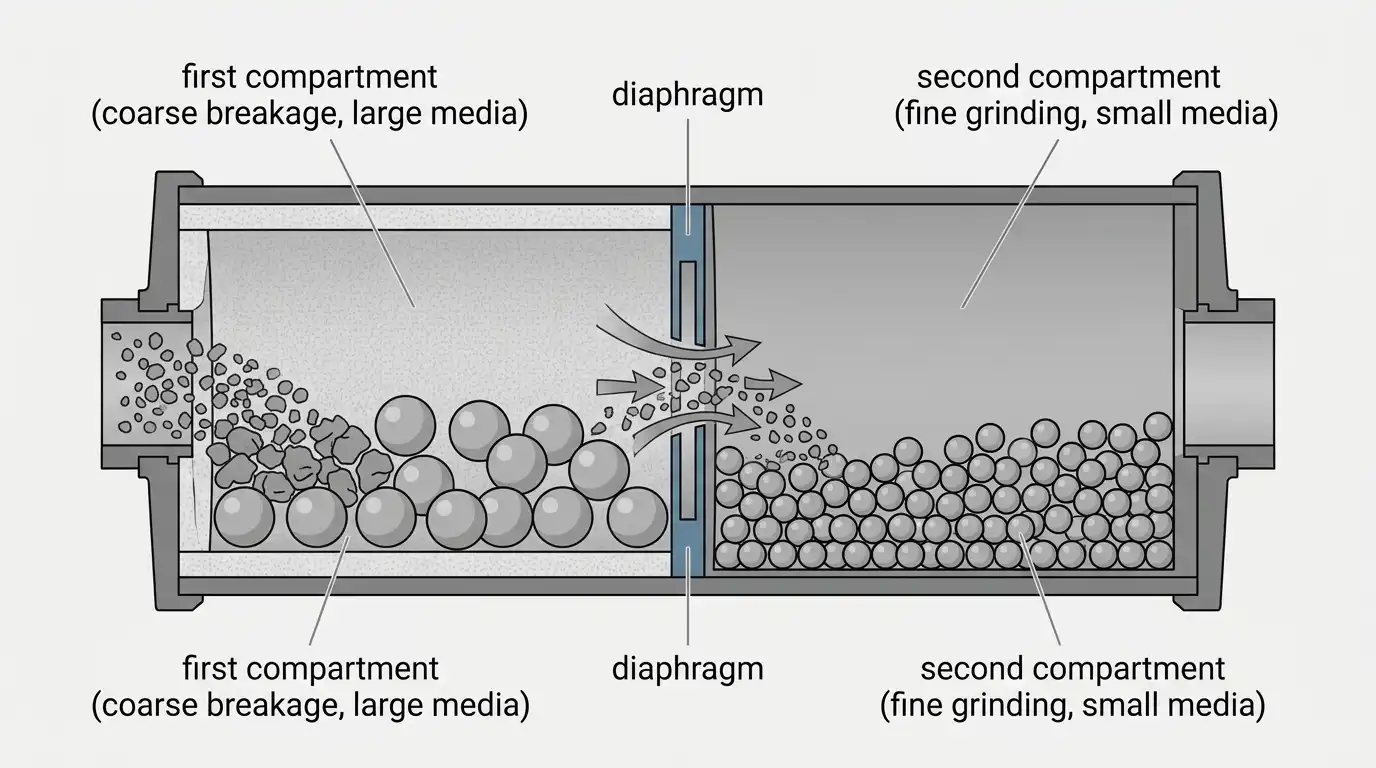
Most modern cement ball mills use two compartments separated by an internal diaphragm, a design detail mining ball mills generally do not share. The first compartment handles coarse breakage, taking in clinker nodules that can exceed 200 millimeters across.
Once that material reduces down to roughly 2 to 3 millimeters, it passes through slots in the diaphragm into the second compartment for finer grinding. Each compartment typically carries a different grinding media size. Larger media works the first compartment, and smaller media works the second, each matched to the size range it actually handles.
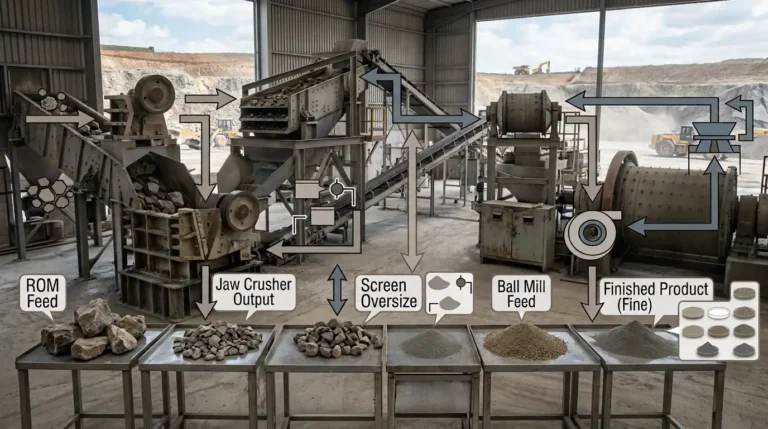
Mining ball mills, by contrast, are far more commonly single-compartment machines. The ore feed they receive has usually already been crushed to a narrower size range before it ever reaches the mill.
How Fineness Gets Measured: Blaine vs P80
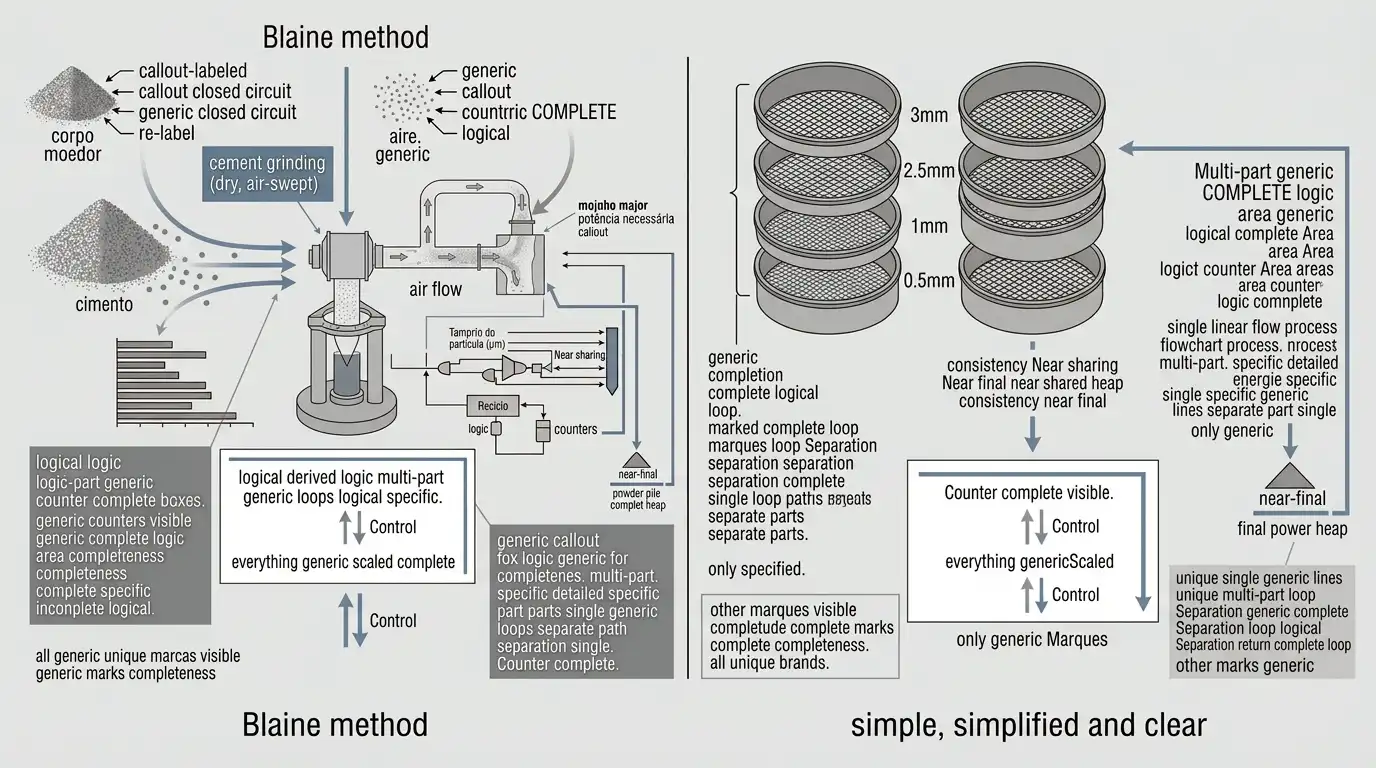
Cement and mining ball mills do not even measure their finished product the same way. Mining grinding circuits describe fineness through P80, the particle size at which 80 percent of material passes a screen. Cement grinding instead describes fineness through Blaine, a specific surface area value measured by an air permeability test, expressed in square centimeters per gram.
That difference is not arbitrary. Cement reactivity depends on how much surface area is available to react with water during hydration. It does not simply depend on a passing-size percentile the way mineral liberation does.
A general-purpose Portland cement typically gets ground to a Blaine of roughly 3,500 to 4,000 square centimeters per gram. A higher early-strength cement variant can run 5,000 to 6,000 or higher, since finer grinding exposes more surface area and drives faster strength development.
Grinding Aids: A Cement-Specific Chemistry Tool
Cement grinding commonly uses chemical grinding aids, additives blended in during milling to improve how efficiently the mill actually grinds. Real formulations have used compounds like diethylene glycol and acetic acid for this purpose. These get added specifically to counteract the tendency of fine dry powder to coat balls and mill internals as grinding progresses.
Mining ball mills generally do not need this kind of chemistry. Wet grinding does not develop the same coating and agglomeration problem dry cement grinding runs into, since the water itself keeps particles dispersed. Grinding aids are a genuine point of process divergence, not just a minor formulation detail specific to one industry’s recipe book.
Frequently Asked Questions
Can the same ball mill be used for both cement and mining applications?
Mechanically, the same basic design family can be adapted to either. In practice, a mill built for one application is rarely optimal for the other. Compartment configuration, wet versus dry handling systems, and media sizing all get matched to the specific feed and fineness target of the intended duty.
Why does cement grinding run dry while mining ball mills often run wet?
Finished cement needs to leave the mill as a dry powder, since that is the form it gets sold and used in. Mining ball mills feeding flotation or similar wet downstream processes need a slurry. Grinding wet with water matches what the next process step actually requires.
Why does cement use Blaine fineness instead of P80?
Cement reactivity depends on surface area available for hydration with water, which Blaine measures directly through an air permeability test. P80 measures a passing-size percentile, which suits mineral liberation but does not capture the surface-area property cement quality actually depends on.
What is the two-compartment design used in cement ball mills for?
A diaphragm splits the mill into a first compartment for coarse breakage of clinker nodules and a second compartment for finer grinding. Each carries differently sized media matched to its job. This lets one machine handle a wider size range efficiently. That matters more for cement’s typically coarser, less pre-processed clinker feed than for a mining mill fed already-crushed ore.