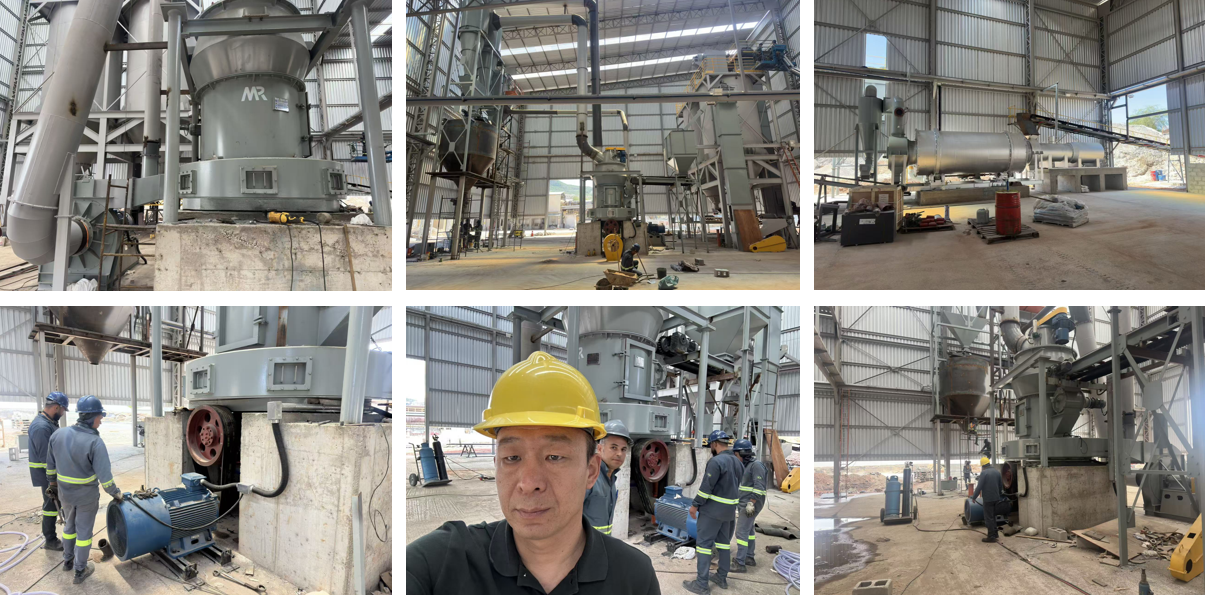


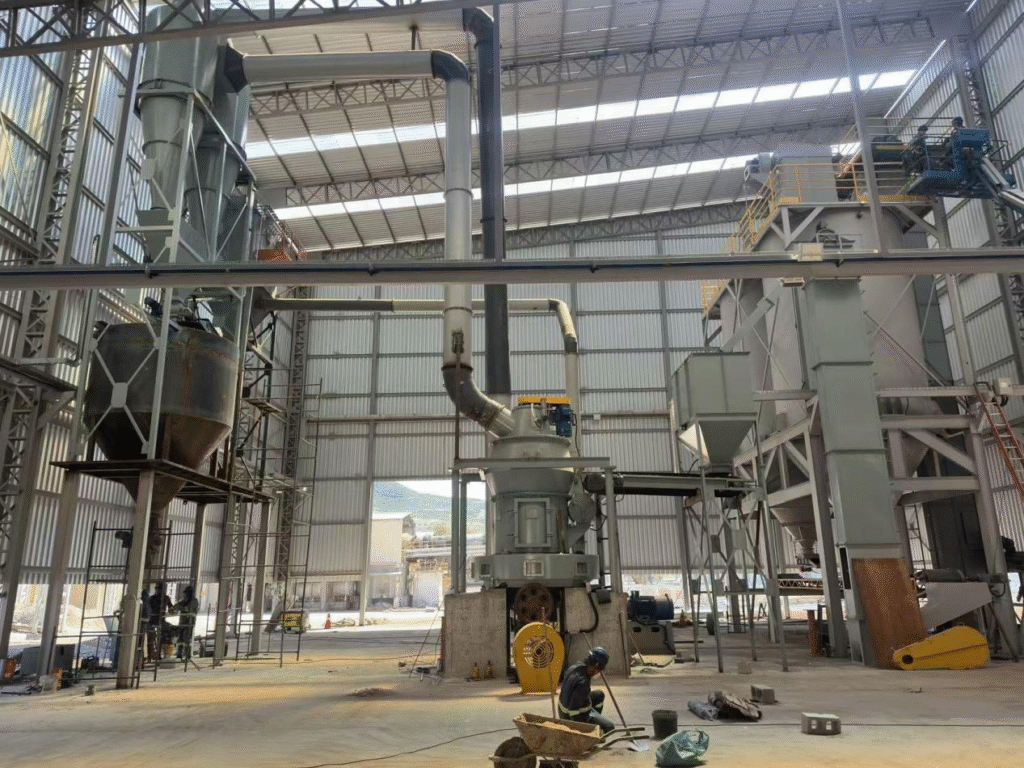
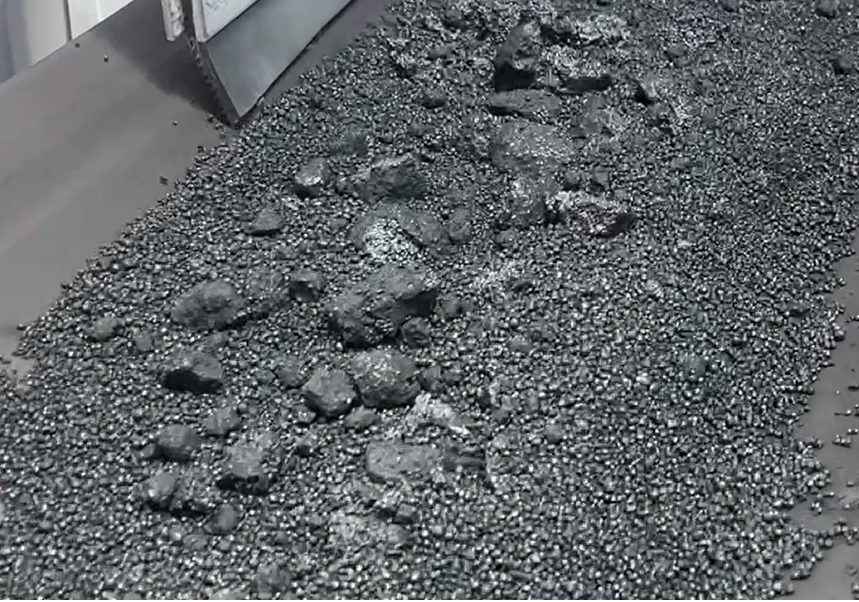
We fully understand our customers’ concerns, so we present the following analysis: Two key factors that can cause petroleum coke to combust and explode are:
(1) Reaching the ignition point;
(2) Excessive pressure.
Regarding the point ①:
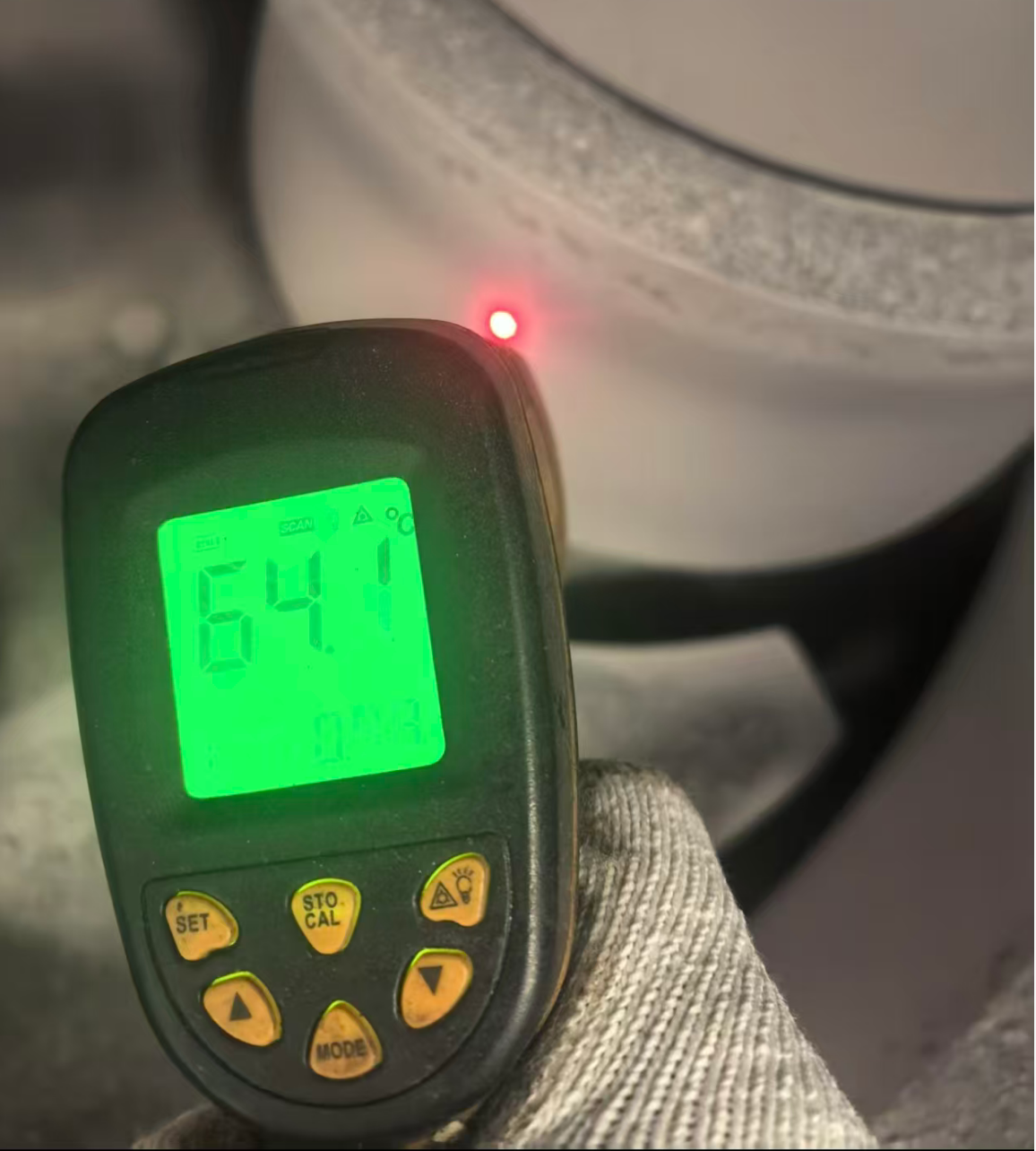
The lowest ignition point of petroleum coke dust is around 270°C. MR’s Raymond mill operates at a temperature of approximately 60-70°C, well below the dust ignition point.
Regarding the point ②:
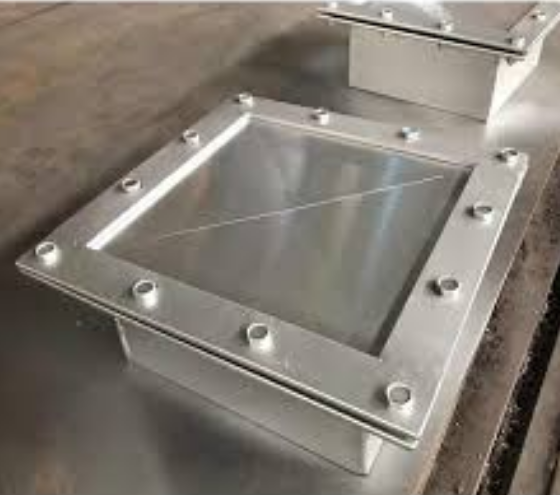
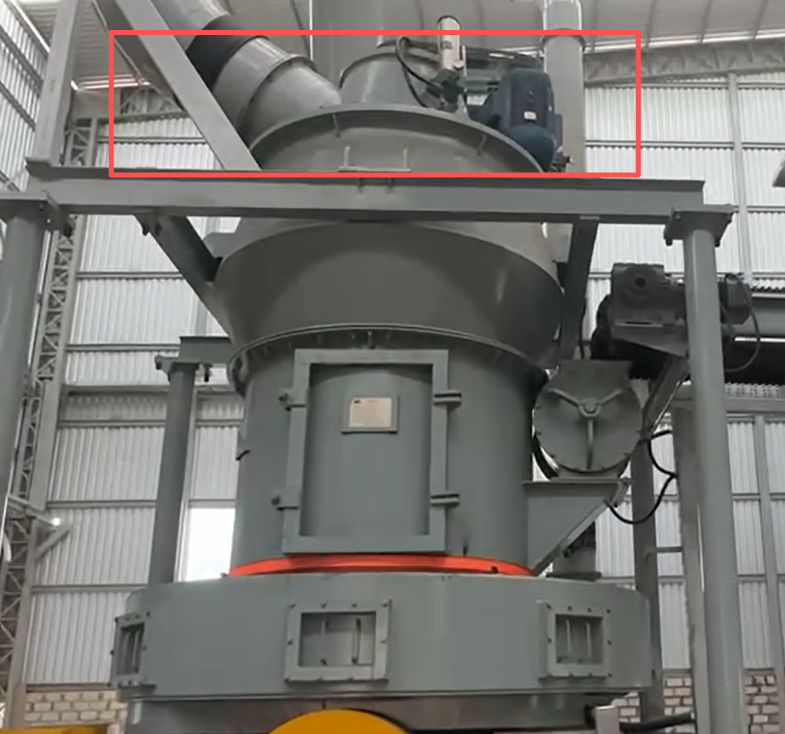
We installed explosion-proof glass mirrors on the top of the classifier housing and the dust collector. During the grinding process, when the internal pressure reaches a certain value, the explosion-proof mirror breaks, releasing the pressure and preventing the petroleum coke from combusting and exploding.
An effective way to prevent vibration during Raymond mill operation is to control the feed size. We require our customers to introduce both fine and coarse materials into the mill simultaneously, rather than only fine materials, to reduce vibration.
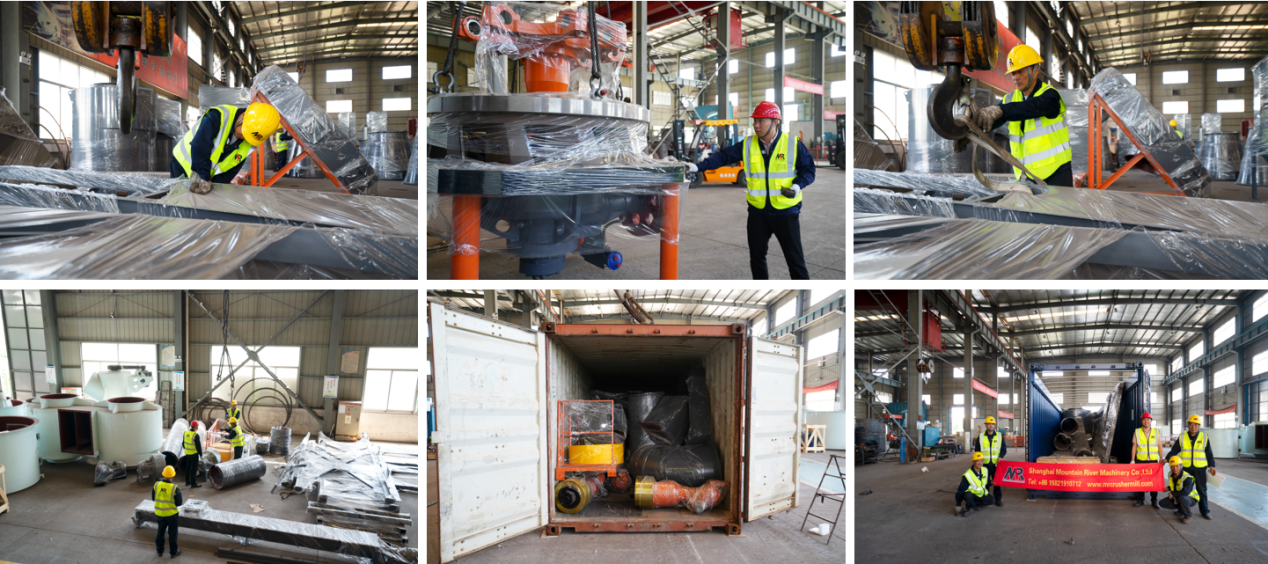
To avoid shortages or omissions during shipments to our customers, we pay special attention to the following points:
(1)Inventory item by item before shipment: Based on the contract list, technical drawings, and assembly manual, we prepare a detailed list of all main units, accessories, tools, bolts, etc.
(2) Verification module by module: We disassemble the equipment into components such as grinding rollers, grinding rings, fans, pipes, and electrical control cabinets, comparing each item with the list and marking those verified with a marker.
(3) Key items that are easily overlooked: We pay special attention to small parts (such as special tools, O-rings, sensors, spare screws), instruction manuals, warranty cards, etc.
During equipment installation at the customer’s site, MR’s after-sales service engineer in the area participated throughout the entire process alongside local workers in installing the equipment. During the installation execution, the following issues arose:
①The classifier motor keeps showing excessive current.
MR Engineer’s Solution:
Increase the power of the classifier motor.
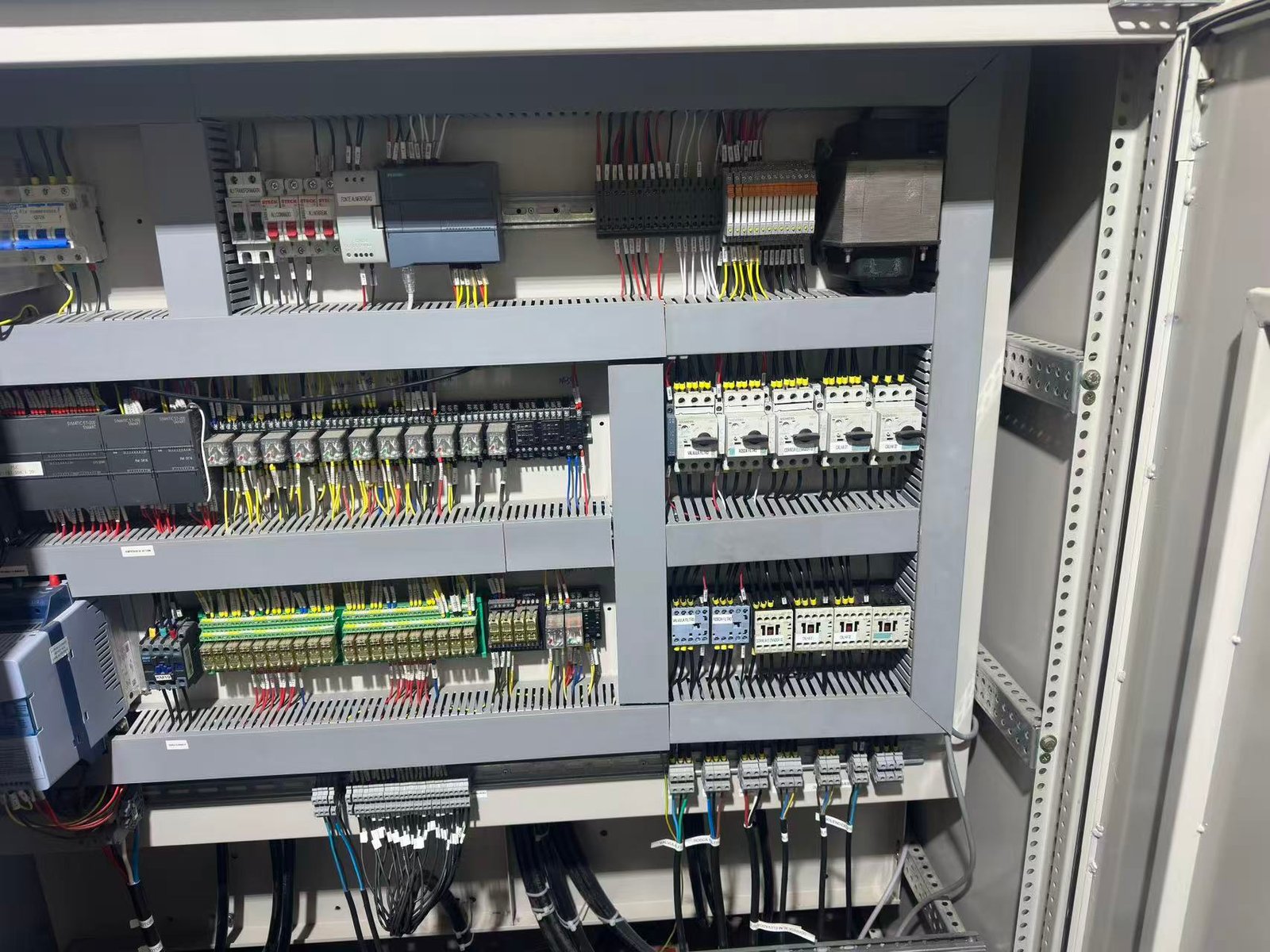
②The fan frequency converter keeps showing a fault.
MR Engineer’s Solution:
After the engineer’s fault investigation, it was determined that the customer had installed an emergency stop button on our electrical control cabinet and modified the frequency converter wiring, causing the fault alarm. Subsequently, after the engineer’s professional repairs, the electrical cabinet wiring was restored to normal.
Thanks to the engineers’ years of experience and timely communication with the head office, the installation and commissioning of the equipment at the customer’s facility were completed successfully, saving the customer a significant amount of time and ensuring production efficiency.