

Limestone Grinding Line Layout: A Raymond Mill Solution for High-Volume Ground Calcium Carbonate
What You Will Learn from This Guide
Building a high-volume ground calcium carbonate line is a system design problem, not just a mill selection problem. Feed preparation, dust collection, and how many mill units actually get installed all matter as much as which grinding technology sits at the center. This guide walks through a complete Raymond mill-based GCC line, from quarried limestone to bagged product. It serves anyone planning or evaluating a large-scale grinding line. After reading, you will understand why high volume usually means multiple mills working together, not one oversized machine.
What GCC Actually Is: Ground, Not Precipitated
Ground calcium carbonate, commonly called GCC, comes from mechanically grinding natural limestone, calcite, or marble. That mechanical route sets it apart from precipitated calcium carbonate, a chemically manufactured alternative produced by carbonating a slaked lime slurry rather than grinding rock.
This distinction is not just terminology. It explains why a Raymond mill belongs in this conversation at all. Raymond mills are grinding equipment, built to physically reduce a mined mineral to powder. They have no role in a precipitation-based chemical process, since that route never grinds solid rock in the first place.
The Full Process Flow: From Quarry to Bagged Powder
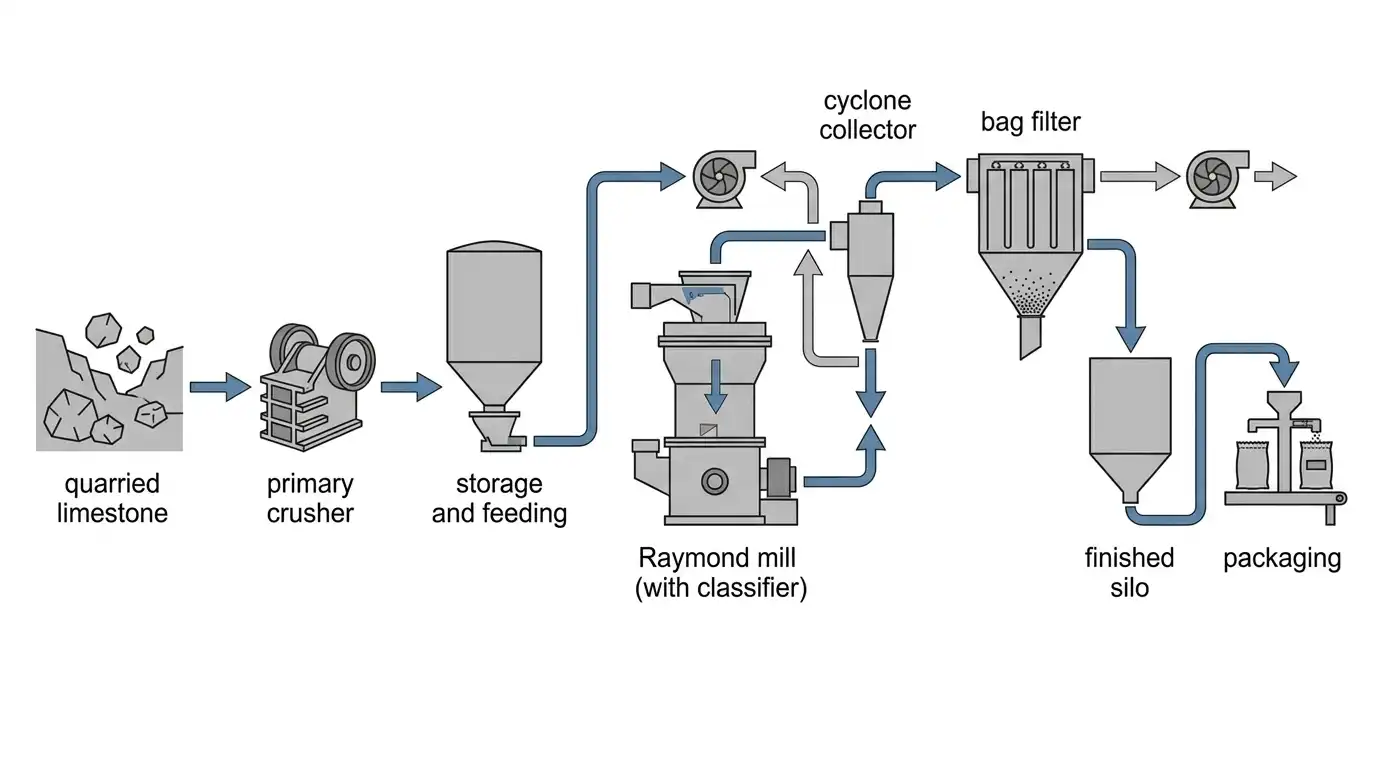
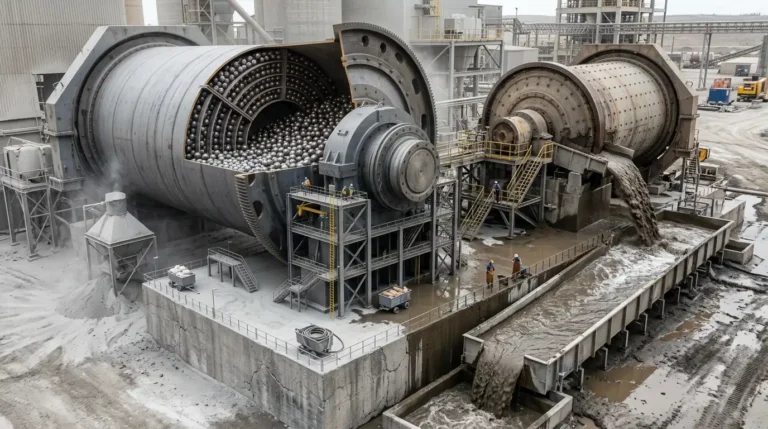
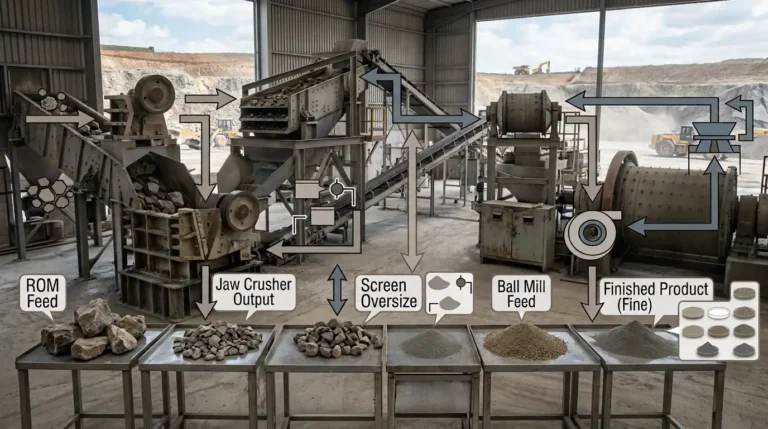
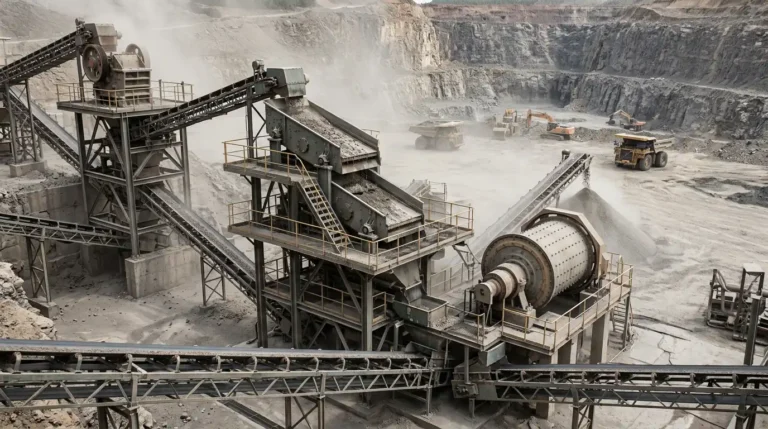
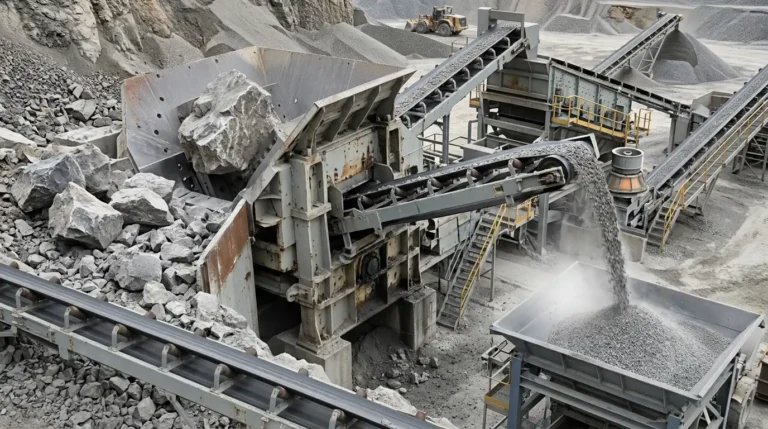
A complete GCC line is a chain of matched stages, not a single machine. Quarried limestone first goes through primary crushing, typically a jaw crusher, to bring the feed down to a size the grinding mill can actually accept. That crushed material moves into a storage silo, then feeds the Raymond mill at a controlled, even rate.
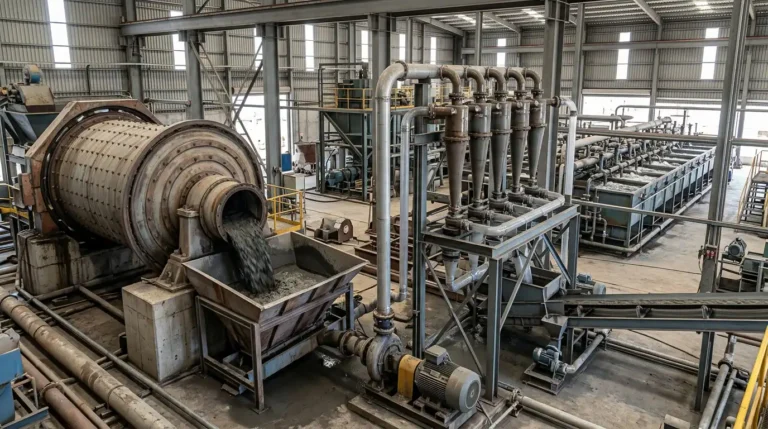
Inside the mill, grinding and classification happen together. An integrated air classifier returns any particle still too coarse for another pass, while properly sized material carries onward in the airstream. A cyclone collector separates the bulk of that finished powder from the air.
A bag filter downstream catches the remaining fines. It both recovers product and controls emissions, before the finished powder moves to storage silos and then to packaging.
Why High Volume Means Multiple Mills, Not One Bigger Mill
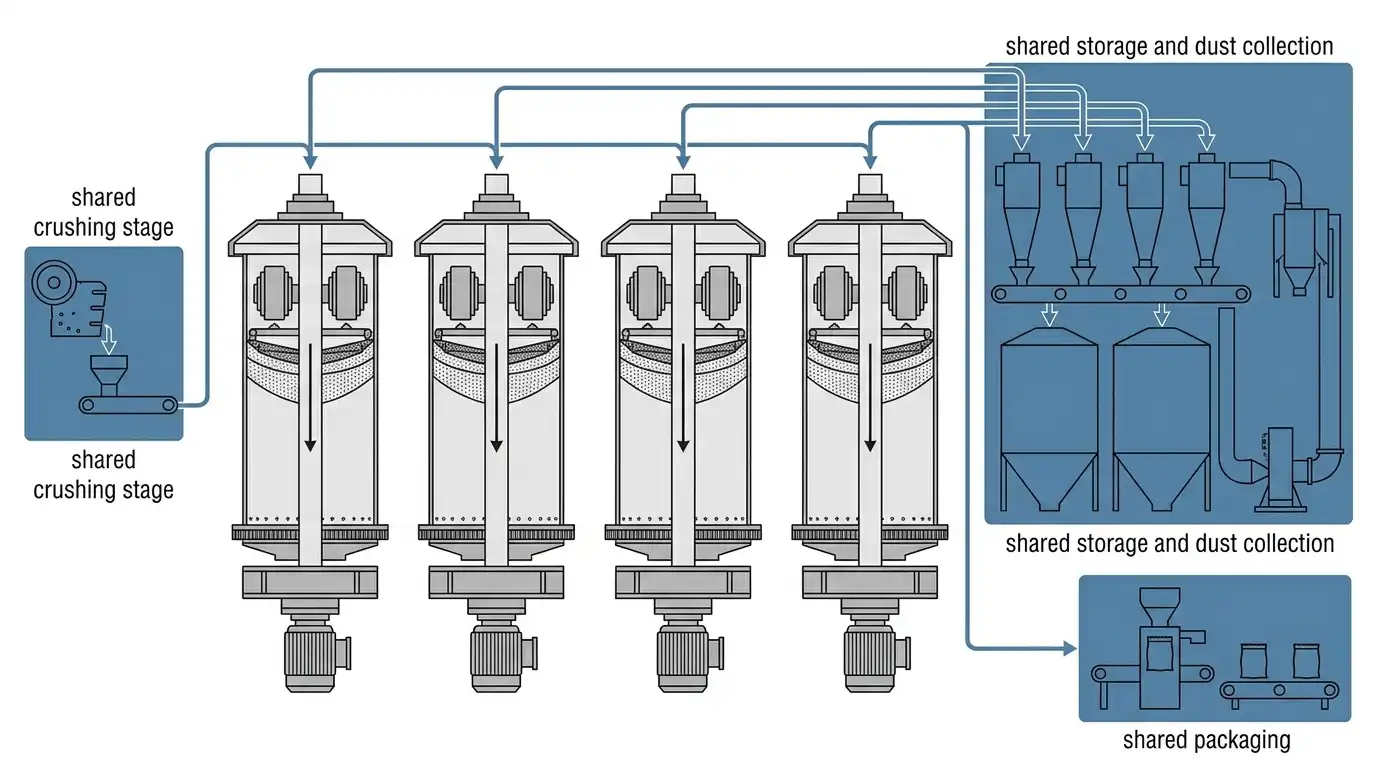
A single Raymond mill has a practical capacity ceiling. It generally lands somewhere in the range of a few tons per hour up to several dozen tons per hour. The exact figure depends on the specific model and target fineness. Genuinely large-volume production, the kind a big industrial buyer actually needs, typically exceeds what any single unit can deliver on its own.
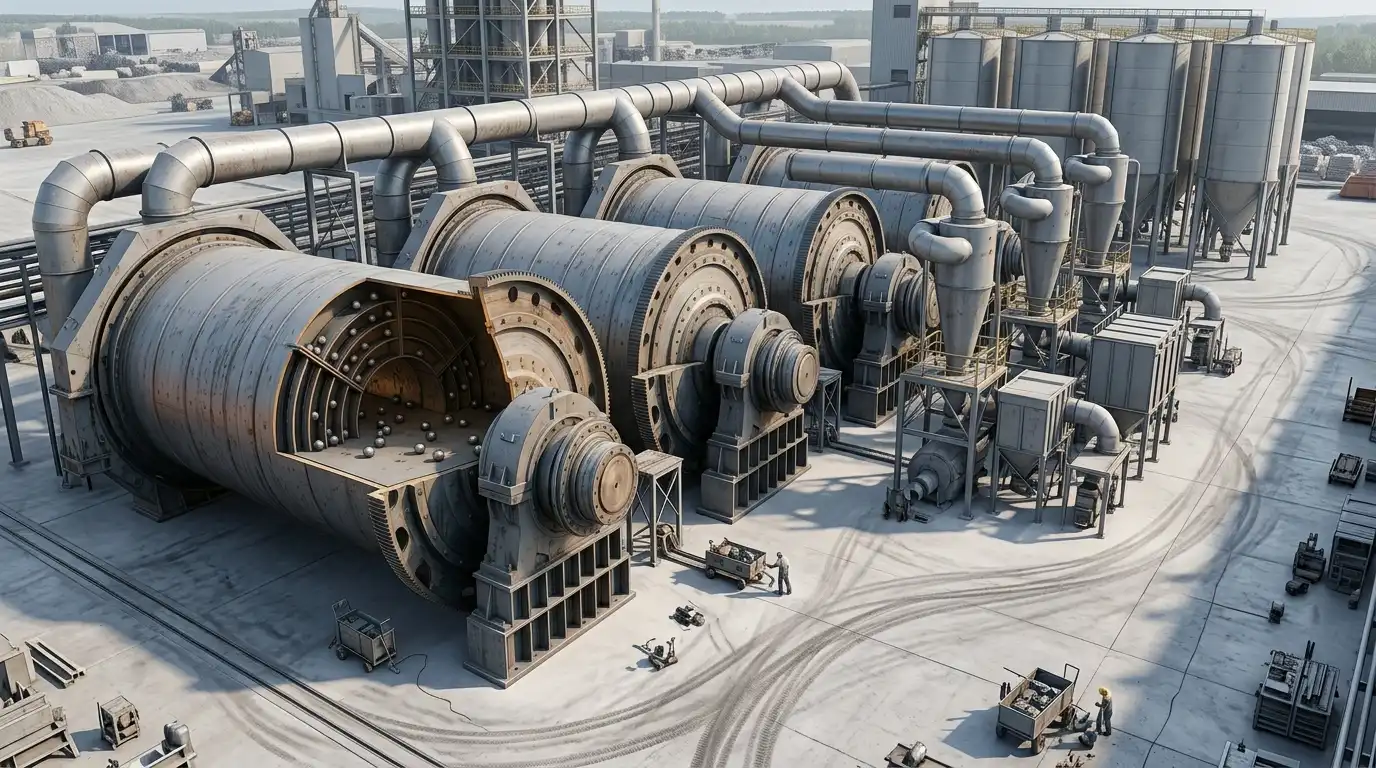
The practical answer is running multiple mill units in parallel rather than chasing an oversized single machine. Each mill in that bank operates as a complete grinding and classification unit on its own. They share common infrastructure instead: the same crushing stage, the same storage silos, the same dust collection and packaging systems.
This approach also protects total output. A single mill going down for maintenance takes out one unit’s worth of capacity, not the entire line’s.
Fineness Targets by End-Use Industry
GCC serves very different industries, and each one drives a different fineness target. Construction-grade filler applications can work with a relatively coarse product. Papermaking, plastics, and paint applications generally demand progressively finer powder instead, often specified in mesh or micron terms rather than a single universal number.
Raymond mills cover a solid middle band of this range well, generally serving medium and moderately fine fineness targets efficiently. Producers chasing the very finest specialty grades typically look elsewhere. That work usually goes to ultrafine mill technology, for that specific portion of their product mix.
Whiteness: The Quality Metric Beyond Fineness
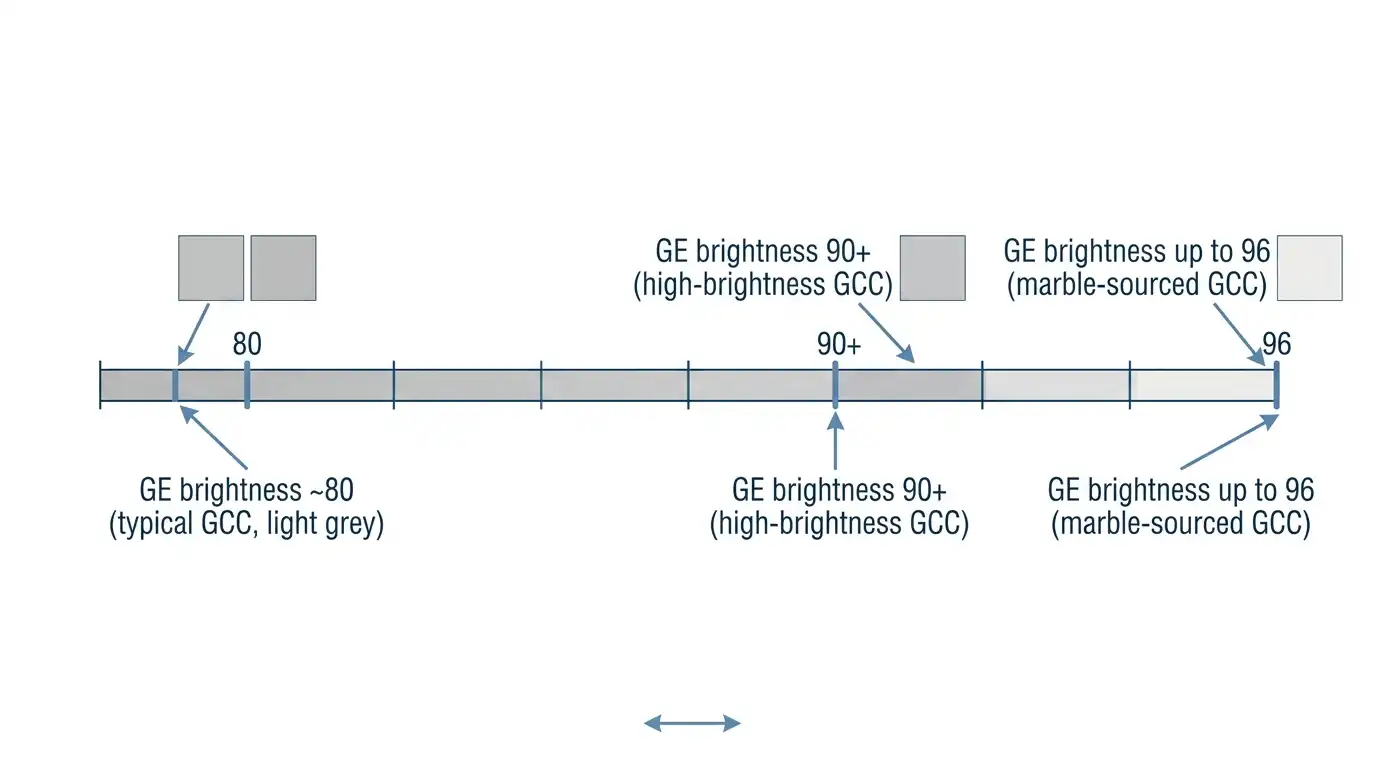
Fineness alone does not fully describe GCC quality. Whiteness, commonly measured on the GE brightness scale, is a separate, genuinely important property for many buyers. Typical GCC runs around 80 on that scale, a shade often described as light grey rather than a true white.
High-brightness GCC can exceed 90 on the same scale. Material sourced from marble specifically can reach as high as 96. Buyers in applications where appearance matters, coatings and certain plastics applications especially, weight this brightness figure alongside fineness. It is not treated as an afterthought to it.
Dust Control at Scale
A high-volume dry grinding line generates a lot of fine powder moving through ductwork. Controlling that dust matters for both regulatory compliance and product recovery. Running the system under negative pressure keeps dust from escaping into the working environment in the first place. That beats trying to clean it up after the fact.
A pulse-jet baghouse downstream handles the fine fraction the cyclone collector alone cannot fully capture. It recovers product that would otherwise be lost, while keeping emissions within regulatory limits.
At the scale a multi-mill GCC line operates, this is not an optional add-on. It is a core piece of the line’s actual economics, since lost fine powder is lost sellable product.
Frequently Asked Questions
What is the difference between ground calcium carbonate and precipitated calcium carbonate?
Ground calcium carbonate comes from mechanically grinding natural limestone, calcite, or marble. Precipitated calcium carbonate is manufactured chemically, typically by carbonating a slaked lime slurry rather than grinding solid rock. Raymond mills and similar grinding equipment apply specifically to the ground route, not the precipitation route.
Why would a plant install several Raymond mills instead of one large one?
A single Raymond mill has a practical capacity ceiling, so genuinely large-volume production typically requires multiple units running in parallel. Those units share common crushing, storage, and dust collection infrastructure. This also protects total output, since one mill down for maintenance only removes that unit’s share of capacity rather than stopping the whole line.
Why does whiteness matter separately from fineness in GCC quality?
Fineness describes particle size, while whiteness describes how light or true-white the powder actually looks, commonly measured on the GE brightness scale. Typical GCC runs around 80 on that scale, while high-brightness material can exceed 90. Buyers in appearance-sensitive applications weight both properties together, not fineness alone.
Why is dust collection treated as a core part of the line, not an add-on?
A high-volume dry grinding line moves a large amount of fine powder through ductwork. Any of that powder escaping as dust is lost sellable product as well as an emissions problem. Negative pressure operation combined with a pulse-jet baghouse recovers that fine fraction while keeping the line within environmental limits. That makes dust control part of the line’s core economics.
References and Sources
- U.S. Patent 10,590,003 — Method of Brightening Ground Calcium Carbonate
- U.S. Geological Survey — Limestone: A Crucial and Versatile Industrial Mineral Commodity
- Grand View Research — Brazil Ground Calcium Carbonate Market Report
- EP1180090A1 — A Composition of Matter Comprising High Brightness Calcium Carbonate Pigments and Processes for Making Same