

Cone Crusher Operating Procedures: Load Control, Choke Feeding, and Level Management
What You Will Learn from This Guide
A cone crusher runs best when three things are managed together: power draw, chamber fullness, and the feed rate that ties them to each other. This guide covers the operating limits that define safe load, why choke feeding matters, and how level management keeps the crusher choke-fed as liners wear. It serves a plant operator or process engineer running an existing cone crusher, and after reading, you will be able to read the warning signs of an overloaded or underfed crusher before they cause damage.
Working Principle Refresher
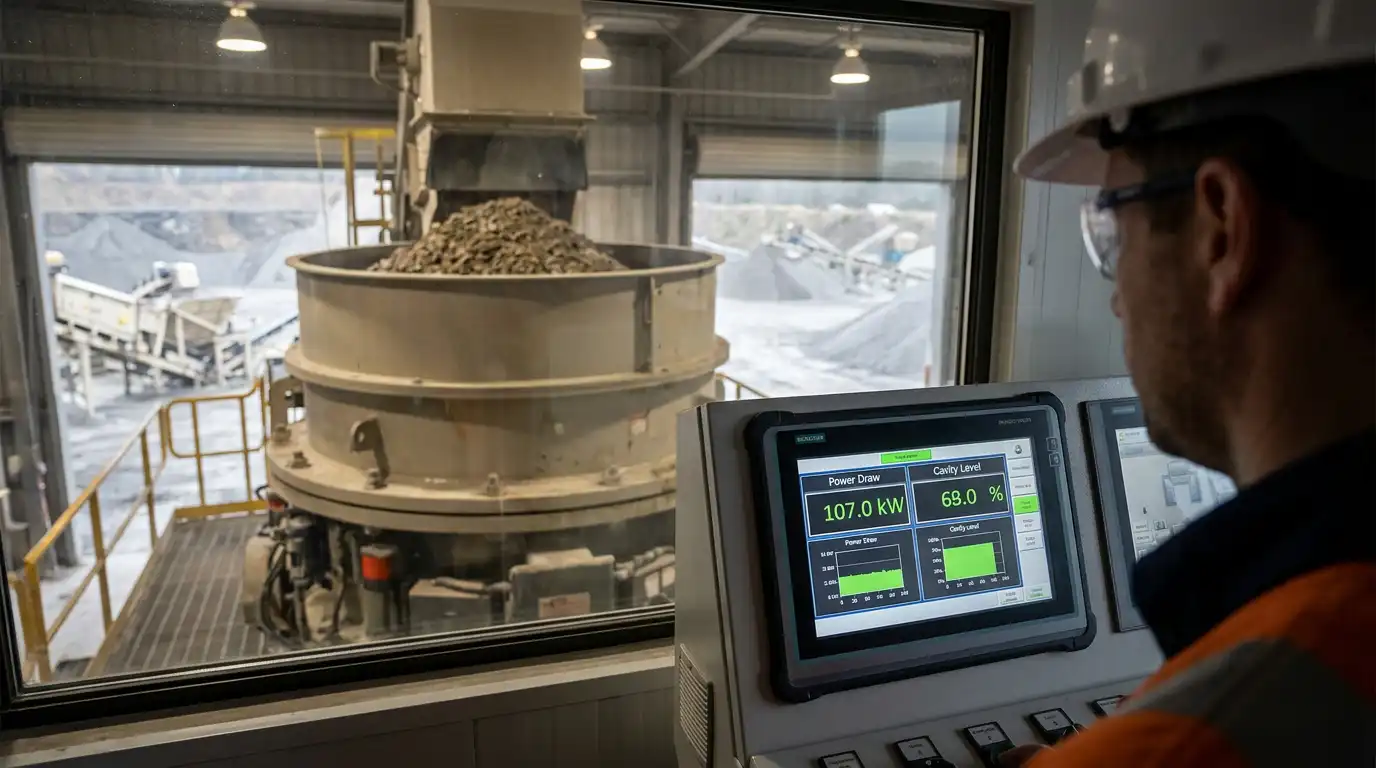
A cone crusher gyrates a mantle inside a concave, compressing rock as the gap narrows. The closed side setting (CSS) sets the minimum gap and controls maximum product size. Power draw rises as feed rate increases and as material is crushed finer. Both put more rock through the chamber per unit of time.
This relationship is the basis for almost every operating decision in this guide. Power draw is not just an electrical reading. It is a real-time signal of how hard the crusher is working relative to its rated capacity.
Load Control and the Three Operating Limits
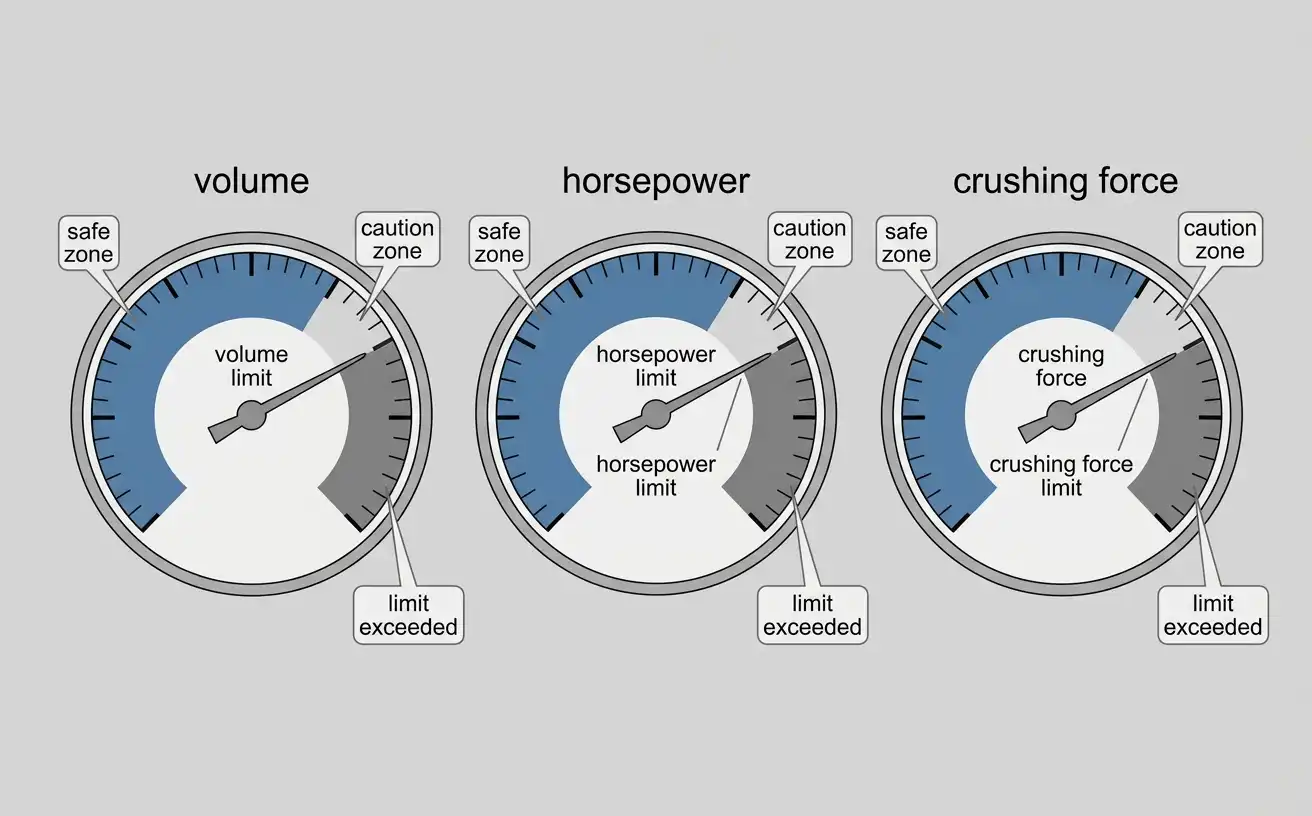
A cone crusher operates against three limits at once. Any one of them can be the actual constraint on a given day. The volume limit is reached when the crushing cavity is full and material starts to overflow the top of the machine. A properly choke-fed crusher is already running at this limit.
The horsepower limit is reached when the motor draws more power than its rating allows. Power draw climbs with feed rate and with finer crushing. This limit tightens whenever the CSS is set tighter.
The crushing force limit is reached when the adjustment ring bounces, wiggles, or lifts off the main frame. This condition, called ring bounce or bowl float, means the crushing force has exceeded the holding force keeping the ring seated.
Ring bounce is hard to detect by standing near the machine. Even a slight bounce can be invisible to an operator on-site. This is why automated monitoring, tied to hydraulic pressure or vibration sensors, matters more here than on almost any other parameter. Undetected ring bounce leads to component failure, not just reduced efficiency.
Choke Feeding: Keeping the Chamber Full
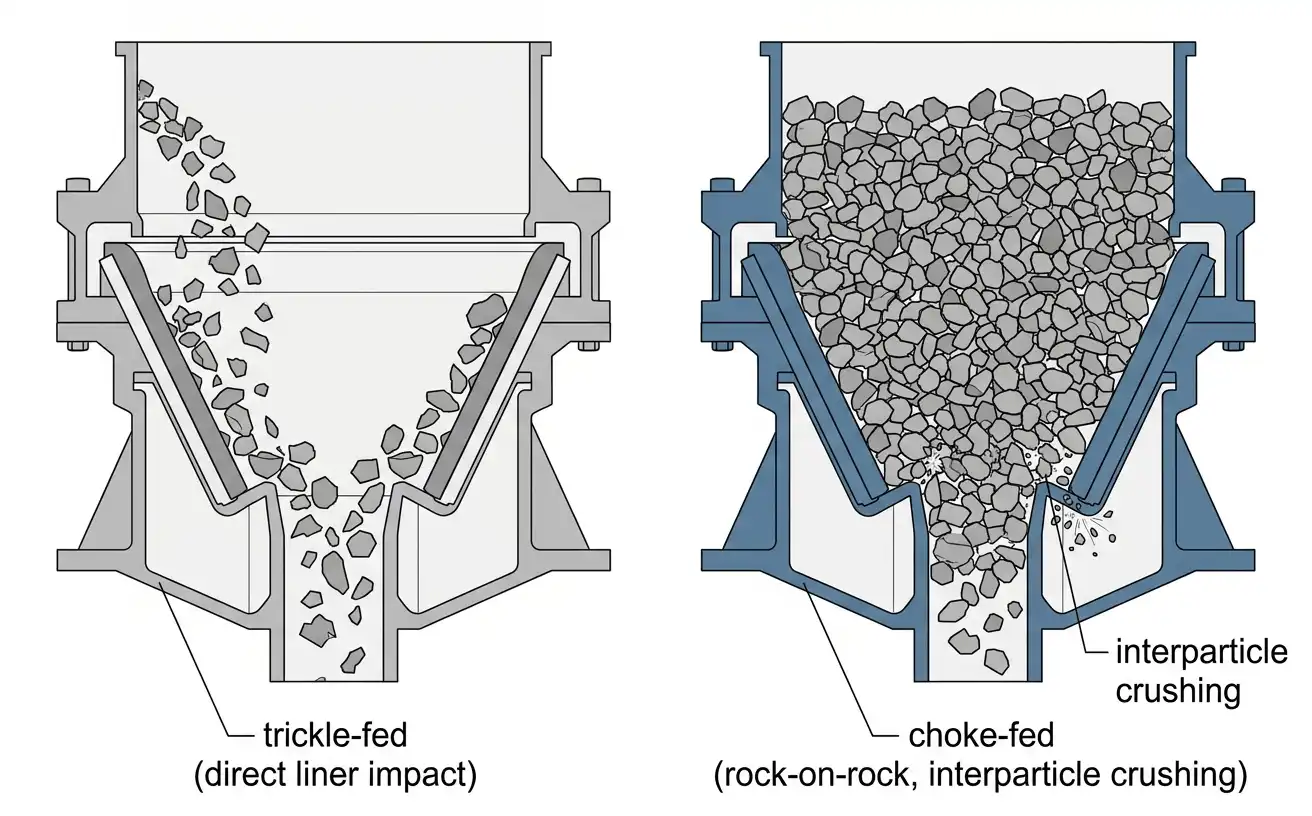
Choke feeding means running the crusher with the cavity kept full. Material is buried under a steady head without overflowing. This keeps rock breaking against rock, not just against the mantle and concave. That interparticle action is what produces a more cubical product.
Published research supports this practice directly. Studies varying cavity level in a high-speed cone crusher chamber found crushing efficiency increased as the level rose. They also found a measurable shift in product size distribution between a full cavity and a partially filled one.
Choke feeding is not a minor tuning preference. It is a documented driver of both capacity and product quality.
Trickle feeding, the opposite of choke feeding, causes several problems at once. Rocks dropping individually into a partly empty chamber strike the liners directly, rather than through a cushioning bed of material. This accelerates wear. Trickle feeding can also stress bearing alignment, since an unevenly loaded chamber applies force asymmetrically instead of through a balanced load.
Level Management: Closing the Loop as Liners Wear
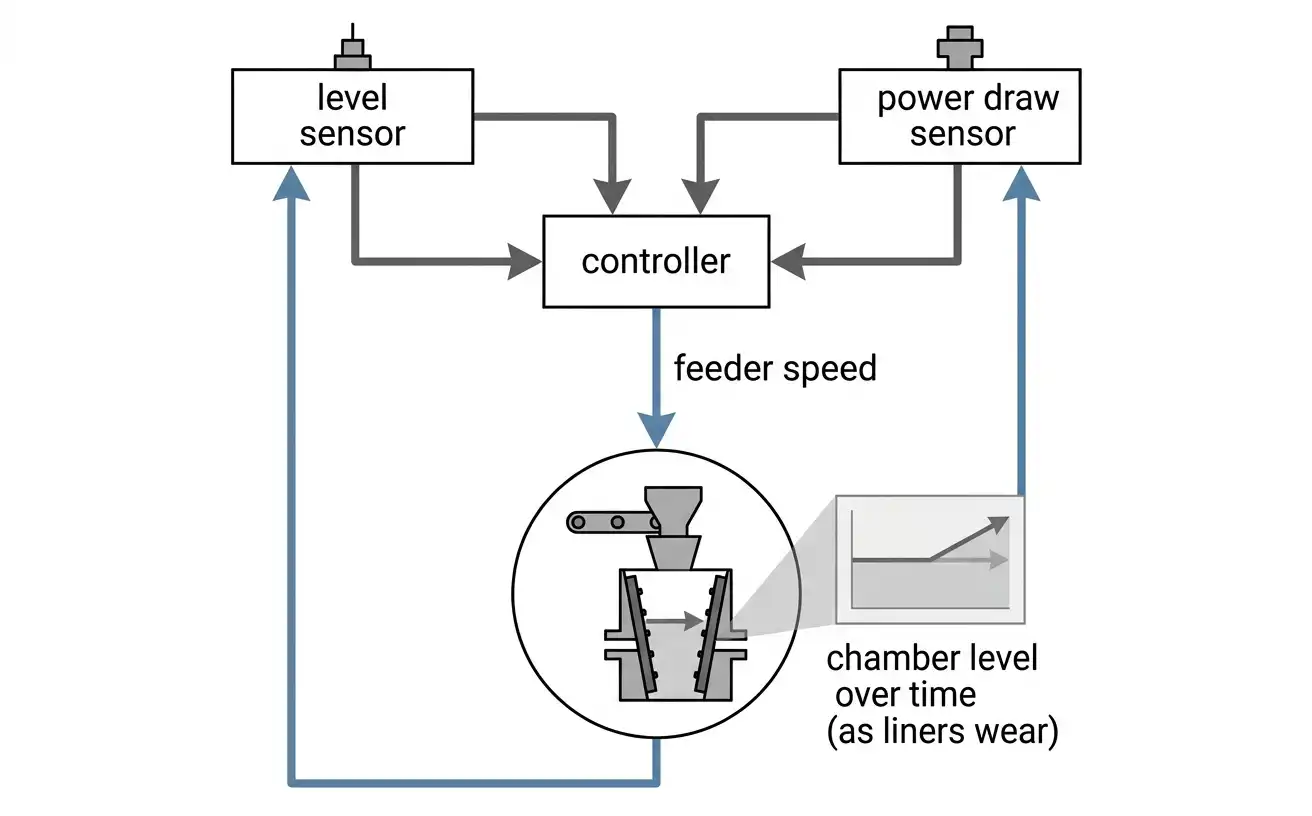
Power draw alone is not a reliable feed-rate signal over time. As liners wear, the same feed rate draws less power than it did with new liners. Worn liners create a larger effective chamber.
A control system relying on power draw alone would gradually increase feed rate to compensate. It would eventually overflow the crusher.
This is why level management pairs a level sensor with the power-draw signal, rather than relying on either alone. A level probe confirms the cavity is actually full, independent of what power draw suggests. When cavity level drops, the feed system speeds up. When material piles toward the top, it slows down.
This combination lets the system account for liner wear, feed moisture, and rock size variation automatically. An operator does not need to manually reset the feed rate every shift. Sites without this automation need a documented manual check schedule instead. The underlying physical relationship does not disappear just because it is not automated.
Circuit Design: Screening Capacity and Recirculating Load
Choke feeding is not purely an operator setting. It depends on circuit design upstream and downstream of the crusher. A buffer bin positioned above the feed opening delivers a steady head of material. A properly sized feeder draws that bin down at a controlled rate.
Downstream screening capacity matters just as much. In a closed-circuit setup, undersized screening sends properly crushed material back to the crusher, instead of passing it through. This recirculating load consumes chamber volume and horsepower that should process new feed.
It also accelerates wear without adding useful output. A screening bottleneck can make a crusher look underperforming when the crusher itself is not the actual constraint.
A Basic Operating Checklist
Before increasing feed rate on a cone crusher, confirm the following:
- Power draw is above roughly 40 percent of rated horsepower. Running consistently below this threshold risks the wear and alignment problems associated with trickle feeding.
- No ring bounce is present at the current setting. Any detected bounce means the crushing force limit has already been reached, regardless of the power draw reading.
- The cavity level sensor, where fitted, confirms a genuinely full chamber, rather than inferring fullness from power draw alone.
- Downstream screening is not returning an unusually high recirculating load, which would mask the crusher’s true available capacity.
Applications by Material and Industry
Choke feeding and load control matter most on high-tonnage secondary and tertiary lines processing granite, basalt, and other hard aggregate. The gap between well-managed and poorly managed operation shows up directly in product shape and wear cost there. Tertiary and shorthead-chamber crushers typically produce the bulk of an aggregate operation’s saleable product, which makes consistent choke feeding especially important for them.
Softer or more variable feed, such as recycled construction material, makes level management more important, not less. Feed consistency cannot be assumed with that kind of material. Automated sensing does the work a steady natural feed would otherwise handle on its own.
Maintenance Implications
Consistent choke feeding reduces liner wear compared with trickle feeding. Impact loads are distributed through a bed of material, rather than striking bare liner surfaces directly. This is a genuine maintenance-cost benefit, not just a production one.
Ring bounce events, even brief ones, warrant an inspection of the hydraulic accumulator or spring system holding the adjustment ring in place. A single undetected bounce is unlikely to cause damage on its own. Repeated undetected events, though, point to a holding-force problem that will eventually cause a component failure if left unaddressed.
Frequently Asked Questions
What is choke feeding on a cone crusher?
Choke feeding means keeping the crushing chamber full, with material buried above the mantle without overflowing. It promotes interparticle crushing, where rock breaks against rock. This improves product shape and reduces liner wear compared with feeding the crusher lightly.
What causes ring bounce in a cone crusher?
Ring bounce happens when the crushing force between the mantle and concave exceeds the force holding the adjustment ring in place. Common causes include a CSS set too tight, tramp iron or dense material plugging the discharge, or a failed hydraulic accumulator or spring.
Why isn’t power draw alone enough to control feed rate?
Power draw depends on liner condition as well as feed rate. As liners wear, the same feed rate draws less power. A control system relying on power draw alone would gradually overfeed the crusher. Pairing power draw with a cavity level sensor corrects for this.
What percentage of rated horsepower should a cone crusher run at?
A commonly cited guideline is to avoid running consistently below roughly 40 percent of rated horsepower. Trickle feeding at low load risks liner wear and bearing alignment problems. The upper limit is set by rated horsepower and the onset of ring bounce.