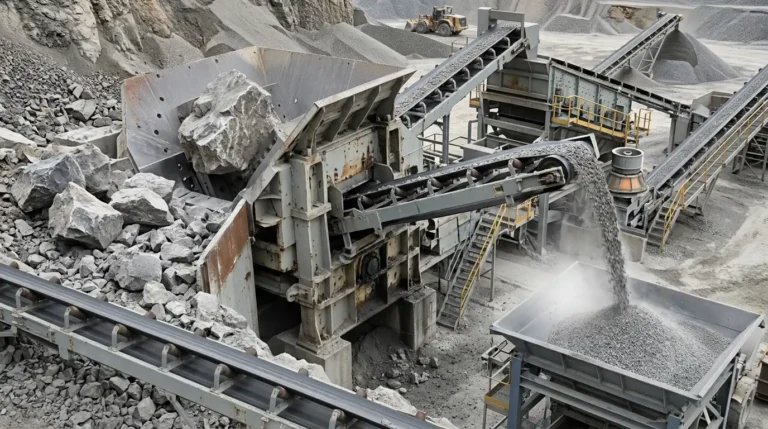


C Series Jaw Crusher: Comprehensive Guide
What You Will Learn from This Guide
A C Series jaw crusher is a heavy-duty primary crusher built for continuous, high-tonnage duty in large mines and quarries, distinguished by a non-welded frame and a deep, steep-angle crushing chamber. This guide covers its structural design, model range, selection criteria, applications, and maintenance needs. It serves an engineer or procurement manager evaluating a heavy-duty primary crusher, and after reading, you will know when this class of machine is the right choice and what to check before specifying one.
Overview
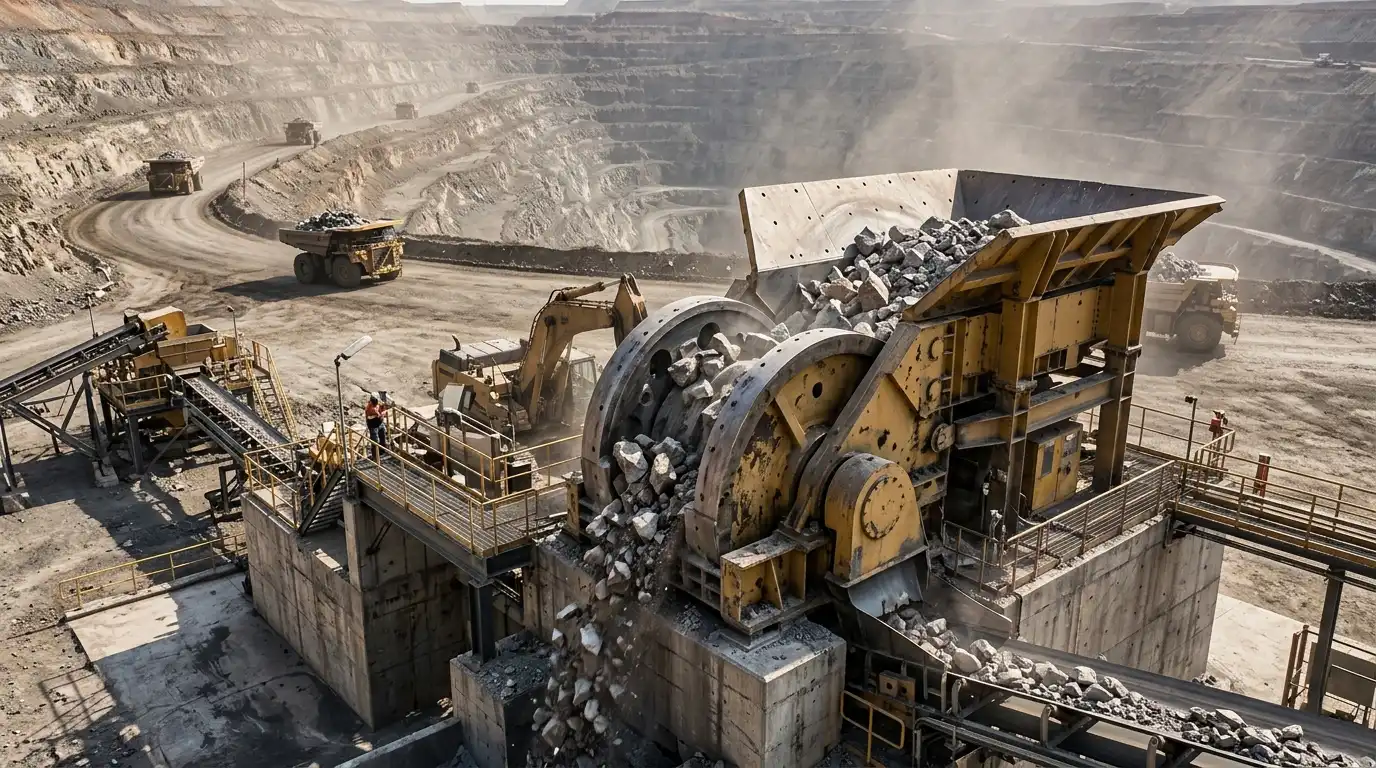
A C Series jaw crusher sits at the top of the jaw crusher size range. It is built for operations that run near-continuously and process large tonnages of hard rock or ore. It is not built for intermittent or small-scale duty. The name comes from a model naming convention several manufacturers use for this heavy-duty class, distinct from the lighter PE and PEW lines.
Three things define this category. A frame engineered for continuous cyclic loading, not occasional use. A chamber geometry that favors high throughput over compact size. And on larger models, hydraulic systems that protect the machine automatically rather than relying on manual intervention.
Working Principle
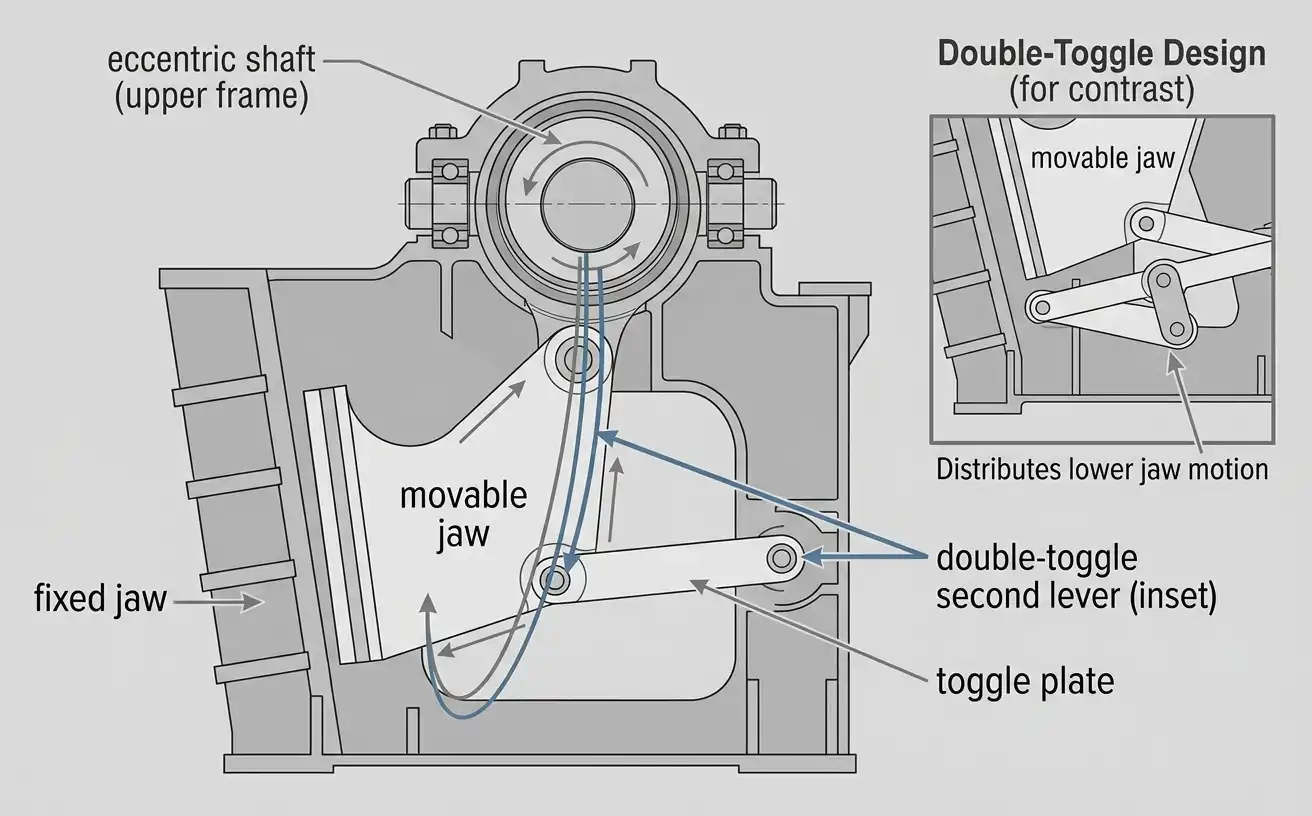
A C Series crusher shares the same basic mechanism as every single-toggle jaw crusher. An eccentric shaft, driven by a motor through a belt and flywheel, imparts an elliptical motion to the movable jaw. The jaw closes against the fixed jaw on the compression stroke. It opens on the return stroke, and material moves down through the chamber until it passes the closed side setting (CSS) at the bottom.
Single-toggle jaw crushers place the eccentric shaft and its bearings in the upper part of the machine. This lets them apply crushing force directly, without the second pivoting lever a double-toggle design uses. The trade-off is that a single-toggle machine depends more heavily on frame strength to absorb that force. Heavy-duty frame construction exists specifically to handle it.
Structural Design: What Makes It Heavy-Duty
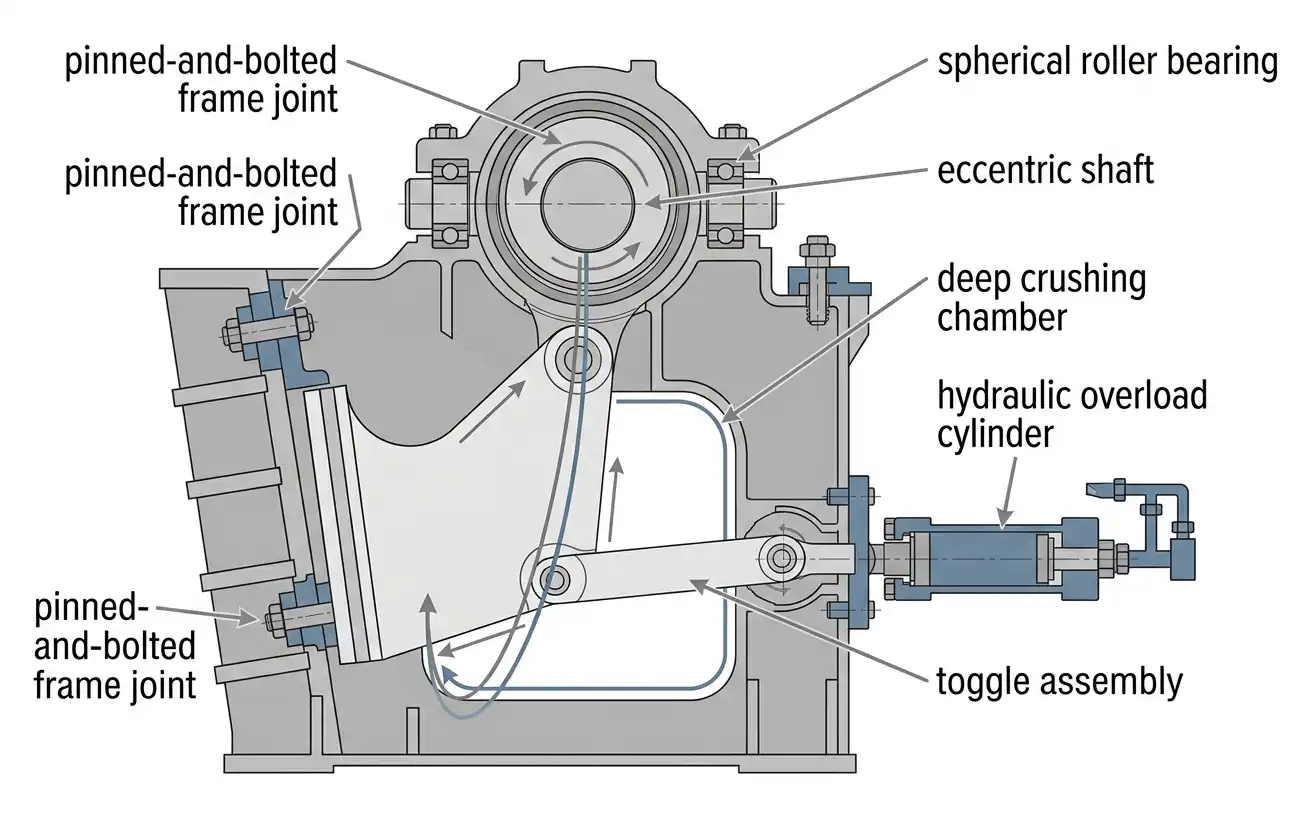
Frame construction is the defining structural choice in this category. Many heavy-duty jaw crushers use a pinned-and-bolted, non-welded frame instead of a fully welded one. Welded joints under continuous cyclic loading are a documented fatigue-crack origin point. A pinned-and-bolted design avoids that specific failure mode and lets individual sections be replaced in the field.
This is a genuine engineering choice, not a settled question. Some manufacturers use welded frames instead. They argue a welded structure resists shock loading uniformly in every direction. Both approaches are in active commercial use on large installations, and the right one depends on maintenance philosophy as much as raw strength.
The chamber itself is deep and set at a steep angle relative to lighter-duty designs. A deeper chamber increases the effective crushing stroke. This improves reduction ratio and throughput for the same feed opening.
On larger models, a hydraulic system does two jobs at once. It adjusts the closed side setting without manual disassembly. It also relieves pressure automatically when an uncrushable object enters the chamber, letting the jaw retract and reset without shearing a mechanical fuse. This layered protection sits on top of, not instead of, the toggle plate every jaw crusher already relies on as a final backstop.
Specifications and Model Range
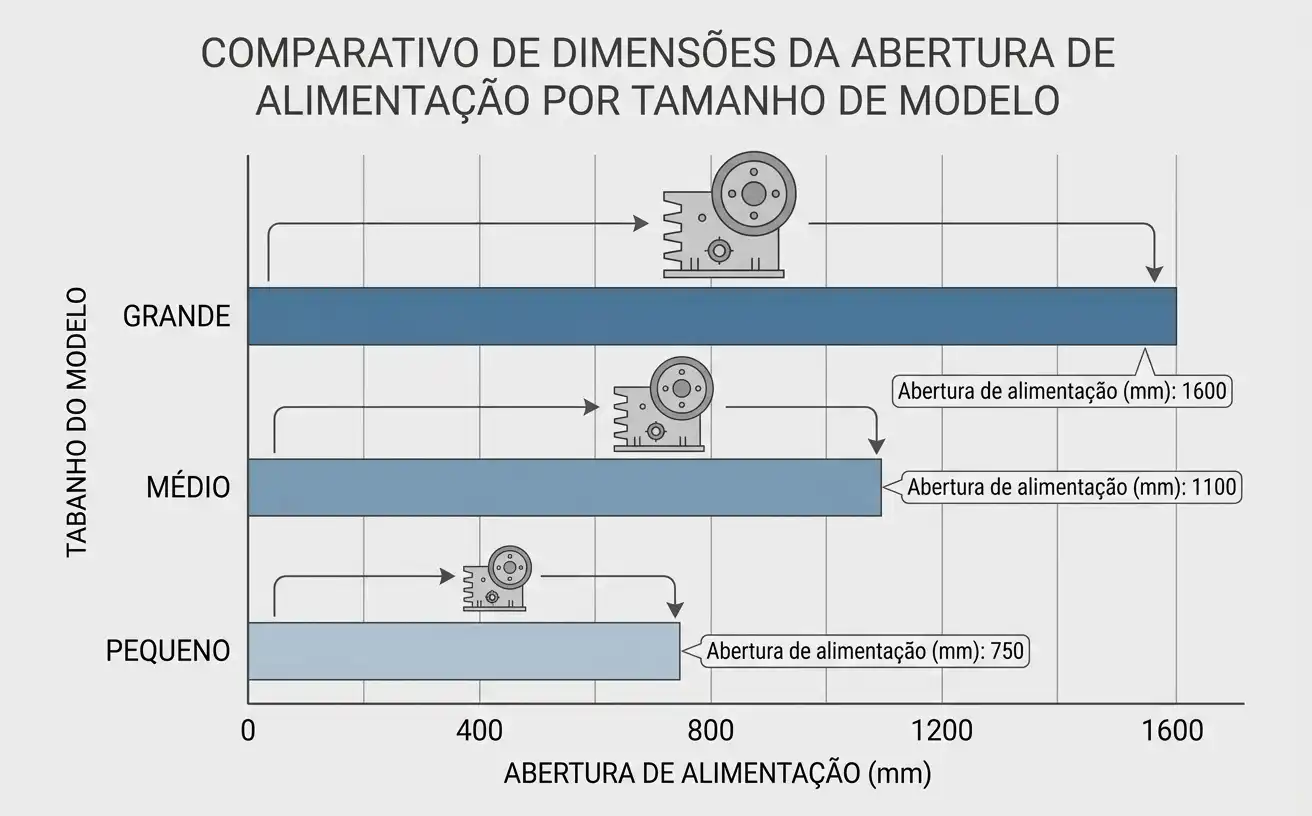
Heavy-duty jaw crusher families are typically built across a wide size range. This runs from feed openings under a meter square up to some of the largest jaw crushers in serial production. One documented example, taught in university mining-engineering coursework, describes a largest-class jaw crusher with a feed opening of roughly 1,600 × 2,514 mm. Its motor is rated between 250 and 300 kW.
Table 1. Typical heavy-duty jaw crusher specification range
| Parameter | Small model | Mid-size model | Large model |
|---|---|---|---|
| Feed opening (mm) | ~800 × 510 | ~1,200 × 870 | ~1,600 × 1,200+ |
| Max feed size (mm) | ~400 | ~700 | ~950+ |
| CSS range (mm) | 40–175 | 70–175 | 150–300 |
| Motor power (kW) | 75 | 160 | 250–400 |
| Compressive strength handled | up to ~320 MPa across the range |
Source: typical market specification ranges compiled across multiple manufacturer technical sheets for this heavy-duty class. These figures are not standardized and should be confirmed against a specific supplier’s current documentation before procurement.
Capacity is usually published two ways. A “scalped feed” figure assumes fines have already been removed ahead of the crusher. A lower “non-scalped” figure applies to raw feed straight from blasting. A quoted capacity without stating which basis it uses cannot be compared directly against a competing quote.
Selecting a Heavy-Duty Primary Crusher
Jaw crushers in this class are generally most competitive up to roughly 1,600 t/h. Above that range, a primary gyratory crusher typically becomes the more economical choice. Gyratory crushers accept direct truck dumping and tolerate less pre-screening ahead of the machine.
A complete guide to grinding media covers what happens after primary crushing feeds into downstream grinding. It is worth reviewing when sizing a full circuit rather than the crusher in isolation.
Three factors decide whether this heavy-duty class fits a given site:
- Duty cycle. Continuous, near-24-hour operation justifies the frame and bearing investment this class carries. Intermittent operation may not.
- Feed size and hardness. Very large ROM lump sizes and harder rock push toward this class over a lighter PE or PEW unit.
- Scalping practicality. A grizzly ahead of the crusher increases effective capacity by removing fines before they reach the chamber. This is standard practice on most large installations in this class.
Applications by Industry and Material
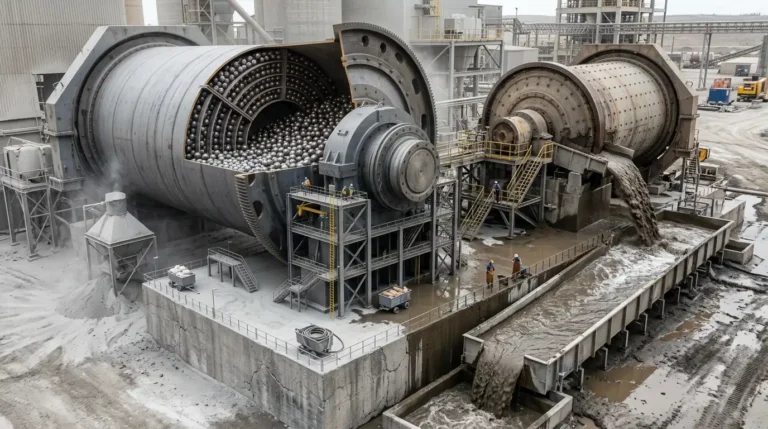
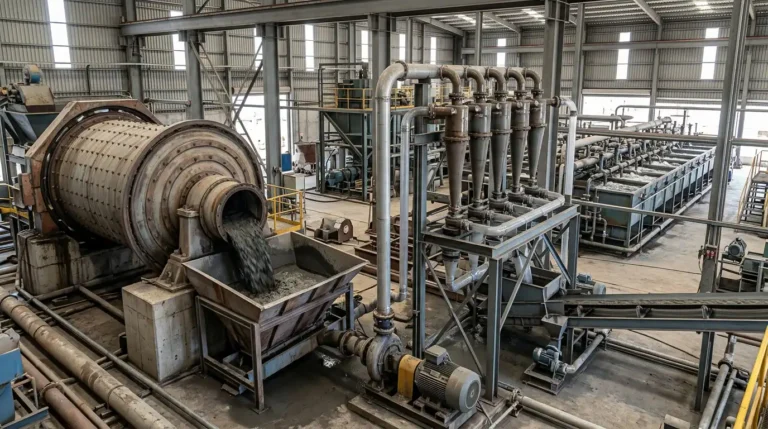
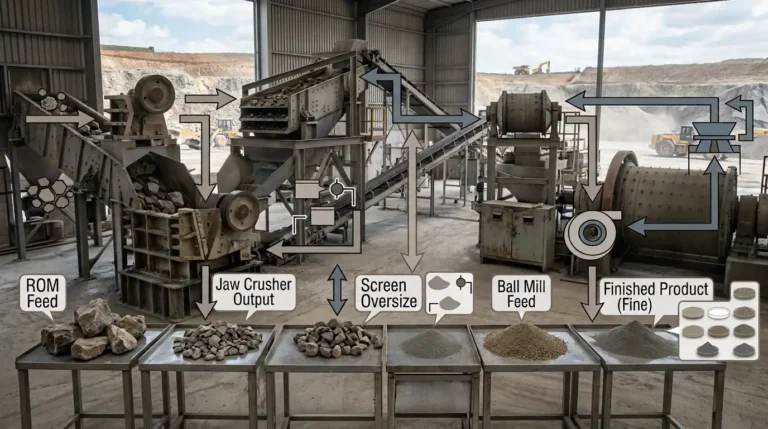
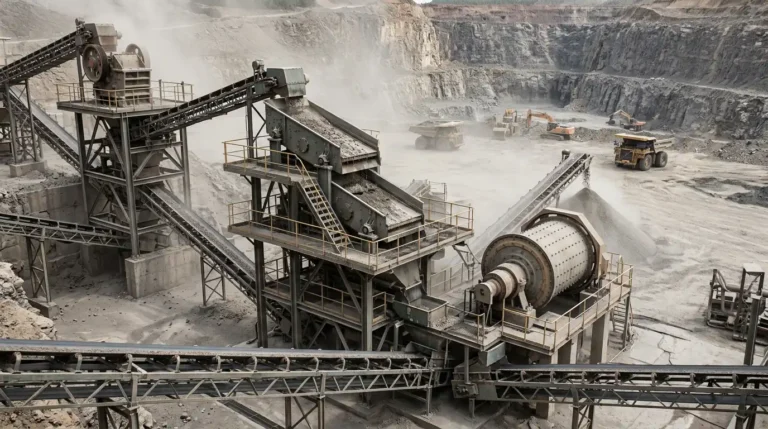
This class of crusher is the standard primary reduction stage in large open-pit mining. Copper, gold, and iron ore operations commonly run one at the head of the circuit, feeding a downstream grinding stage. A ball mill positioned after primary crushing typically needs feed no coarser than about 25 mm. That is why a heavy-duty jaw or a lighter PEW unit is the standard upstream stage, rather than skipping straight to fine grinding.
Large quarrying operations producing high-volume construction aggregate use the same class of machine for the same underlying reason. They need high, continuous tonnage of hard rock that a smaller unit cannot sustain economically.
Underground mining applications also favor jaw crushers over gyratory crushers below roughly 1,000 t/h. Jaw crushers are more tolerant of the space constraints an underground crusher station imposes.
Maintenance and Wear Parts
Jaw dies remain the primary wear item, manufactured from high-manganese steel or, for the most abrasive ores, high-chrome alternatives. Frame liners protect the structural frame itself from direct wear and require less frequent replacement than the jaw dies. A liner worn through, however, exposes the frame to damage that costs far more to repair than the liner itself.
On hydraulically adjusted models, the hydraulic circuit itself becomes a maintenance item alongside the mechanical wear parts. Seal condition and fluid cleanliness affect both the setting-adjustment function and the overload-protection function. A hydraulic system inspection schedule is not optional on machines that carry this feature.
Bearing lubrication follows the same discipline as any large jaw crusher: grease-lubricated spherical roller bearings, with contamination control as a leading factor in unplanned downtime. At this scale, a bearing failure stops an entire mine’s throughput rather than one line among several.
Cost and Procurement
Heavy-duty jaw crushers in this class carry a higher purchase price than a comparable PE or PEW unit at the same feed opening. This reflects the frame construction, deeper chamber, and hydraulic systems described above. Buyers should request a breakdown of what specifically drives that premium. This means frame type, bearing specification, and hydraulic automation level — not the heavy-duty designation treated as a single line-item upgrade.
Lead time is a real procurement factor at this scale. A machine this size can take significantly longer to manufacture, ship, and commission than a smaller unit. Site preparation, including foundation and civil works, needs to be planned against that timeline rather than started after the equipment order.
Frequently Asked Questions
What makes a C Series jaw crusher different from a PE jaw crusher?
A heavy-duty C Series unit is built for continuous, high-tonnage duty. Its frame is designed for sustained cyclic loading, with a deeper chamber and, on larger models, hydraulic overload protection. A standard PE unit uses a simpler, lower-cost construction suited to intermittent or moderate-duty operation.
What is the maximum capacity of a jaw crusher in this class?
Jaw crushers in this heavy-duty class are generally most competitive up to roughly 1,600 t/h. Above that range, a primary gyratory crusher typically becomes the more economical choice for continuous high-tonnage operations.
Does a heavy-duty jaw crusher need a welded or non-welded frame?
Both approaches are in active commercial use. A pinned-and-bolted, non-welded frame allows field-replaceable sections and avoids weld-joint fatigue cracking. A welded frame is marketed by its proponents as offering uniform strength against shock loading in every direction.
How is capacity reported for heavy-duty jaw crushers?
Capacity is typically reported two ways. A “scalped feed” figure assumes fines are removed ahead of the crusher, and a lower “non-scalped” figure applies to raw feed. The two figures are not interchangeable. A quoted capacity should always state which basis it uses.