

PE Jaw Crusher Explained: Structural Features and Application Scenarios
What makes the structure of a PE jaw crusher different from other crusher types? A PE jaw crusher is built around a welded steel-plate frame reinforced with cast sections at the high-stress bearing housings, an overhead eccentric shaft carried on large spherical roller bearings, and a toggle plate that doubles as a mechanical overload fuse. The closed side setting is adjusted with shims or packing plates behind the toggle seat rather than a wedge or hydraulic mechanism, which keeps the design simple and low-cost but slower to reset than a European-type (PEW) or heavy-duty C Series unit. This structural combination — deep V-shaped chamber, symmetric flywheels, manganese-steel jaw plates — suits primary crushing of hard, dry-to-moderately-moist rock and ore up to roughly 320 MPa compressive strength, but is not the right structural choice for high-moisture, clay-bearing feed prone to packing in the chamber.
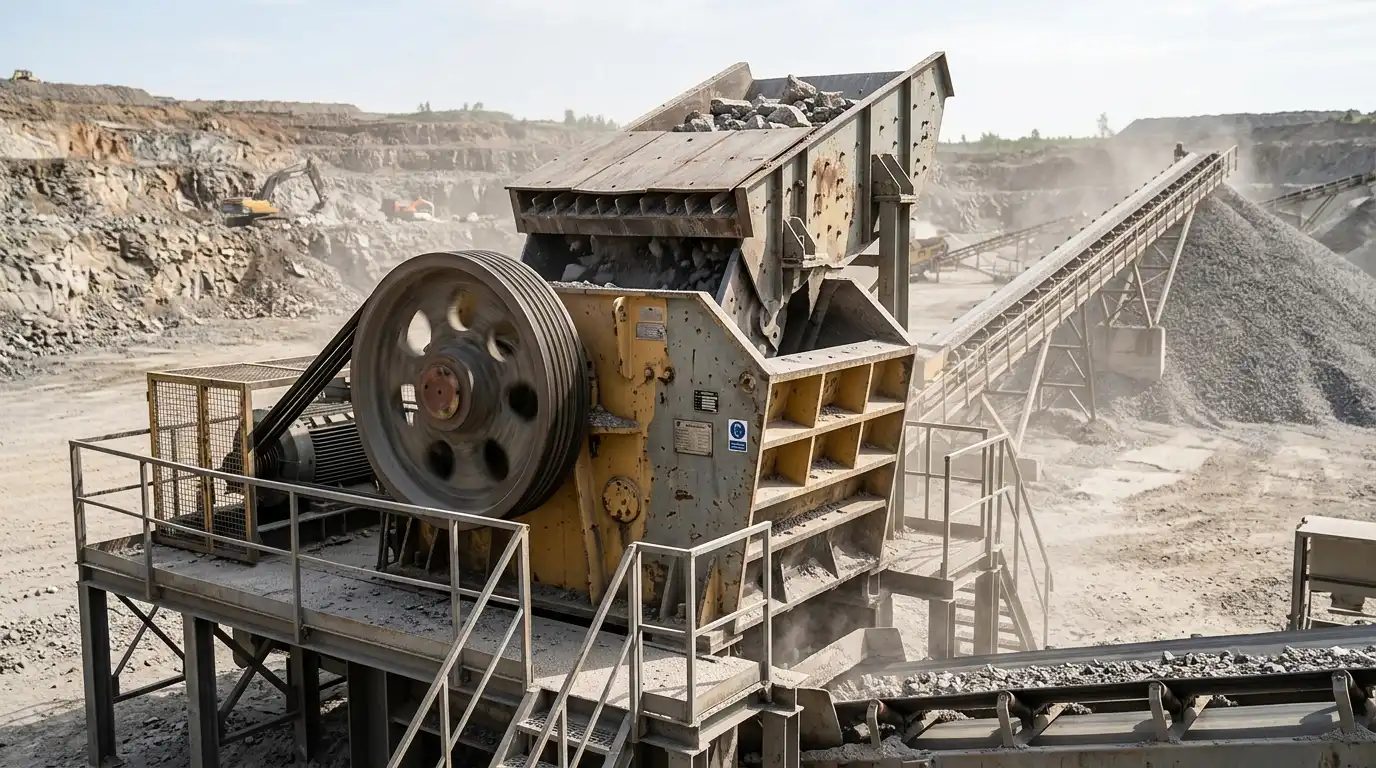
What You Will Learn from This Guide
This guide breaks down the physical construction of a PE jaw crusher component by component — frame, eccentric shaft and bearings, toggle plate, jaw plate profile, flywheel, discharge adjustment mechanism, and lubrication system — and explains how each design choice affects the machine’s performance and suitability for a given application. It serves an engineer or procurement specialist who has already narrowed a shortlist to a PE-class jaw crusher and needs to evaluate competing manufacturer quotations on structural merit rather than price alone, or a maintenance planner who needs to understand why a given component is built the way it is before ordering spares. After reading this guide, a reader will be able to identify which structural options (jaw plate profile, bearing type, frame construction) matter for a specific rock type and operating environment, and ask a supplier specific, testable questions instead of relying on marketing claims.
Overview
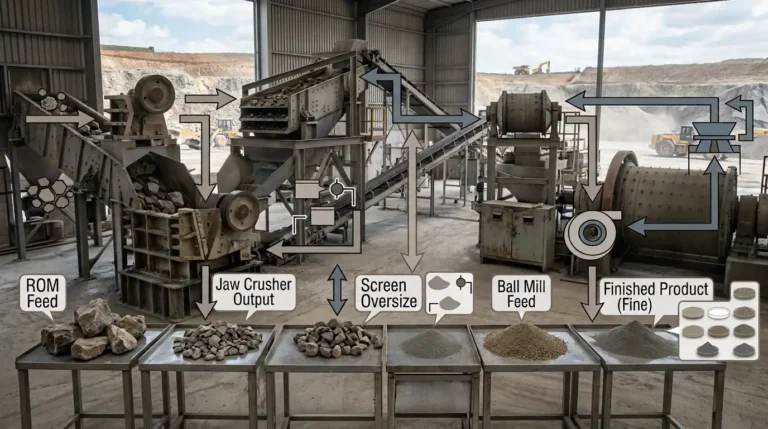
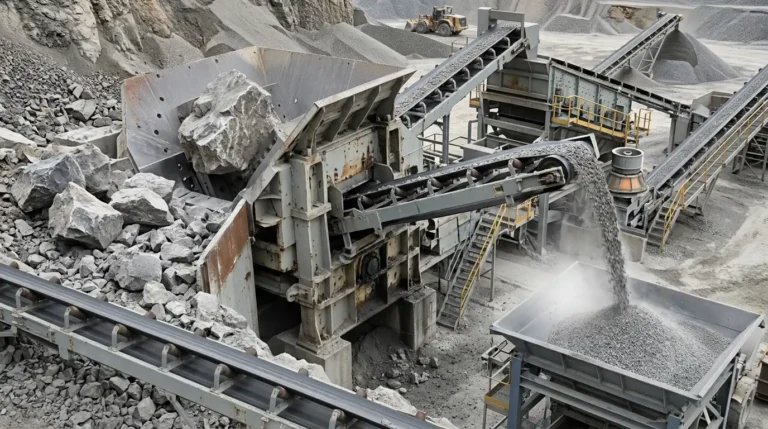
The PE jaw crusher is the standard coarse primary crushing machine used across mining, quarrying, and construction-material production. The designation traces to a Chinese equipment-manufacturing convention in which the model number states the feed opening width and length in millimeters — a PE900×1200 accepts a feed opening of 900 by 1,200 mm — and the category now covers a wide size range, from small PE250×400 units suited to pilot plants and small quarries up to PE1200×1500-class machines processing more than 1,000 tonnes per hour in large operations. A PE Jaw Crusher is almost always the first machine in a crushing circuit, positioned directly after blasting and ahead of secondary crushing and screening.
This guide focuses on structure rather than a type-by-type comparison: readers looking for how PE compares with PEW, C Series, fine/secondary, or hydraulic-driven jaw crushers as categories should consult a dedicated types-overview guide; this article instead opens the PE machine itself and explains what each structural component does, what it is made of, and why the design is built that way.
Working Principle
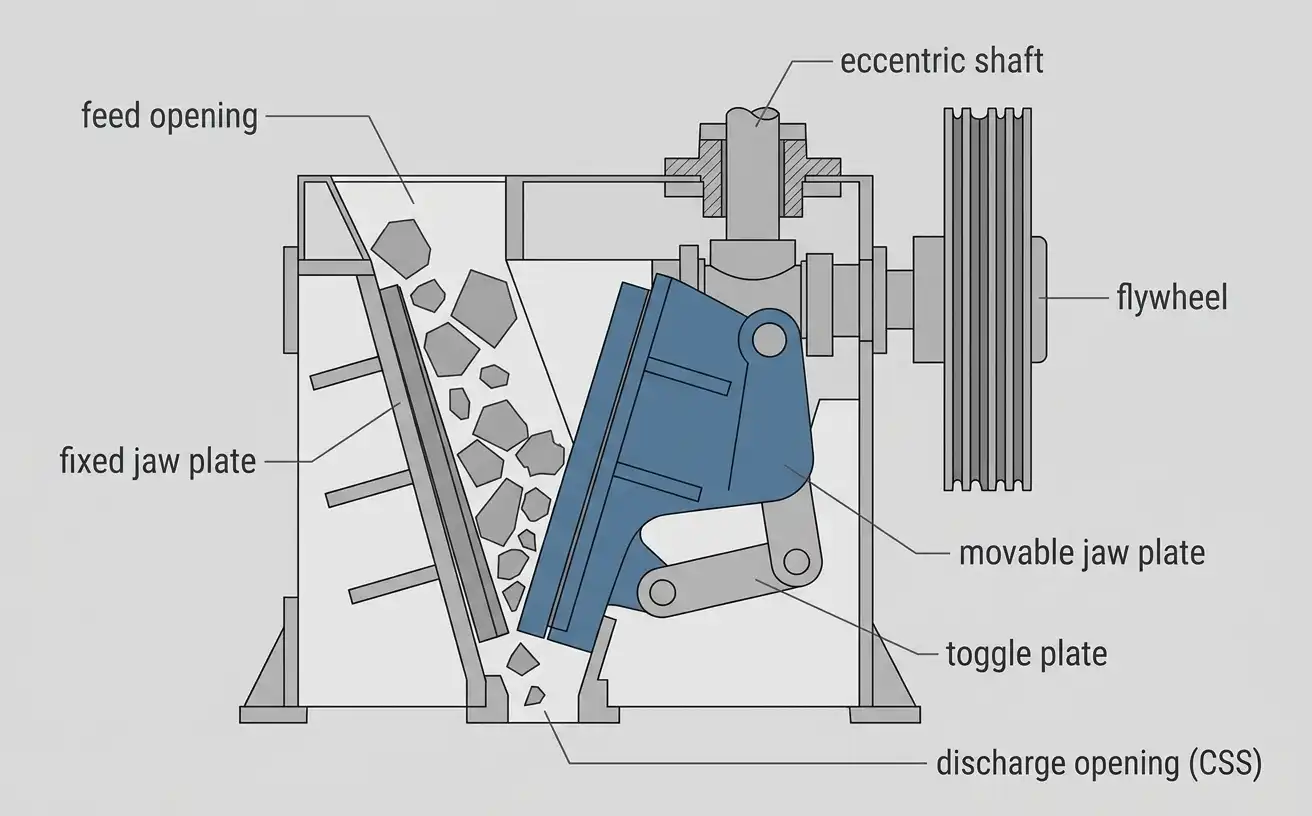
A PE jaw crusher uses an overhead eccentric shaft arrangement: the shaft sits above the movable jaw and drives it through a single toggle plate, which is why the category is described as single-toggle. The electric motor drives a pulley on the eccentric shaft through V-belts. As the shaft rotates, the offset (eccentric) section imparts an elliptical motion to the top of the movable jaw, which pivots on the shaft itself. On the compression stroke, the movable jaw closes against the fixed jaw and fractures the rock trapped between them; on the return stroke, the jaw opens and material already reduced below the closed side setting (CSS) drops further into the chamber under gravity.
The chamber is a symmetric V-shape: both jaw plates converge from a wide feed opening at the top to the narrower discharge gap at the bottom, and the geometry is designed so the actual feed opening matches the nominal (model-number) width rather than being reduced by an offset chamber. This symmetry is a defining structural trait of the PE category and is part of what distinguishes it from asymmetric secondary/fine chamber designs.
Structural Design and Key Components
Frame Construction
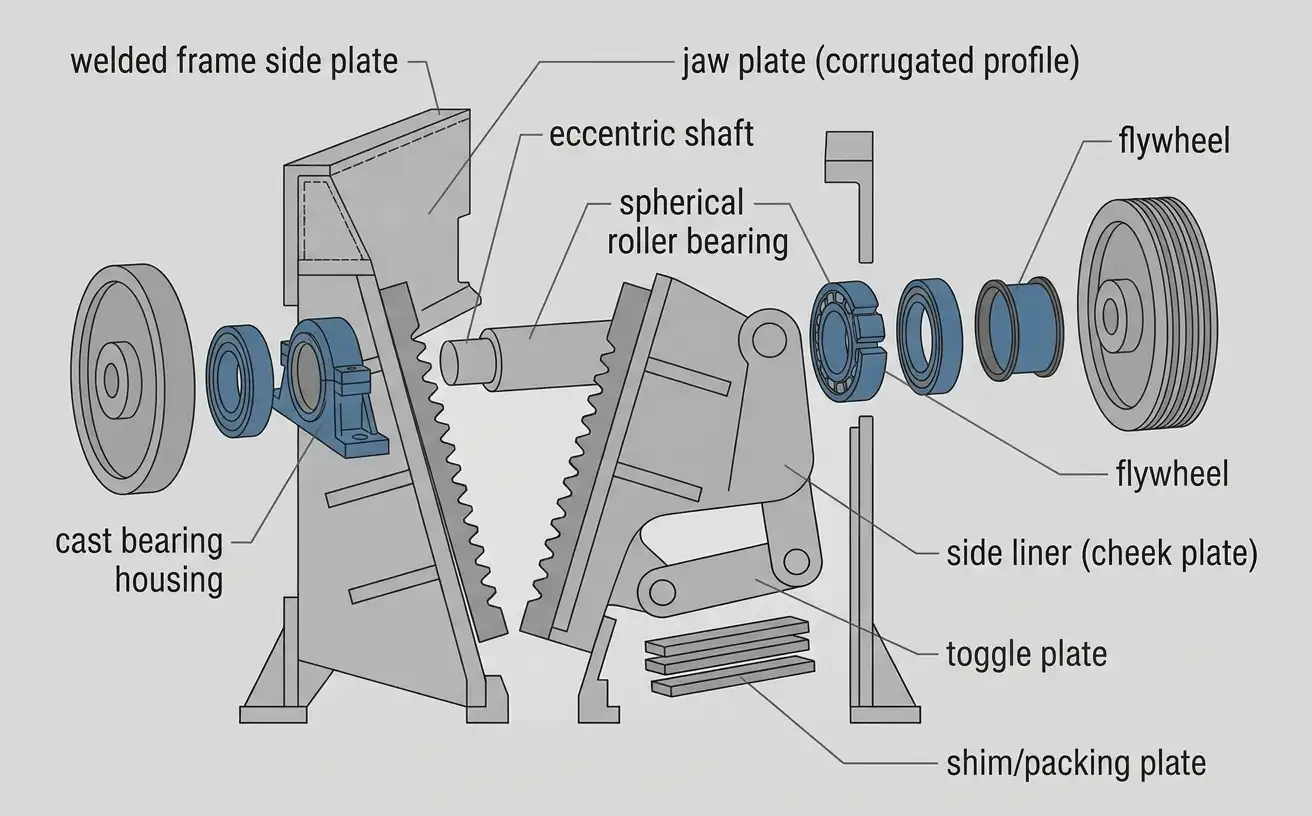
The PE frame is typically built from low-carbon steel side plates, welded and reinforced with internal ribbing, combined with cast sections at the front frame end and around the moving-jaw mounting where stress concentration is highest. This hybrid welded-and-cast approach gives a favorable rigidity-to-weight ratio compared with an all-cast frame, and manufacturers position welds in lower-stress zones with large-radius transitions to reduce fatigue-crack initiation points. Smaller PE units (roughly PE250×400 and below, used in pilot plants and laboratories) are sometimes built as a single-piece cast steel or cast iron frame instead, since the lower crushing forces at that size do not require the fabricated welded structure. This baseline welded-with-cast-inserts construction is a deliberate cost-and-simplicity choice: it differs from the fully non-welded, pinned-and-bolted frames used on heavier-duty product lines, which trade higher unit cost for field-replaceable frame sections.
Eccentric Shaft and Bearings
The eccentric shaft is the component that converts rotary motor input into the elliptical crushing motion, and because it carries the full crushing reaction force, it is machined from high-carbon or alloy steel forgings sized to resist substantial bending torque. On a standard overhead-eccentric PE unit, the shaft is supported by large spherical roller bearings — typically four in total, two supporting the shaft in the main frame and two at the pitman/jaw connection — sealed against contamination and lubricated with grease rather than an oil bath. Older or smaller PE-class designs sometimes use bronze (babbitt) sliding bearings in place of anti-friction roller bearings at one or more of these positions; sliding bearings cost less and tolerate shock loading differently, but generate more friction and heat and generally require closer lubrication monitoring than roller bearings of equivalent capacity. A buyer comparing quotations should confirm which bearing type is fitted at each of the four positions rather than assuming roller bearings throughout, since mixed configurations exist across manufacturers and price tiers.
Toggle Plate (Mechanical Safety Fuse)
The toggle plate sits between the bottom of the movable jaw (or pitman) and a fixed seat at the rear of the frame, transmitting the reaction force of the crushing stroke and holding the jaw at its working angle. It performs a second function that is central to the machine’s safety design: on many PE units, the toggle plate is built from two steel plates bolted together with shear bolts rated to a known, specified shear strength, so that when an uncrushable object such as tramp steel enters the chamber, the bolts shear and the plate releases before the eccentric shaft, bearings, or frame absorb damaging load. A rear-mounted tension rod and spring assembly keeps the toggle plate seated against its bearing surfaces during normal operation and provides the return force that pulls the movable jaw back on the opening stroke. Because the toggle plate is engineered to be the weakest link in this force path, it is treated as a scheduled-replacement wear item rather than a structural component expected to last the life of the machine.
Jaw Plate Profile
The fixed and movable jaw plates are the direct wear surfaces and are available in several tooth profiles, a structural choice that is frequently left at a manufacturer’s default rather than actively specified by the buyer. A flat or smooth (“quarry”) profile crushes primarily by compression, resists wear well on highly abrasive rock, and is a common baseline for general quarry duty. A corrugated or wave profile introduces tension and shear components to the crushing action in addition to compression; because rock is roughly ten times weaker in tension than compression, a corrugated profile can reduce both power draw and wear cost for a given tonnage, at some cost in jaw-plate service life relative to a flat profile on the most abrasive rock. A coarse-corrugated profile — fewer, wider teeth with larger valleys between them — is designed to resist the packing that fine material can cause at a tight CSS, and is frequently recommended as a general-purpose middle ground between flat and fine-corrugated profiles. A toothed or anti-slab profile with uneven tooth height is used mainly in construction and demolition recycling, where it improves grip on irregular debris and reduces the slabby, elongated particles that a flat profile tends to produce from flat or plate-shaped feed. Jaw plates on PE units are manufactured predominantly from high-manganese steel (grades in the Mn13Cr2–Mn22Cr2 family are common), which work-hardens under repeated impact; high-chrome iron is used as an alternative on the most abrasive, high-silica feeds where manganese steel wear rates become uneconomical.
Flywheel
One or two flywheels are mounted at the ends of the eccentric shaft — commonly one flywheel doubling as the drive pulley and a second, symmetric flywheel on the opposite end. The flywheel’s function is to store rotational energy through the portion of the crushing cycle when the jaw is not engaged with material, then release that stored energy during the compression stroke, so the motor supplies a comparatively steady average load rather than having to meet the instantaneous peak torque of each crushing event directly. A symmetric two-flywheel arrangement also reduces vibration transmitted to the frame and foundation compared with a single flywheel of equivalent stored energy.
Discharge Adjustment Mechanism
The standard PE discharge (CSS) adjustment method uses shims or packing plates inserted behind the toggle seat: adding shims narrows the CSS, removing them widens it. This method is mechanically simple, low-cost, and reliable, but it requires stopping the machine and partially disassembling the toggle-seat area to change the setting, and the available adjustment increments are limited by the shim thicknesses stocked on site — a full changeover can take an hour or more depending on model size. This is a deliberate structural trade-off rather than a shortcoming: it keeps the baseline PE unit simpler and less expensive than a wedge-adjusted or hydraulically adjusted machine, which is the correct choice for an operation that rarely changes its CSS. Operations that need to adjust product gradation frequently should evaluate a wedge-adjusted PEW Jaw Crusher or a hydraulically adjusted C Jaw Crusher instead of a shim-adjusted PE unit.
Lubrication and Drive System
Grease is the standard lubricant for PE jaw crusher bearings, applied manually with a grease gun on smaller units or through a centralized grease system (grease pots or a metering pump) on larger installations; this differs from the oil-bath lubrication typically used on gyratory crushers. Bearing temperature and lubrication status are treated as part of the operator’s routine circuit checks, since contamination or lubrication failure at the eccentric-shaft bearings is a leading cause of unplanned downtime. The drive itself uses V-belts between the motor sheave and the eccentric-shaft pulley, with the motor mounted on an adjustable base to allow belt tensioning, and a guard enclosing the belt and pulley assembly for operator safety.
Table 1. PE structural component summary
| Component | Standard PE construction | Function |
|---|---|---|
| Frame | Welded low-carbon steel side plates with cast/ribbed reinforcement at high-stress zones | Resists crushing reaction forces; supports eccentric shaft and jaw assembly |
| Eccentric shaft and bearings | Forged alloy/high-carbon steel shaft on large spherical roller bearings (four typical); bronze sliding bearings on some smaller/older units | Converts rotary motion into elliptical jaw motion; carries crushing load |
| Toggle plate | Steel plate(s), often shear-bolted, with rear tension rod and spring | Transmits crushing force; mechanical overload fuse |
| Jaw plates | High-manganese steel (Mn13Cr2–Mn22Cr2) or high-chrome iron; flat, corrugated, coarse-corrugated, or toothed profile | Primary wear surface; crushes and grips material |
| Flywheel | One or two cast steel/iron flywheels on the eccentric shaft | Stores and releases rotational energy across the crushing cycle |
| Discharge adjustment | Shim/packing-plate stack behind the toggle seat | Sets the closed side setting (CSS) |
| Lubrication | Grease, manual or centralized system | Reduces friction and wear at bearing surfaces |
Source: manufacturer technical documentation and engineering references for standard single-toggle, overhead-eccentric jaw crushers; specific components vary by manufacturer and model size.
The table above is the specification checklist a buyer should work through with any PE supplier before comparing price. Two machines quoted at the same feed opening and capacity can differ meaningfully in bearing type, jaw plate metallurgy, and frame fabrication method, and these differences affect service life and downtime risk more than the headline capacity figure does.
Specifications and Model Range
PE jaw crushers are produced across a wide size range, and specifications scale together rather than independently: a larger feed opening generally comes with a larger CSS range, higher motor power, and higher capacity, but the exact relationship depends on the manufacturer’s chamber geometry and eccentric throw.
Table 2. Representative PE model range
| Parameter | Small (lab/pilot) | Mid-size | Large primary |
|---|---|---|---|
| Feed opening (mm) | 250 × 400 | 600 × 900 | 1,200 × 1,500 |
| Max feed size (mm) | ~210 | ~480 | ~1,020 |
| CSS range (mm) | 20–60 | 40–150 | 150–350 |
| Motor power (kW) | 15–30 | 55–75 | 160–200+ |
| Capacity (t/h) | 5–20 | 50–160 | 400–1,000+ |
Source: typical Chinese-market PE jaw crusher specification ranges compiled across multiple manufacturer technical sheets; these figures are not standardized and should be confirmed against a specific manufacturer’s brochure before procurement. Full specification tables for the range are available on the PE Jaw Crusher product page.
The compressive strength of the feed material a PE unit can process is commonly cited at up to approximately 320 MPa, a figure that appears consistently across manufacturer and engineering sources and covers the great majority of quarry and hard-rock mining applications. This ceiling is a material-strength limit rather than a size limit — a small PE unit and a large one handle the same maximum compressive strength, differing in the tonnage and lump size they process at that strength.
Selection Criteria: Matching Structural Features to Application
The structural detail above is not academic; each choice has a direct, testable consequence for a given application, and matching them correctly is the strongest lever a buyer has over the machine’s operating cost.
Bearing type matters most in continuous, high-utilization operations. A large-scale quarry or mine running near-continuous shifts should specify spherical roller bearings at all four positions and confirm the sealing and lubrication system, since the friction and heat generated by bronze sliding bearings compound over high running hours. A smaller, intermittently operated site, such as a construction-material yard running limited daily hours, can tolerate bronze bearings at a lower purchase price without the wear penalty becoming significant over the machine’s practical service life.
Jaw plate profile should be matched to feed characteristics rather than left at a manufacturer’s default. Highly abrasive, non-sticky rock such as quartz-bearing granite favors a flat or coarse-corrugated profile in high-chrome iron or a harder manganese grade, prioritizing wear life over power efficiency. Moderately hard, less abrasive rock such as limestone or basalt can use a standard corrugated profile to reduce power draw without a meaningful wear-life penalty. Construction and demolition debris, which is irregular and often contains embedded rebar, benefits from a toothed or anti-slab profile that improves grip and reduces slabby product, independent of the toggle plate’s role in protecting against the embedded steel itself.
Discharge adjustment mechanism should be matched to how often the operation needs to change product gradation. A single-product quarry that runs the same CSS for months at a time is well served by the lower cost and mechanical simplicity of shim adjustment. An operation supplying multiple aggregate gradations from the same primary crusher, or a remote site where a technician-hours-based setting change is expensive, should evaluate the wedge or hydraulic adjustment offered on PEW and C Series product lines instead, even at a higher purchase price, since the operational savings can offset the price difference within one to two years of frequent setting changes. Manufacturer-specific wear-life projections for jaw plates and toggle plates under a given ore or rock type are not available as a general figure and depend on site-specific abrasiveness, moisture, and tonnage; operations needing that data should request a projection from the manufacturer’s engineering team using representative feed samples rather than relying on a published range.
Applications by Material and Industry
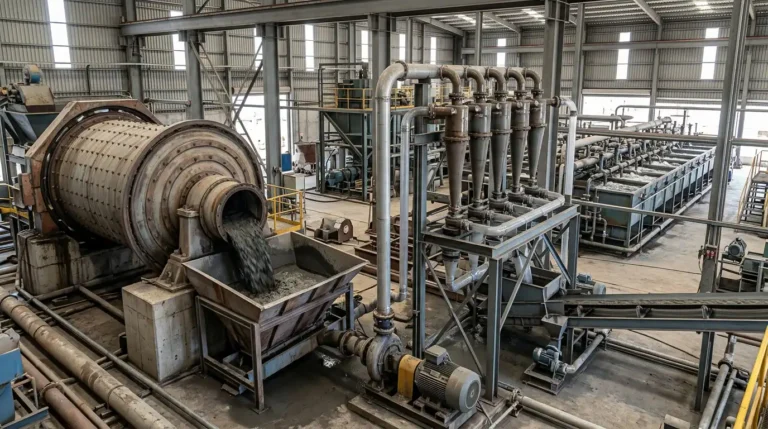
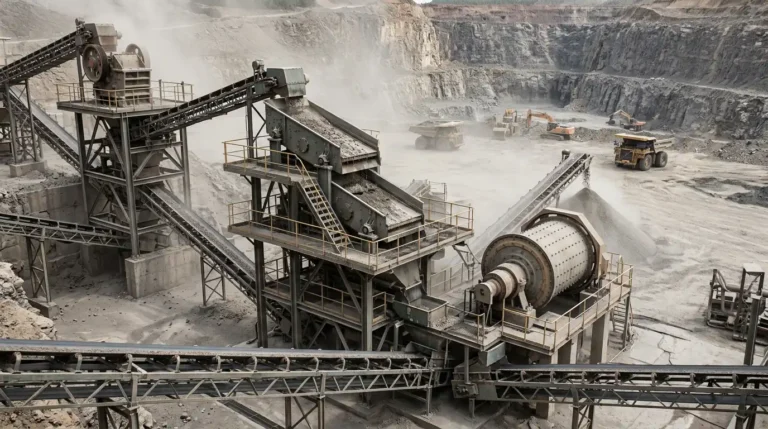
PE jaw crushers handle a wide range of hard, dry-to-moderately-moist rock and ore up to approximately 320 MPa compressive strength: granite, basalt, diabase (gabbro), and other igneous rock common in quarry and road-base production; limestone and other sedimentary material for cement and construction aggregate; and metal ores including iron, copper, and gold ore ahead of a ball mill or further crushing stages in mineral processing. A 200 t/h basalt crushing plant and a 60 t/h slate crushing plant illustrate the range from higher- to lower-hardness rock a PE unit is commonly specified for, and a 100–150 t/h aggregate production plant shows a PE primary integrated into a full crushing-and-screening line.
PE units are structurally well suited to blocky, dry-to-moderately-moist feed and are not the right choice for high-moisture, clay-bearing material. The chamber’s intermittent compression cycle depends on gravity to move material downward between strokes; above roughly 8 to 10 percent moisture content with significant clay or fines present, material can pack in the chamber rather than flow, increasing motor load, accelerating jaw-plate wear from compacted material friction, and raising the risk of unplanned jamming. Operations feeding material with meaningful clay or moisture content should install a grizzly or scalping screen ahead of the crusher to remove fines before they reach the chamber, rather than relying on the crusher itself to handle a high-fines feed. This is a genuine limitation rather than a universally worse outcome relative to competing crusher types: a jaw crusher’s open-top chamber and large clearances generally clog less readily than a cone or impact crusher on the same feed, even though it is not immune to packing at the higher end of the moisture range.
Beyond primary quarrying and mining, PE units are used in construction and demolition recycling, where the toggle plate’s overload protection is exercised more frequently due to unpredictable embedded steel in the feed, and in general infrastructure work — road, railway, and hydropower construction material production — where the machine’s simple, low-maintenance construction supports operation at remote sites without close manufacturer support. A downstream vibrating screen, such as the S5X vibrating screen, is standard practice after PE primary crushing to separate finished product from oversize material.
Maintenance and Wear Parts
The jaw plates and the toggle plate are the two components with the shortest service life on a PE unit and should be stocked as standard maintenance-inventory items. Jaw plate wear rate depends on feed abrasiveness, moisture, and tonnage processed rather than a fixed calendar schedule, so inspection intervals are best tied to operating hours and periodically verified by physical measurement rather than assumed from a manufacturer’s generic wear-life estimate. Side liners (cheek plates) protecting the frame walls inside the chamber wear more slowly than the jaw plates but should be inspected on the same schedule, since a worn-through liner exposes the frame itself to direct wear that is far more costly to repair than a liner replacement.
The toggle plate, as described in the structural section above, is designed to fail before the eccentric shaft, bearings, or frame sustain damage, and should be replaced immediately after any uncrushable-object event rather than reused, even if visual inspection suggests it survived the event without cracking. A stock of replacement toggle plates and shear bolts (where fitted) is a standard maintenance-inventory item on any active PE installation. Because the shim-based discharge adjustment on a PE unit requires partial disassembly to change the CSS, maintenance planning should account for the labor time of setting changes separately from routine wear-part replacement; sites that adjust the CSS frequently accumulate more cumulative downtime from this mechanism than sites running a fixed setting.
Cost and Procurement
Purchase price for a PE jaw crusher scales primarily with feed opening, motor power, and the specific structural options selected — bearing type, jaw plate metallurgy, and frame fabrication method all affect price within the PE category before any comparison to PEW or C Series units. A unit specified with spherical roller bearings throughout and high-chrome iron jaw plates for abrasive duty carries a higher price than an otherwise equivalent unit with bronze bearings and standard manganese-steel jaw plates, and buyers should confirm which configuration a quotation actually includes rather than comparing headline capacity and price alone. As a general reference point, a PEW or C Series unit of comparable feed opening and capacity typically carries a higher purchase price than a baseline PE unit, reflecting the deeper chamber and wedge or hydraulic adjustment systems described earlier in this guide.
Lead time and spare-parts availability are practical factors beyond the base equipment price. Jaw plates, toggle plates, and shim sets should be sourced with a defined lead time before commissioning, since a wear-part stockout is a common and avoidable cause of unscheduled downtime on new installations. Buyers should request a documented spare-parts list with lead times and a maintenance-interval schedule specific to the quoted model and structural configuration, rather than treating this as a follow-up conversation after purchase.
Frequently Asked Questions
What is the frame of a PE jaw crusher made of?
A standard PE frame uses welded, ribbed low-carbon steel side plates combined with cast sections at the eccentric-shaft bearing housings and moving-jaw mounting, where crushing stress concentrates. Smaller lab- or pilot-scale PE units are sometimes built as a single-piece cast frame instead of a welded fabrication.
What type of bearings does a PE jaw crusher use?
Standard PE units use large spherical roller bearings, typically four in total, at the main eccentric-shaft supports and the pitman connections, lubricated with grease rather than an oil bath. Some smaller or older PE designs use bronze (babbitt) sliding bearings at one or more positions instead, which cost less but generate more friction under continuous high-utilization duty.
How is the discharge opening adjusted on a PE jaw crusher?
The closed side setting on a standard PE unit is adjusted by adding or removing shims or packing plates behind the toggle seat, which requires stopping the machine and partial disassembly. This differs from the wedge-based adjustment used on the PEW Jaw Crusher, which can be changed in minutes without disassembly.
What jaw plate profile is best for a PE jaw crusher?
The best profile depends on the feed material: a flat profile suits highly abrasive, non-sticky rock where wear life is the priority, a corrugated profile reduces power draw on moderately hard, less abrasive rock, and a toothed or anti-slab profile improves grip and product shape on irregular construction and demolition debris.
Is a PE jaw crusher suitable for wet or clay-bearing material?
A PE jaw crusher tolerates dry to moderately moist feed well, but material with high clay content or moisture above roughly 8 to 10 percent risks packing in the chamber rather than flowing freely, increasing motor load and jam risk. A grizzly or scalping screen ahead of the crusher to remove fines is the standard mitigation for feeds with meaningful clay or moisture content.